Why the decision is not always obvious
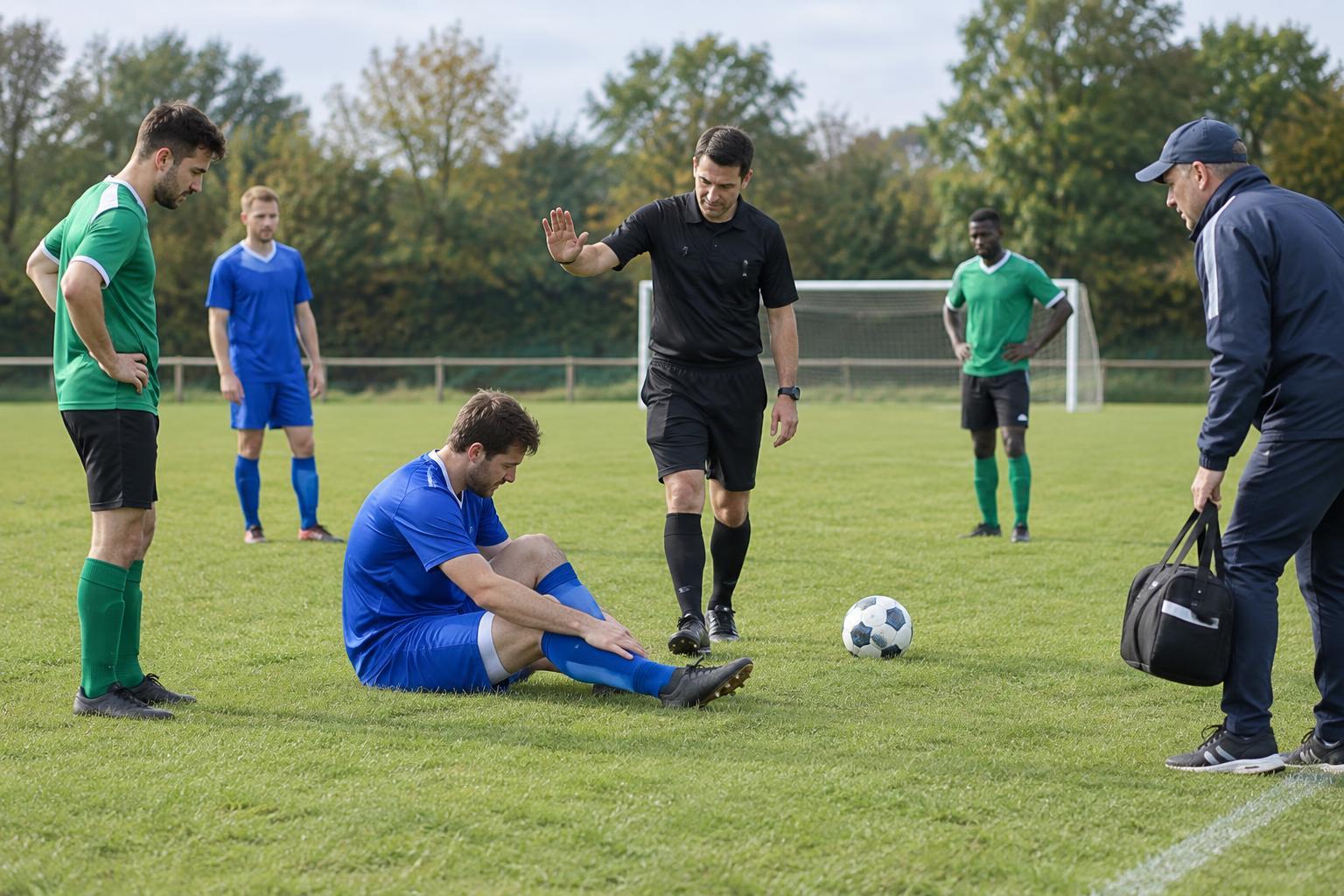
A player goes down, the ball stays in play, and everyone looks around to see who will act. In grassroots football, this moment can feel especially uncertain. There may be no medical staff at the ground, players may know one another, and a shout of concern can travel faster than the referee can see what happened.
The basic distinction is between an injury that appears to need prompt attention and one that appears less serious. The referee is responsible for deciding whether to stop play, taking account of what they can see and hear. They do not need to diagnose an injury to recognise that continuing may be unsafe. A player who appears unable to protect themselves, a possible head injury, or a collision that raises immediate concern calls for particular caution. If the situation is unclear, clear communication matters more than guessing.
What players should do while the ball is live
Players close to an incident can help by calling the referee’s attention to the injured person and giving a brief, factual description of what they saw. A calm shout is more useful than several people arguing at once. Teammates and opponents should give the injured player space, avoid crowding them, and make room for whoever is asked to assist.
Kicking the ball out of play can be a sporting gesture, but it is not a substitute for the referee’s decision. Players should not assume that an opponent will put the ball out or that play has stopped simply because someone asks for it. Until the whistle goes, they need to remain aware that play may continue. Equally, nobody should delay drawing attention to an injury just because their team has possession or an attacking chance.
If someone appears to be in immediate danger, the priority is to alert the referee and get appropriate help, not to settle a debate about advantage or possession. Players should avoid moving an injured person unless remaining where they are presents an immediate danger. The people responding should follow their training and the procedures available at that ground.
The referee’s role after stopping play
Once play is stopped, the referee can keep other players back, allow appropriate assistance onto the pitch, and make space for the situation to be assessed. Coaches or designated helpers may be better placed to contact emergency services or find the ground’s first-aid equipment. The referee’s job is to manage the match and the space around the incident, not to provide a medical diagnosis.
The restart depends on why and when play was stopped, so it should not be decided by players trying to recreate the previous attack. Competition rules may also set out procedures for injured players leaving the pitch, substitutions, or head-injury concerns. Referees, coaches, and team organisers should know the rules that apply to their match rather than relying on habits from another league.
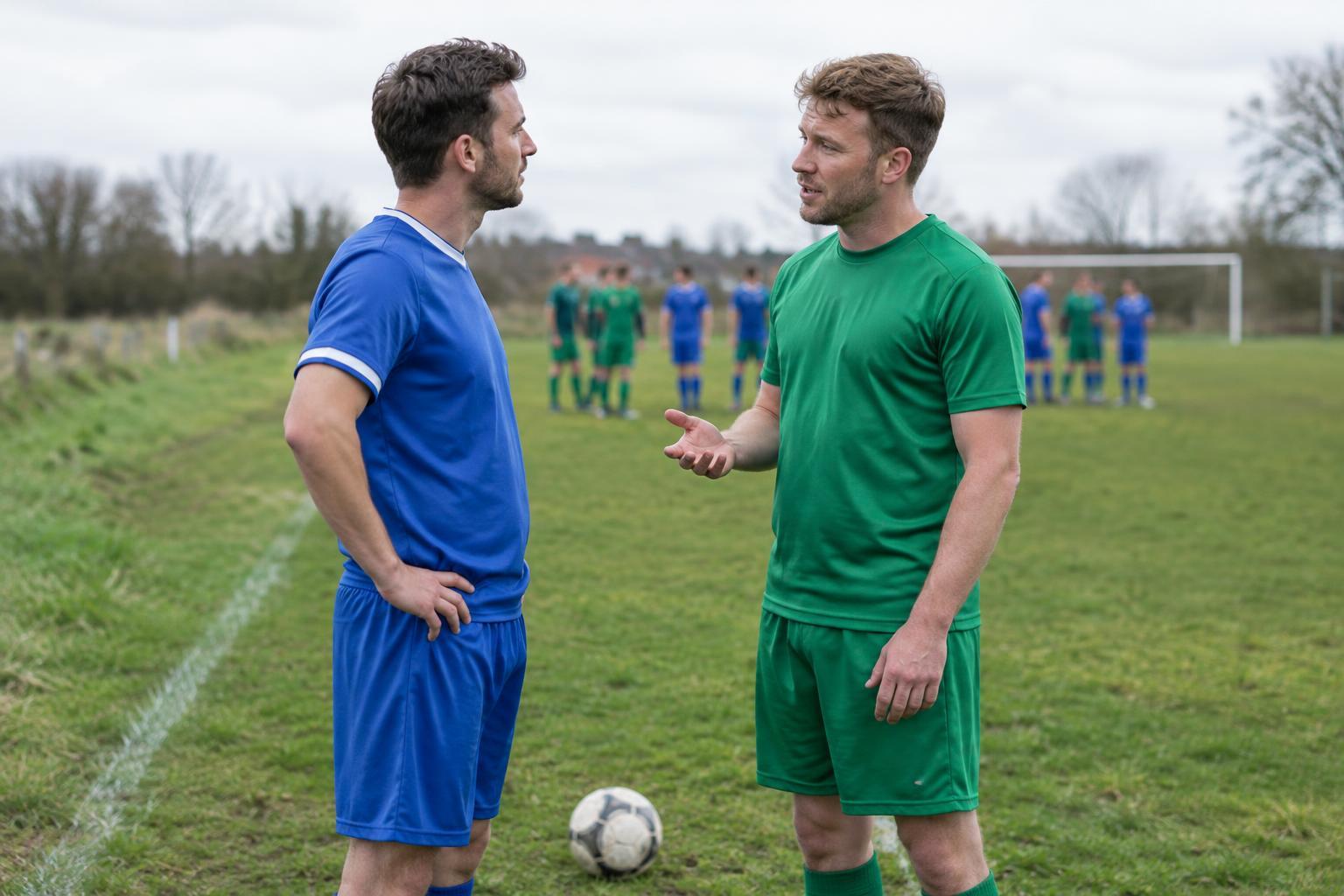
A stoppage can produce frustration, particularly if one team had a promising chance. A short explanation of the decision and restart can help, but it need not become a long discussion. The injured person’s welfare should not be treated as something to negotiate between captains.
What coaches and organisers can prepare
The best response begins before kick-off. Each team should know who will take charge of practical tasks if someone is hurt: who has access to first-aid supplies, who can call for help, and who knows how to direct responders to the pitch. Check the ground’s access points rather than assuming an ambulance or helper could easily find an unfamiliar field.
Coaches can also set expectations for players. Encourage them to report concerns promptly, respect a stoppage even when they disagree with it, and leave decisions about returning to play to the appropriate people and applicable rules. This is particularly important with younger players, who may feel pressure to carry on. Local policies and any relevant training should guide the people responsible for assessing an injury; a teammate’s reassurance is not a clearance to return.
Keep the response calm and the priorities clear
Grassroots football depends on cooperation. Players can alert and make space; the referee can stop and manage play; coaches and organisers can arrange suitable help. None of those roles requires someone to be certain what the injury is. When there is a credible concern that a player needs prompt attention, responding early is more important than preserving the flow of the match.
After the incident, teams can review whether their plan worked: Was help easy to summon? Did people know the pitch location and access route? Was communication clear? Those small checks make the next difficult moment less chaotic, while keeping the game’s central responsibility in view: people matter more than the passage of play.