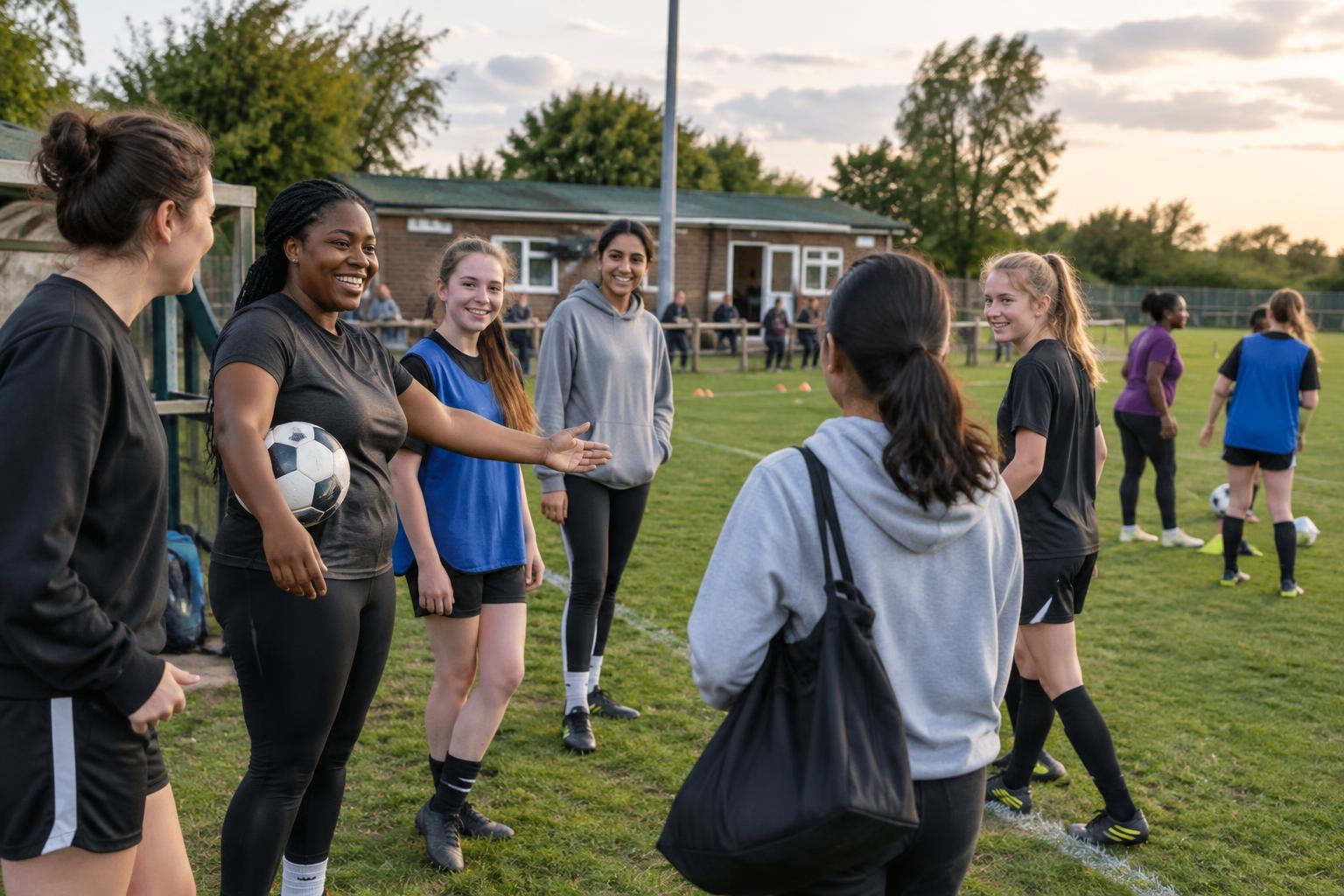
Start with the first visit
Joining a football club can feel daunting when everyone else seems to know the routine. Make the first step easy: publish a clear contact route, explain who each session is for, and say whether beginners can attend. Include the meeting point, session length, likely cost, what to wear, and what happens if someone does not yet have boots or other equipment. A friendly reply before a player arrives can remove a surprising amount of uncertainty.
On the day, ask one person to welcome newcomers, introduce them to the coach and a few players, and explain the session. Do not leave someone to work out where to change or which group to join. Offer a way to try a session without committing to a season. Afterwards, ask how it went and make it easy to return, while respecting a decision not to.
Build sessions for different starting points
Women and girls do not arrive with a single level of experience or the same reason for playing. Some want a competitive pathway; others want exercise, friendship or a chance to learn the basics. Where numbers allow, offer a beginner-friendly option alongside more experienced training. Where they do not, coaches can adapt drills so players get useful touches and manageable challenges rather than being separated by reputation.
Watch how playing time, coaching attention and encouragement are shared. A session may appear open to everyone while its most confident players take every pass and every decision. Small-sided games, rotating roles and clear coaching prompts can give quieter players room to participate. Explain mistakes as part of learning, not as evidence that someone does not belong. Ask players what they hope to gain from the club, then revisit that conversation as their confidence or ambitions change.
Make the practical details work
A warm invitation means less if sessions are scheduled at times that players cannot reasonably attend or if facilities make participation uncomfortable. Ask prospective and current players about training times, travel and changing arrangements before assuming what suits them. Check that toilets and changing spaces are clean, usable, clearly explained and offer appropriate privacy. If the club shares a venue, communicate any limitations honestly and work with the venue to improve them.
Kit is another small decision with a large effect on comfort. Provide a sensible choice of sizes and, where possible, options for fit rather than assuming one cut works for everyone. Explain what is required for matches and what is optional at training. Make costs visible early, including membership, travel and kit. If the club can offer spare equipment or flexible payment, describe those options plainly without making players feel singled out for using them.
Set expectations for behaviour and safety
A welcoming environment depends on what the club does when someone is excluded, mocked or harassed. Set straightforward expectations for players, coaches, volunteers and spectators, including how people speak to one another in person and in club messages. Make it clear who can receive a concern and what the club will do next. Respond consistently rather than asking the affected player to brush it off for the sake of team harmony.
For girls’ teams and any sessions involving children, follow the safeguarding requirements that apply to the club and its football organisation. Ensure volunteers know their responsibilities and that parents or carers can find the right contact. Keep communication arrangements appropriate for players’ ages. Safety also includes everyday coaching choices: suitable supervision, sensible grouping and a culture in which someone can say they are uncomfortable without being treated as a problem.
Give players a voice and a future at the club
Recruitment is only a start. Invite women and girls to shape the club through regular, low-pressure feedback: a short conversation after training, a player representative or an anonymous route for concerns. Ask specific questions about session quality, facilities and team culture, then explain which changes the club can make and which need more time. Listening is most convincing when players can see it affect decisions.
Think beyond one team or one season. Players may want to coach, referee, organise fixtures or help run the club, and visible routes into those roles can strengthen a sense of belonging. Offer information and support without assuming everyone wants extra responsibility. A grassroots club becomes welcoming through repeated choices: greeting people well, making participation practical, addressing poor behaviour and giving players reasons to feel that the club is theirs too.