Start with movement, then plan for the conditions
Football training rarely involves standing still for long. A session may move from a gentle warm-up to repeated sprints, then pause while a coach explains a drill. That change in intensity is why training clothes need to do more than match the temperature at the moment you leave home. They should let you run, turn and stretch comfortably, while giving you a way to adjust when you warm up or cool down.
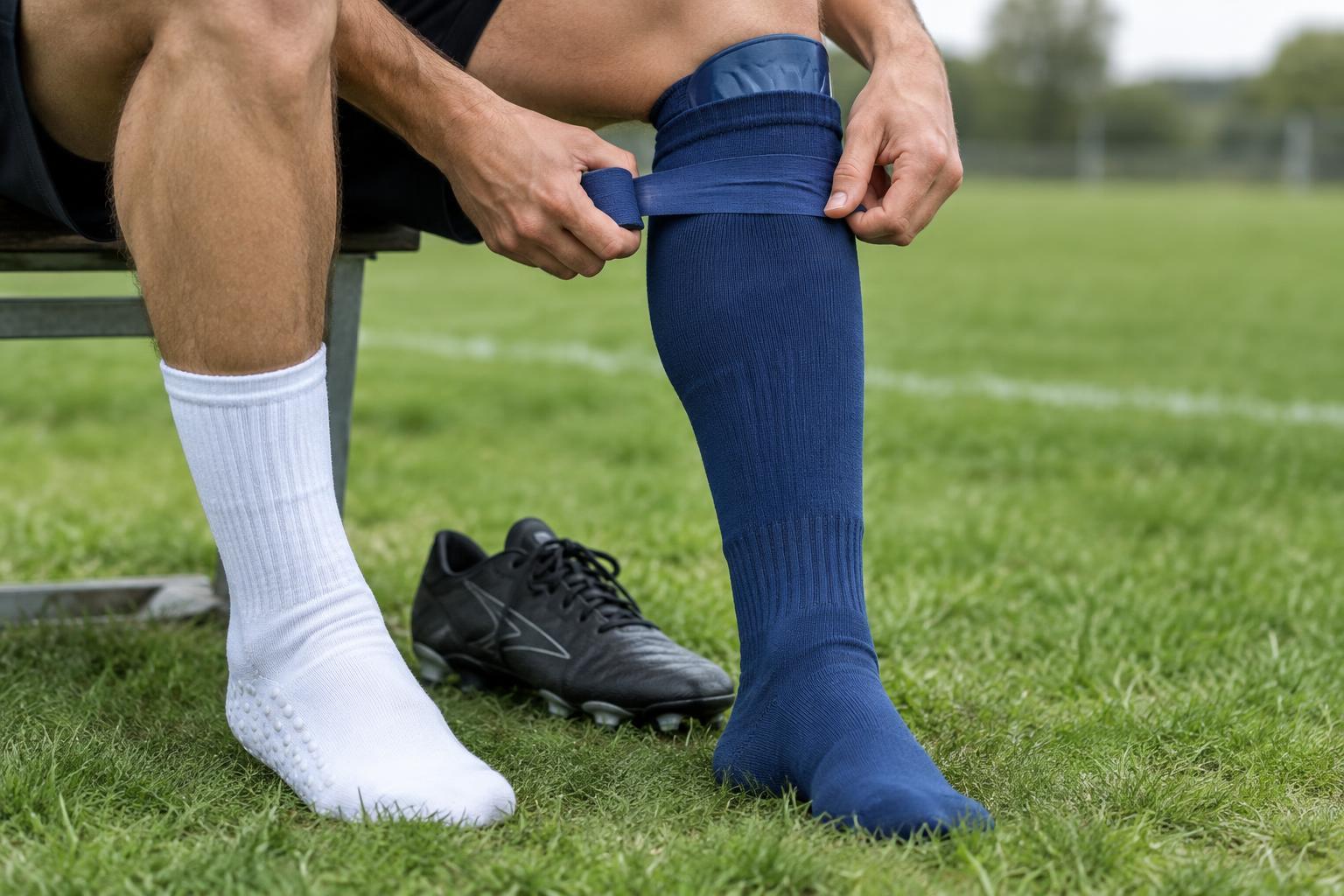
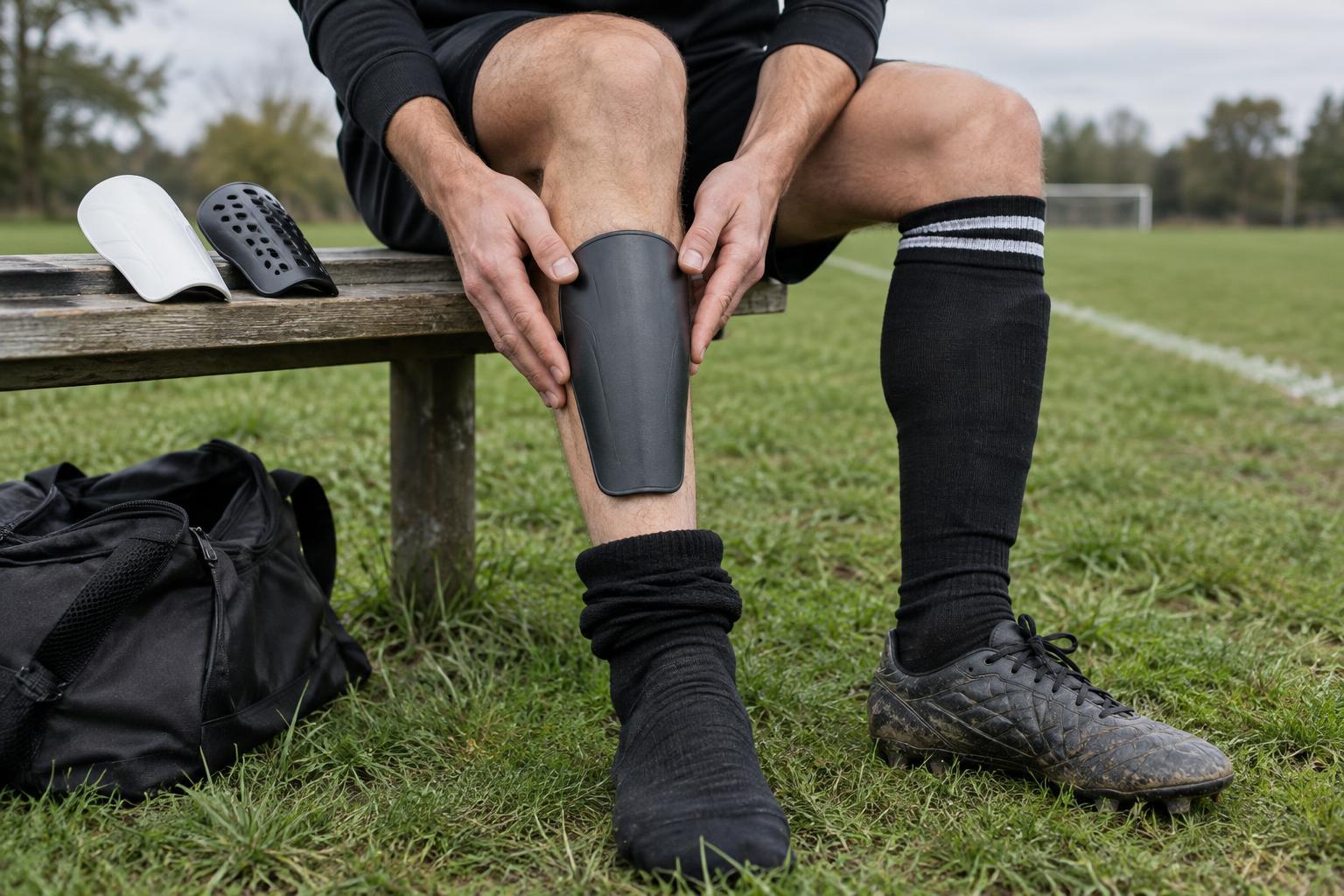
Begin with a breathable top, shorts or training trousers, socks and footwear suited to the playing surface. Clothing should fit closely enough not to flap or catch, but not restrict your stride or your ability to lift your arms. Check your boots against the pitch and any club or facility rules; the right sole for natural grass may not be the right choice for artificial turf or an indoor court. If your session involves contact or match-style drills, bring the shin guards your coach requires.
Hot weather: keep the kit light and simple
In warm conditions, choose lightweight clothes that allow air to circulate and do not hold on to too much sweat. A comfortable short-sleeved top and shorts will suit many sessions. Some players prefer a thin, close-fitting base layer to reduce rubbing; others find an extra layer uncomfortable in the heat. The useful test is how the full outfit feels once you start running, not how technical it looks on a hanger.
Lighter colours may feel more comfortable in strong sun, especially during breaks, but fabric, fit and shade all matter. Bring water and make use of the breaks available during the session. If you train outside, consider a cap for travel or time on the sideline, though it may not be appropriate during play. Pack a dry top for the journey home: sitting in damp training clothes can feel chilly even after a hot session. If you feel unwell in the heat, stop and let the coach know rather than trying to finish a drill.
Cold weather: use layers you can remove
For cold training, layering is usually more versatile than relying on one heavy jacket. A thin base layer under a training shirt adds coverage without much bulk. Over that, a light training top or zip-up layer can help during the warm-up and quieter drills. You can remove it once you are moving hard, then put it back on for breaks. Avoid layers so loose or heavy that they change how you run or trap too much moisture against your skin.
Training trousers or tights can be useful when bare legs feel uncomfortable, provided they allow a full range of motion. A close-fitting hat and gloves may make early warm-ups more pleasant, subject to your team’s rules for drills and contact. Feet deserve attention too: wear football socks that fit well inside your boots rather than stacking pairs until the boots feel tight. Keep a warm, dry layer in your bag for immediately after training, when your body is no longer generating as much heat.
Wet weather: manage water without overheating
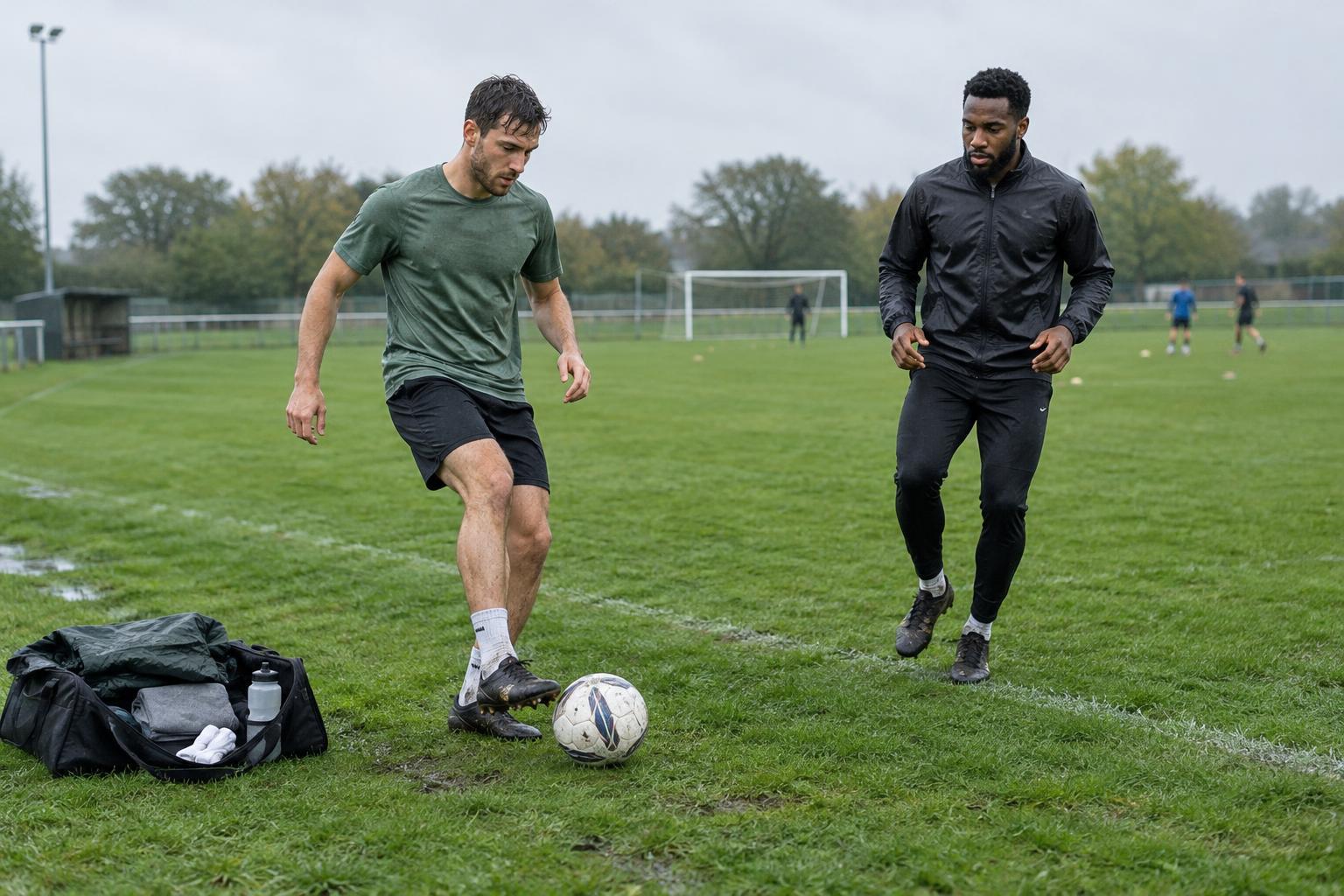
A light rain jacket can be useful before training, during low-intensity work or when rain comes with wind. For harder drills, however, an impermeable layer may leave you damp from sweat even if it keeps the rain out. A breathable, water-resistant training top is often a more flexible option. Whatever you wear, make sure you can move your shoulders freely and that a hood or loose fabric will not get in the way of your vision.
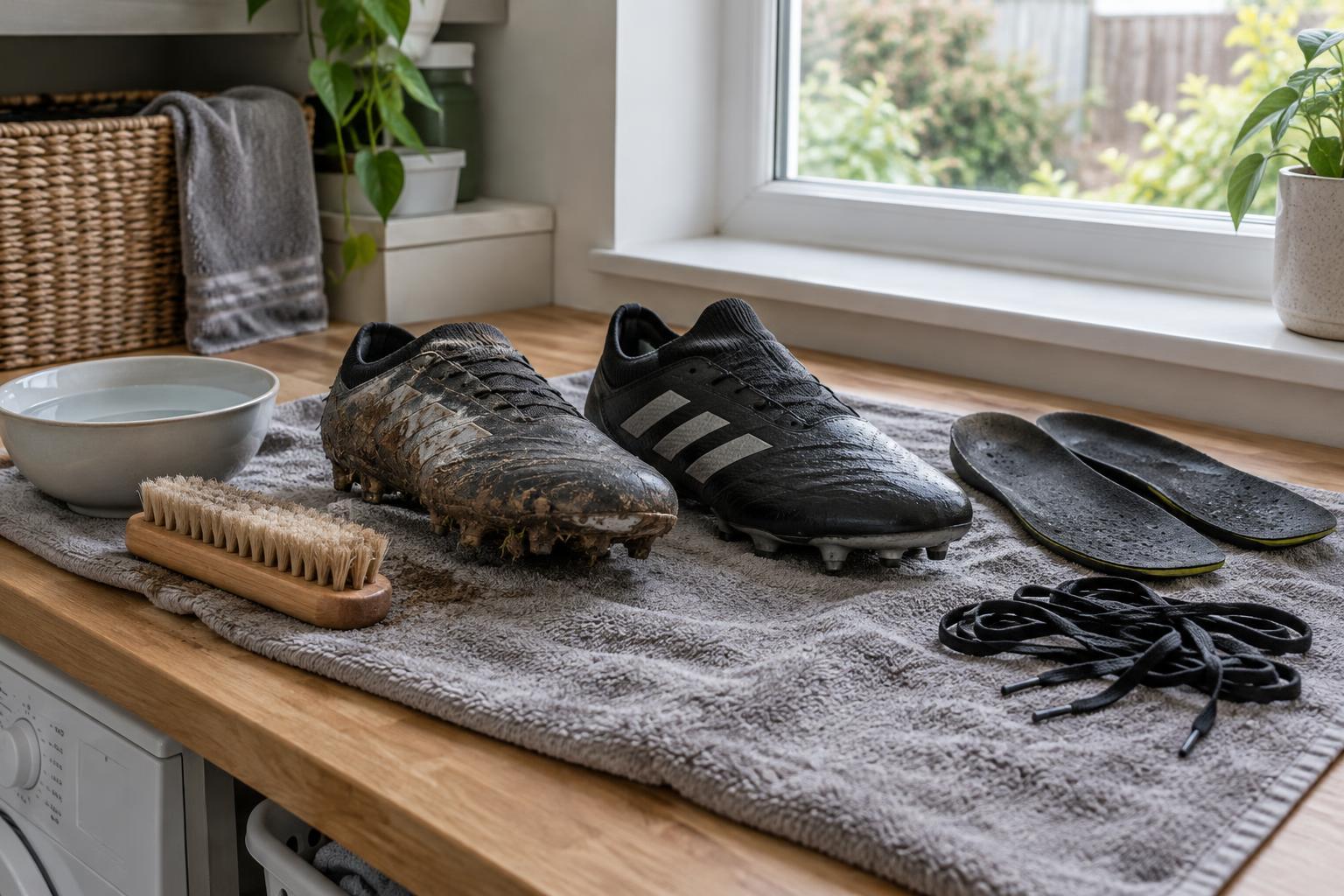
On a wet pitch, secure footing matters more than keeping your boots spotless. Choose footwear appropriate to the surface and its condition, and follow the facility’s rules. Socks that bunch or slide can become distracting when soaked, so start with a pair that fits properly and carry a spare. A towel, dry clothes and a bag for wet kit make the trip home more comfortable. Let boots dry naturally after the session; forcing them against a strong heat source may damage some materials.
Pack for changes, not just the forecast
A small training-bag routine removes much of the guesswork. Keep a spare top, socks and a light outer layer ready alongside your usual kit. Before leaving, think about the whole session: the walk to the pitch, warm-up, drills, breaks and journey home. A cool evening after a warm afternoon or a sudden shower can make that spare layer worthwhile.
There is no single outfit that works for every player or every training ground. The best choices are the ones that suit the weather, surface and session while letting you focus on the ball. After a few sessions, note what you actually wore, what stayed in the bag and when you felt too hot, cold or restricted. Those observations are a better guide to your next kit choice than buying more clothing for every possible condition.