Start with mud, not soap
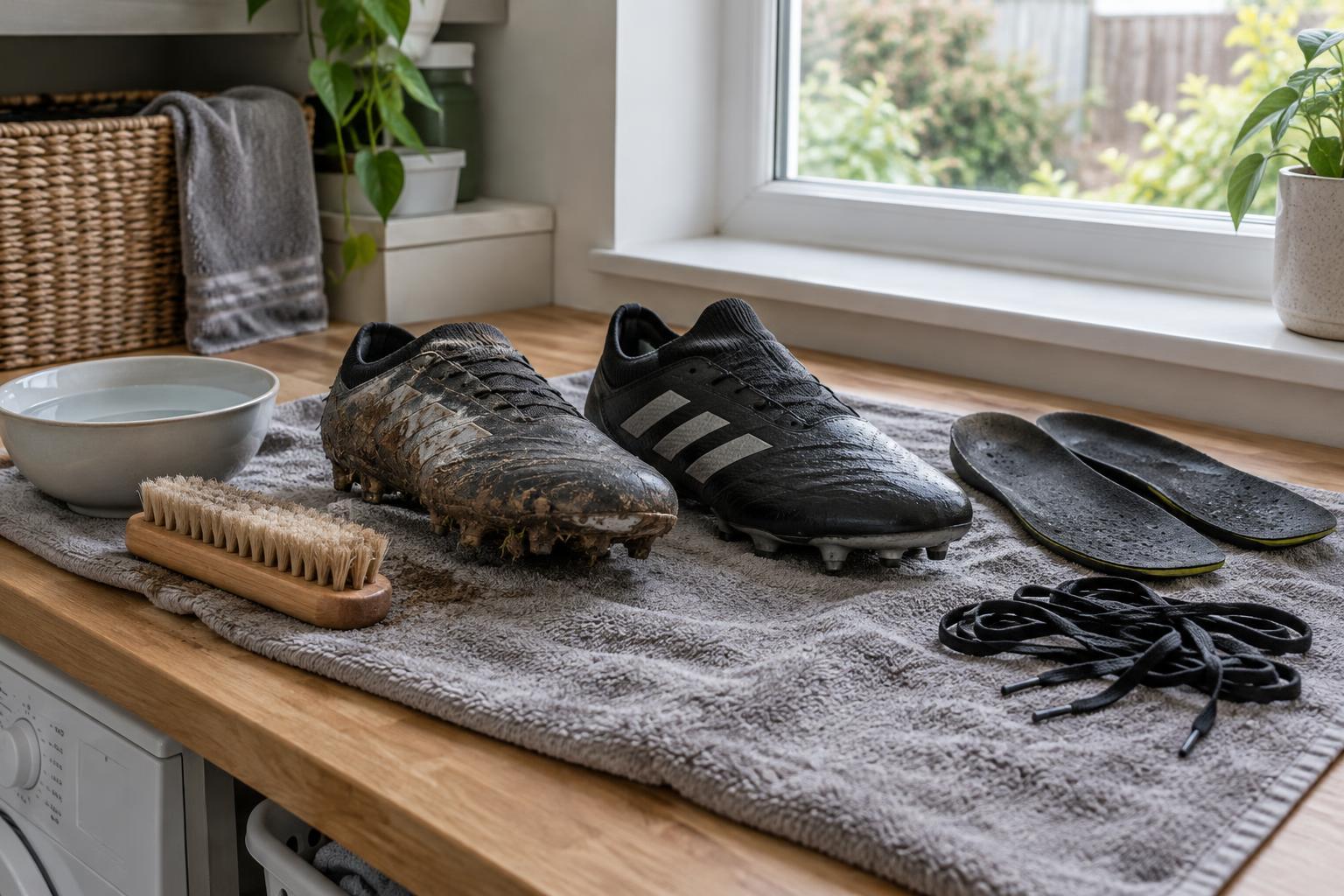
After a match, it is tempting to throw muddy boots into a bag and deal with them later. A little attention before the mud hardens makes the job easier. Knock the soles together gently outdoors to dislodge loose clumps, then use a soft brush or an old toothbrush to clear dirt from the soleplate, around the studs and along the join between the upper and sole. Avoid striking the boots against a wall or hard surface, which can scuff the upper or put unnecessary stress on the soleplate.
If the mud has already dried, brush away what you can before adding water. Then wipe the boots with a cloth dampened with lukewarm water. Work gradually rather than soaking them. For stubborn dirt, a small amount of mild soap in water is usually enough; wipe away any residue with a clean, damp cloth. Strong cleaners and aggressive scrubbing can affect finishes, stitching or glued areas. Check the care guidance supplied with your boots if you are unsure what a material can tolerate.
Clean the upper according to its material
Synthetic uppers are often straightforward to wipe clean, but their printed textures and coatings still deserve a gentle touch. Use a soft cloth or brush, especially around grip elements and seams. Do not try to scrape off every mark: surface scuffs from play may remain even when the boot is clean. The goal is to remove dirt that holds moisture against the material, not to make a used pair look untouched.
Leather needs particular care because repeated soaking and rapid drying can leave it feeling stiff. Wipe dirt away with a damp cloth, use as little water as practical, and let the leather dry slowly. If the boot maker recommends a leather conditioner, apply it sparingly according to those instructions once the boots are dry. More product is not necessarily better; excess can leave a residue or change how the upper feels.
Knit collars and fabric sections can trap grit and sweat. A soft brush and a lightly damp cloth can lift dirt without saturating the fabric. Pay attention to the area where the collar meets the upper, but do not pull hard on stretchy sections. If the boots have removable laces and insoles, take them out so you can clean each part separately and expose the inside of the boot to air.
Give the soles, laces and insoles their own check
The underside of a boot collects more than visible mud. Work a soft brush around each stud and any grooves in the soleplate, rinsing the brush as needed rather than holding the whole boot under a tap. If your boots have removable screw-in studs, check that they are secure before the next game and follow the manufacturer's guidance for their care. Do not force a stuck stud while cleaning.
Laces can be washed separately with mild soapy water and left to air-dry. Wipe removable insoles rather than soaking them unless their care instructions say otherwise. Let them dry completely before putting them back: a clean-looking upper will still feel unpleasant if moisture remains trapped inside. This is also a useful moment to look for worn laces, loose stitching or damage to the soleplate.
Dry slowly, with room for air to move
Air-drying is the safest default. Open the boots as much as their design allows, loosen the laces and place them in a well-ventilated spot away from direct heat. You can loosely fill the toes with plain paper to help absorb moisture and support the shape, replacing it when it becomes damp. Do not pack the paper tightly; air still needs to circulate. Dry the laces and insoles alongside the boots rather than putting them back while wet.
Avoid radiators, heaters, hairdryers and tumble dryers. High heat can affect adhesives and synthetic components, and it may dry leather unevenly. A washing machine is also a poor shortcut for most football boots: tumbling and prolonged soaking can be hard on the upper and its joins. Drying time varies with the material and how wet the boots became, so check inside them before storing or wearing them again.
Make the routine easier next time
A quick brush and wipe after each muddy session is usually less work than a major clean weeks later. Once the boots are dry, keep them in a cool, ventilated place rather than sealed in a damp kit bag. A boot bag is useful for carrying dirty gear home, but it should not become permanent storage for wet boots.
If you play regularly, leave enough time between sessions for your boots to dry where possible. You do not need an elaborate collection of products: a soft brush, cloth, mild soap and patience cover most routine cleaning. The best habit is simple and repeatable—remove dirt promptly, use water sparingly and let the boots dry without forcing the process.