Start with coverage, not appearance
Shin guards have a simple job: put a protective layer between your shins and the knocks that are part of football. A pair that looks sleek but covers very little may leave more of your leg exposed than you intended. A bulky pair is not automatically better, either, if it gets in the way of movement or will not stay in place.
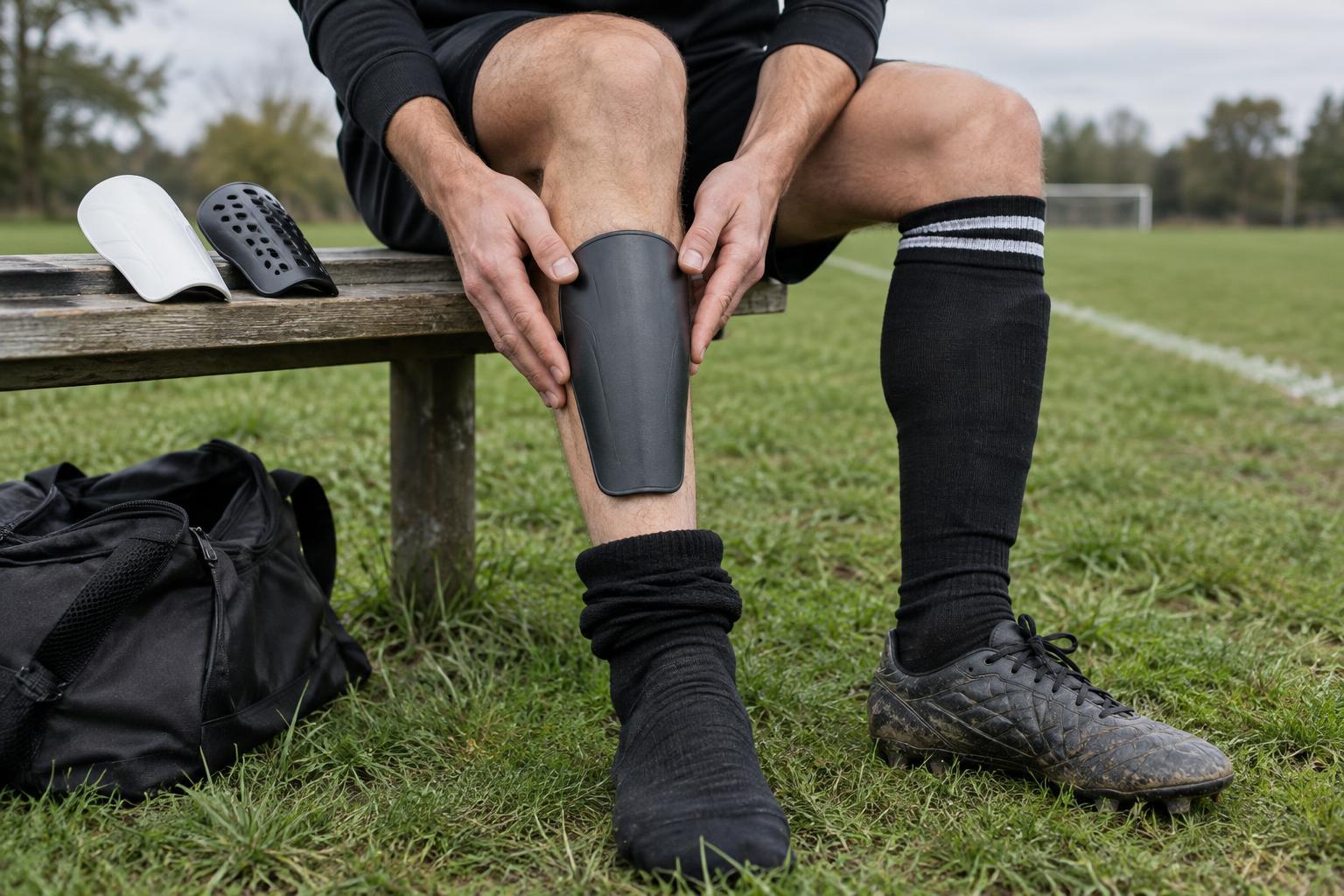
Look for a guard that follows the front of your lower leg and covers a useful stretch between the ankle and the knee without pressing into either joint. Your knee should bend freely, and the bottom edge should not dig into your foot when you flex your ankle. Coverage needs to be judged while the guard is in its playing position, not while you hold it against your leg in a shop.
If you play in an organised league, check its equipment rules before buying. Requirements can differ, and a guard that feels comfortable in a casual kickabout may not meet the rules for a particular competition.
Find a size and shape that match your leg
Size labels are a starting point, not a final answer. Height-based charts can help narrow the options, but two players of the same height may have different lower-leg lengths and calf shapes. If possible, try more than one size and compare where each guard sits when you stand, walk and bend your knees.
The shell should sit against the front of your shin without sharp gaps, concentrated pressure or edges that rub. Some guards are narrow and curved; others are wider or flatter. A wider model may offer more side coverage but feel restrictive on a slimmer leg. A narrower model may fit closely yet leave more of the sides uncovered. Choose the shape that balances coverage with a stable, natural fit.
Do not assume that choosing the smallest guard you can tolerate is the best way to keep it unobtrusive. If it slips around because it does not suit your leg or fastening method, its position during play may be less reliable. Equally, sizing up until a guard reaches your knee can make running and turning uncomfortable.
Compare fastening styles in your full kit
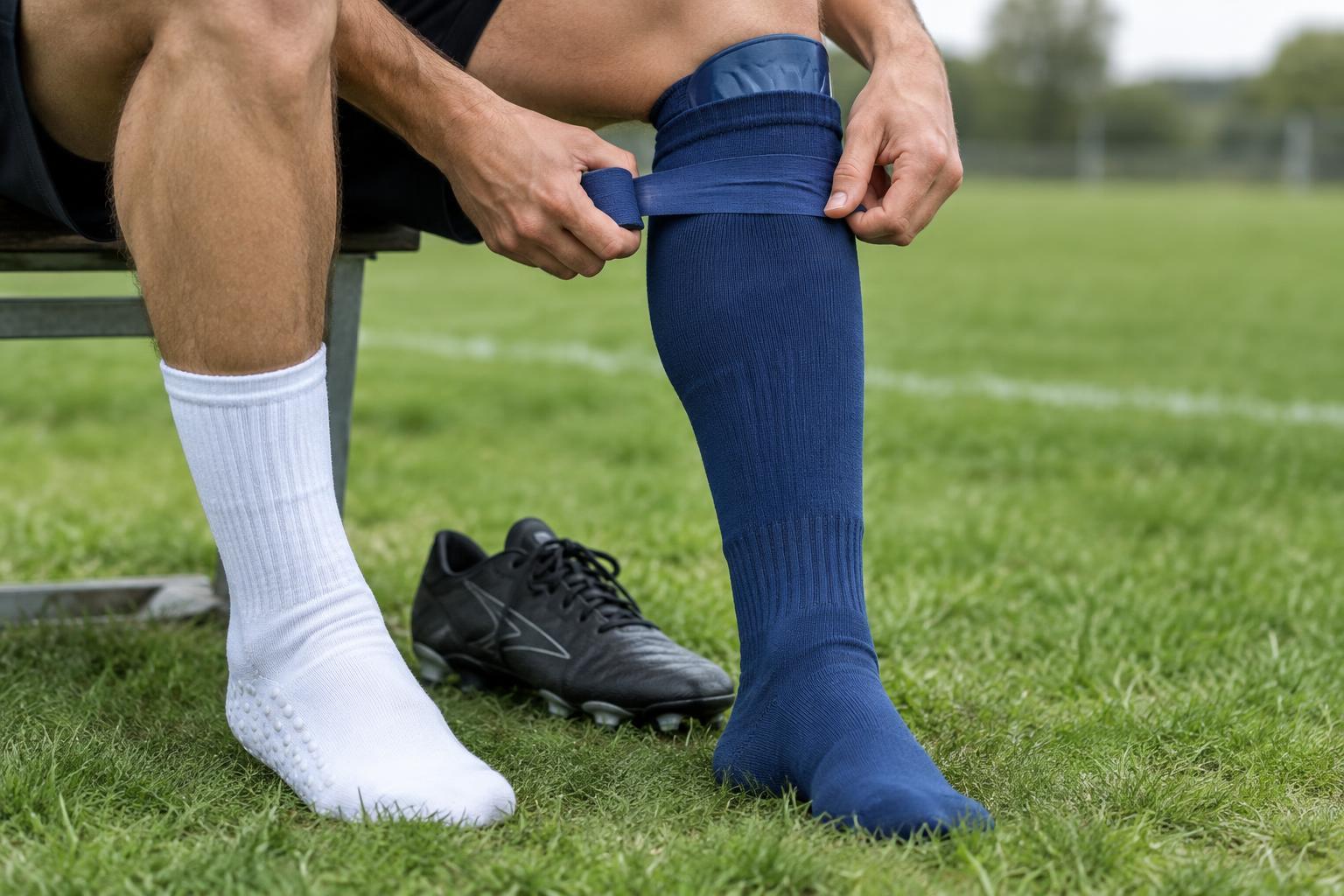
Slip-in guards rely on a close fit under the football sock, often with a separate sleeve to help hold them in place. They are easy to take on and off, but they need enough grip to avoid sliding down. Guards with attached straps offer another way to secure the shell; check that the straps hold without cutting into your calf. Models with ankle protection add coverage around the lower leg but can feel warmer or more substantial inside the sock and boot.
Try guards with the socks you normally play in. A thick sock, a thin sock and a compression sleeve can each change how firmly the same guard sits. Put on your boots as well, then walk, jog in place, turn and squat. Notice whether the guard rotates, whether its lower edge catches on your boot and whether the fastening stays comfortable as your calf moves.
Tape can help some players secure a sock or sleeve, but it should not be the only thing making a badly fitting guard usable. Avoid wrapping it so tightly that it feels restrictive. A guard that stays put with a straightforward setup is easier to wear consistently.
Pay attention to padding and everyday comfort
A hard outer shell and a softer inner layer are common features, but the feel varies. Padding can reduce pressure from the shell, while ventilation and fabric choice may affect how hot or damp the guard feels. There is no single material that suits everyone: the best test is whether the guard remains comfortable as you move and sweat.
Check seams, strap ends and shell edges before committing to a pair. Minor rubbing in a brief fitting can become distracting over a full session. If a guard pinches immediately, do not count on it becoming comfortable with use. If you are buying for a growing player, reassess the fit regularly rather than relying on a pair that once fitted well.
Use a simple final fit check
Before playing, position both guards at the same height and pull your socks over them. Take a few quick steps, change direction and bend each knee fully. The guards should remain over the shins, the joints should move freely and nothing should dig into the skin. If one side shifts, adjust the sleeve or straps and repeat the check.
After a session, take note of any rubbing, pressure marks or repeated slipping. Those signs are useful feedback about size, shape or fastening. Clean and dry the guards according to their care instructions, and inspect them for cracks or damaged fastenings. The most useful pair is one that offers sensible coverage, stays where you put it and feels comfortable enough to wear every time you play.