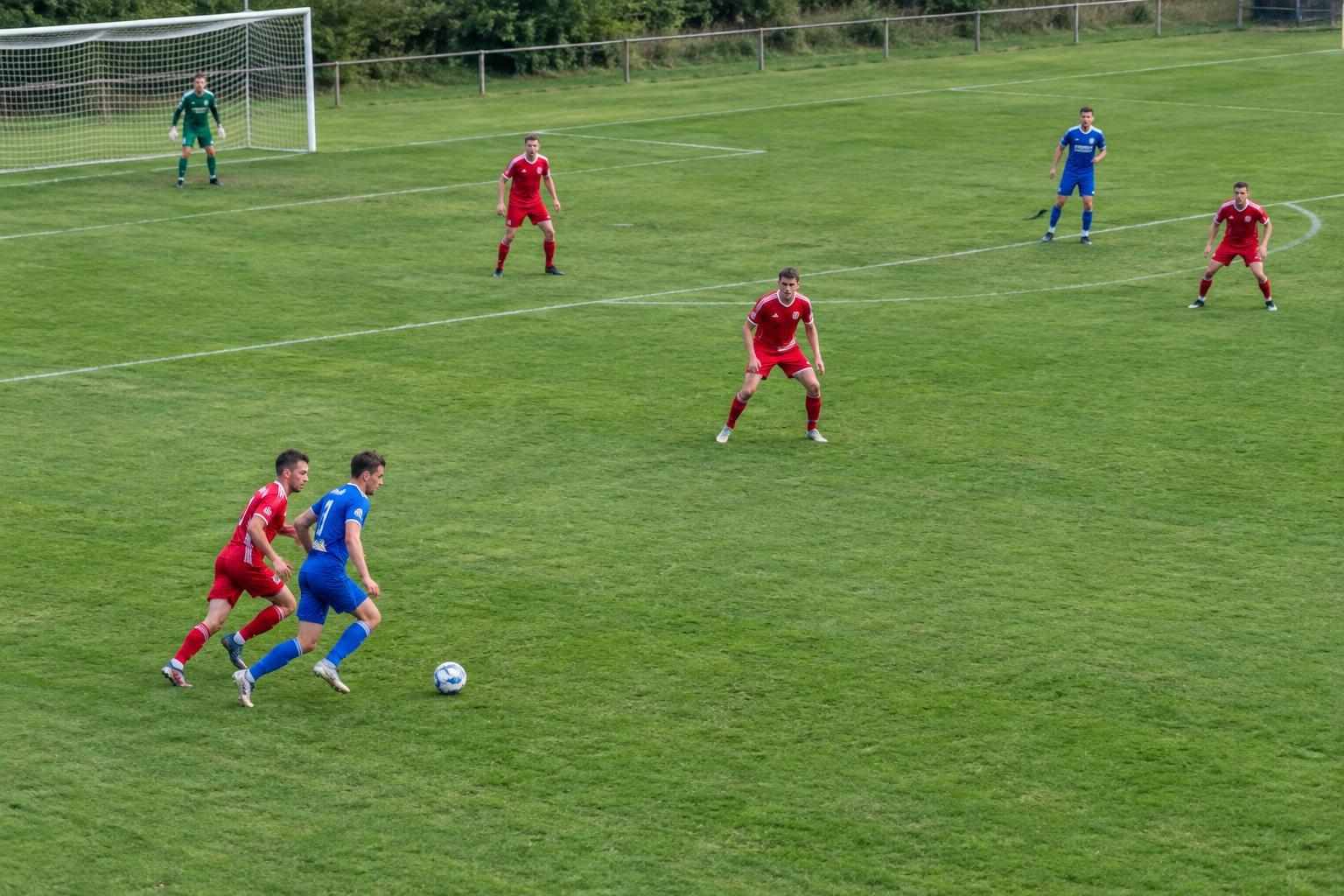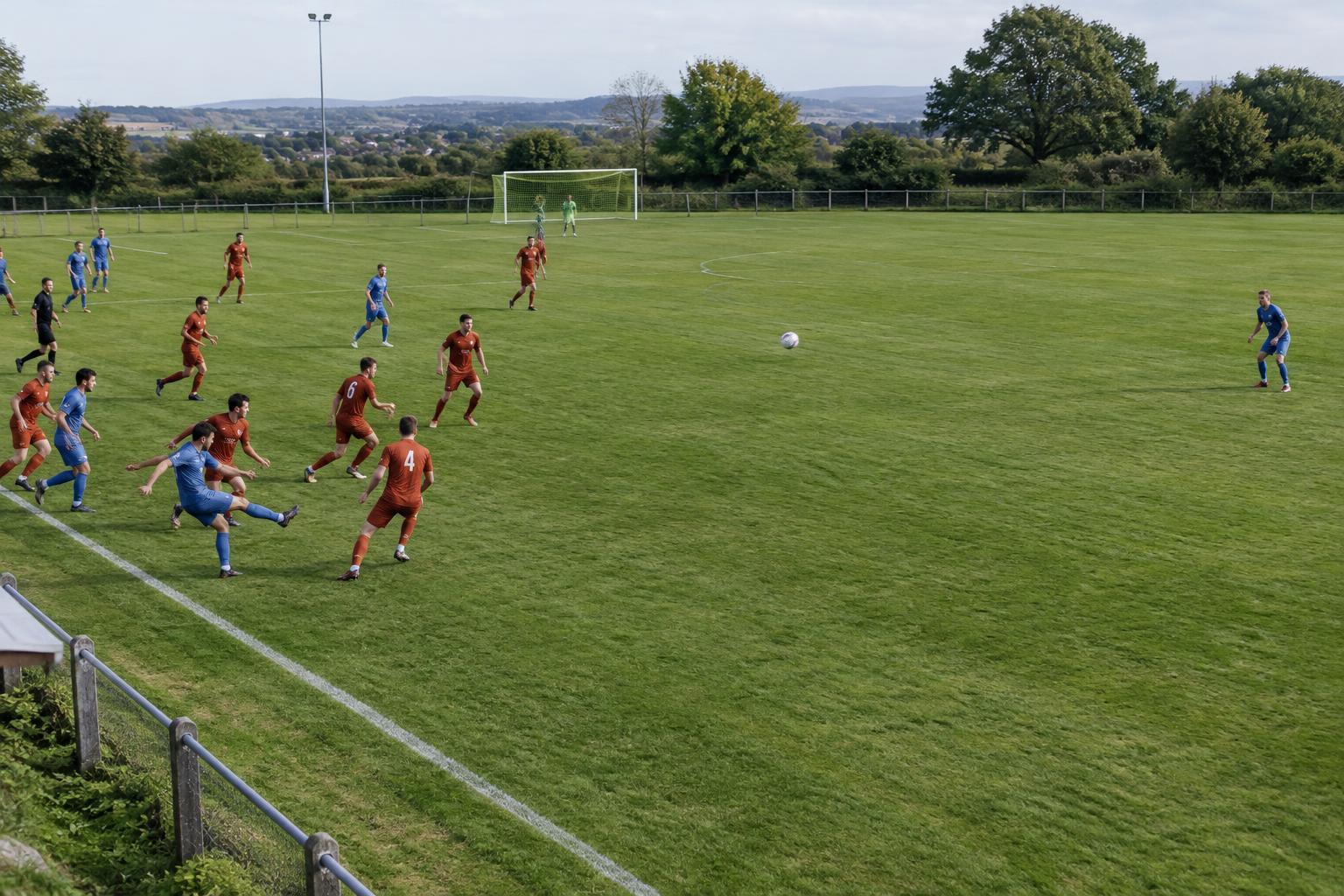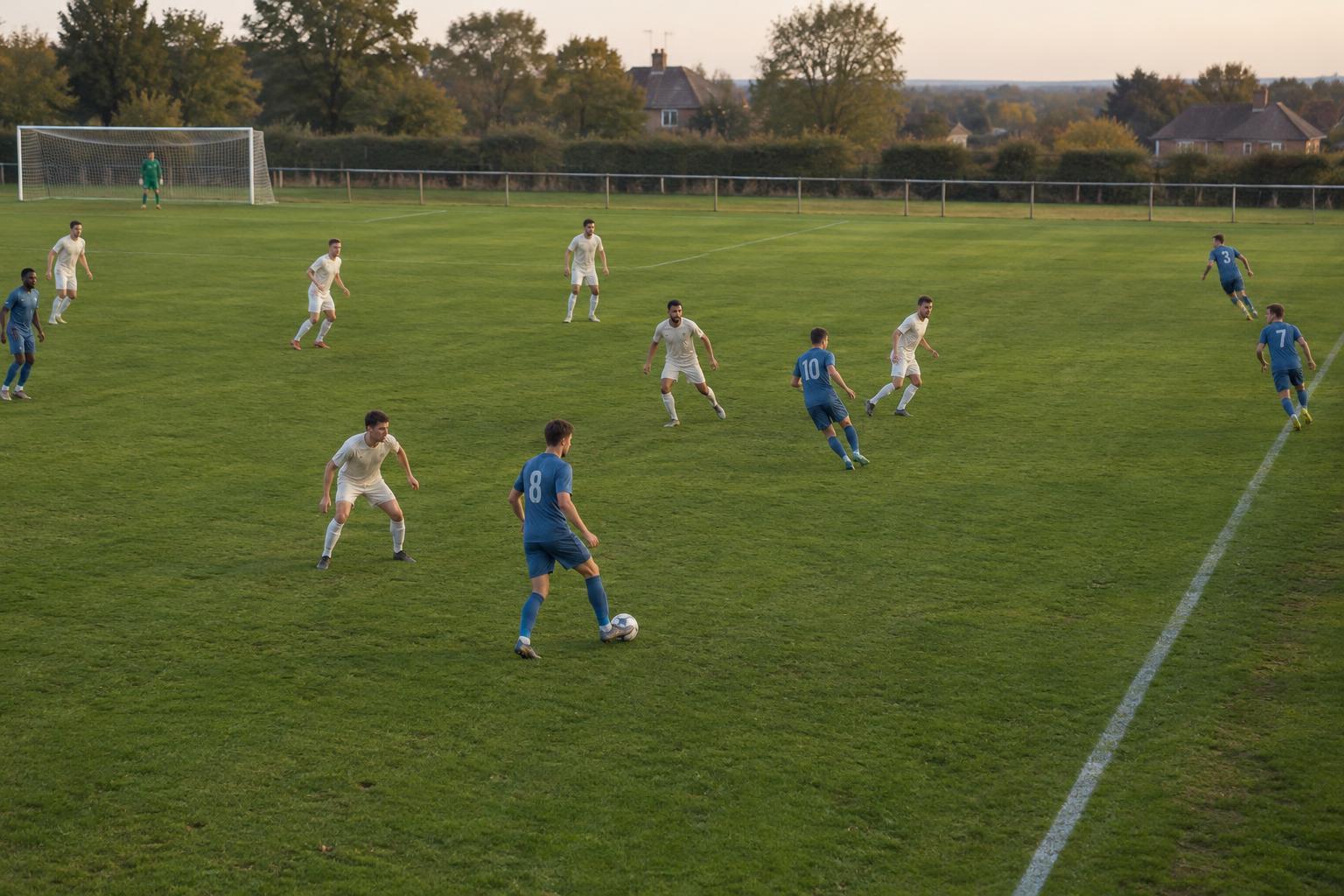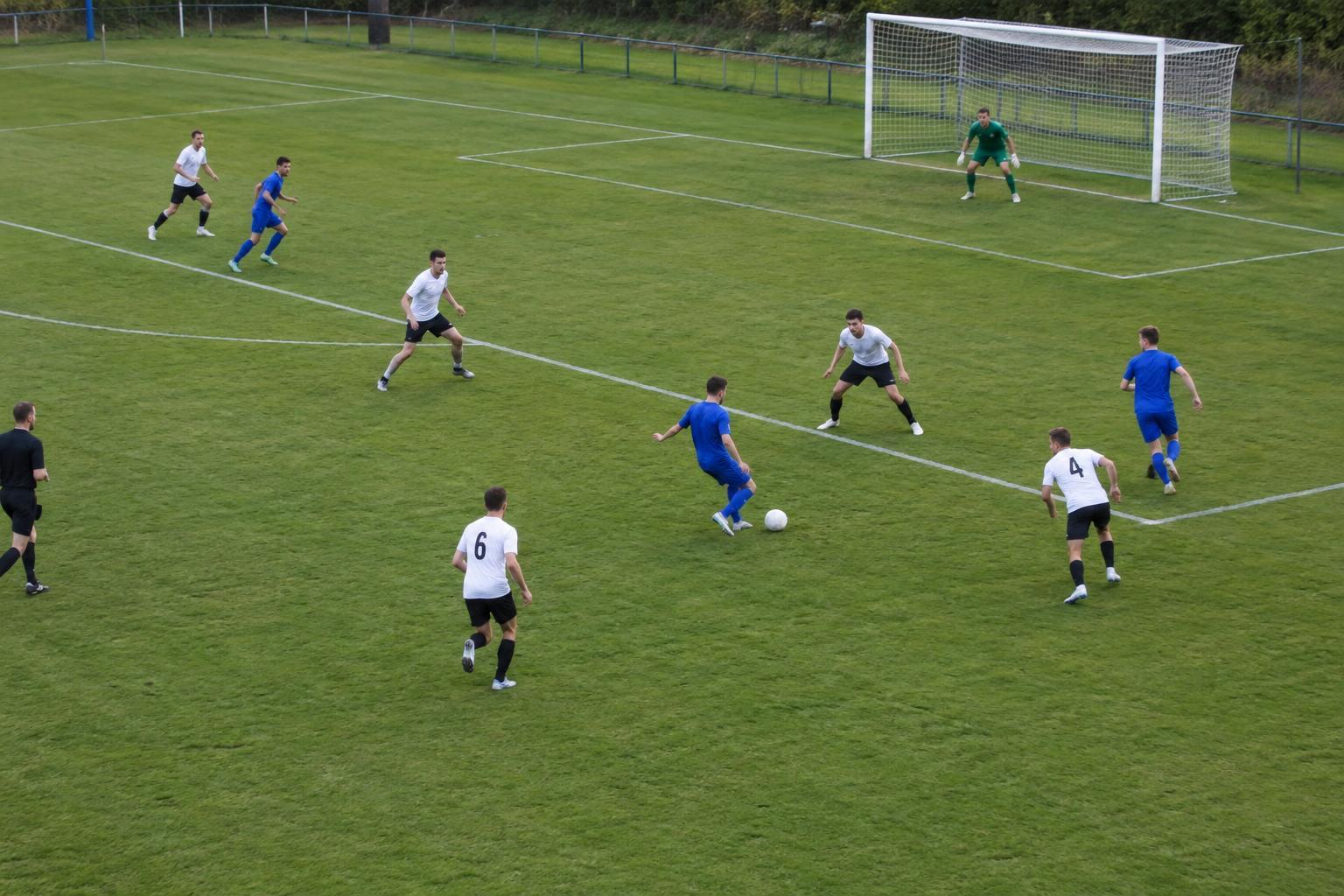
Where are the half-spaces?
Imagine dividing the pitch lengthways into five broad lanes: one central lane, two wide lanes near the touchlines, and a lane between the centre and each wing. Those two in-between lanes are the half-spaces. They are not painted on the grass, and their exact boundaries do not matter. The term simply gives coaches and viewers a way to describe where a player receives the ball or makes a run.
A half-space runs along the pitch rather than referring to one spot. A midfielder might occupy it near halfway, while an attacker might use the same lane close to the penalty area. In both cases, the important question is what that position offers relative to teammates and defenders. The value of a half-space changes as players move and the opposition shifts.
Why can these lanes be useful?
In a wide position, the touchline limits the directions a player can move. In the centre, a player may have routes in several directions but can also be surrounded quickly. The half-space offers a useful middle ground: a player can often see both the centre of the pitch and a teammate out wide, while still being close enough to threaten the goal. This can create passing angles that are harder to find from the touchline.
A player receiving between an opposition midfield line and defensive line is particularly awkward to mark. If a central midfielder steps towards them, space may open behind that midfielder. If a defender steps out, a runner may attack the gap left behind. If neither moves, the receiver may have time to turn, pass or carry the ball forward. None of those outcomes is automatic, but the position asks the defence to make a choice.
How do teams attack through a half-space?
One common pattern starts with a wide player holding their position near the touchline. That player occupies a defender and stretches the opposition across the pitch. A teammate then moves into the nearby half-space to receive a pass. From there, they might play the ball wide, combine with a central attacker or pass into the path of someone running behind the defence. The wide and inside positions work together; the half-space is rarely useful in isolation.
Teams also use short combinations to help a player face forward. A half-space receiver might pass to a striker and continue their run, hoping for a return pass. Or they might draw a defender towards the ball before finding a third teammate moving into the space that opens. These moves depend on timing and support. A pass into the half-space is not necessarily an attacking breakthrough if the receiver has no safe next action.
What can a half-space attack lead to?
Near the penalty area, a player in the half-space has several possible routes towards goal. They may shoot if given room, slip a pass through to a runner, or move closer to the byline and play the ball back towards a teammate. They can also switch play if the defence has crowded one side. The threat comes from having more than one plausible option, which makes it harder for defenders to commit early.
The position can also help a team connect its midfield and attack. A midfielder who arrives in the half-space offers a passing target beyond an opponent’s first line of pressure. An attacker who drops into it can bring others into play. In either case, simply standing in the lane is not enough. Teammates must provide width, depth or a passing outlet, and the player on the ball must be able to find them.
What should you watch for during a match?
When a team has the ball, look first at the player on the wing, then just inside them. Is a teammate available in the gap between the opposition’s wide and central defenders or midfielders? Notice what happens when the ball reaches that player. A defender stepping forward, a runner going behind, or a wide teammate staying near the touchline can tell you why the position matters.
Watch the defensive response too. A compact team may close the half-space and force play outside, where it can press against the touchline. If an attack loses the ball while several players are ahead of it, the opposition may find room to break. Half-spaces are not a shortcut around every defence. They are useful channels because they create connections and choices, and defending them requires a team to stay coordinated.