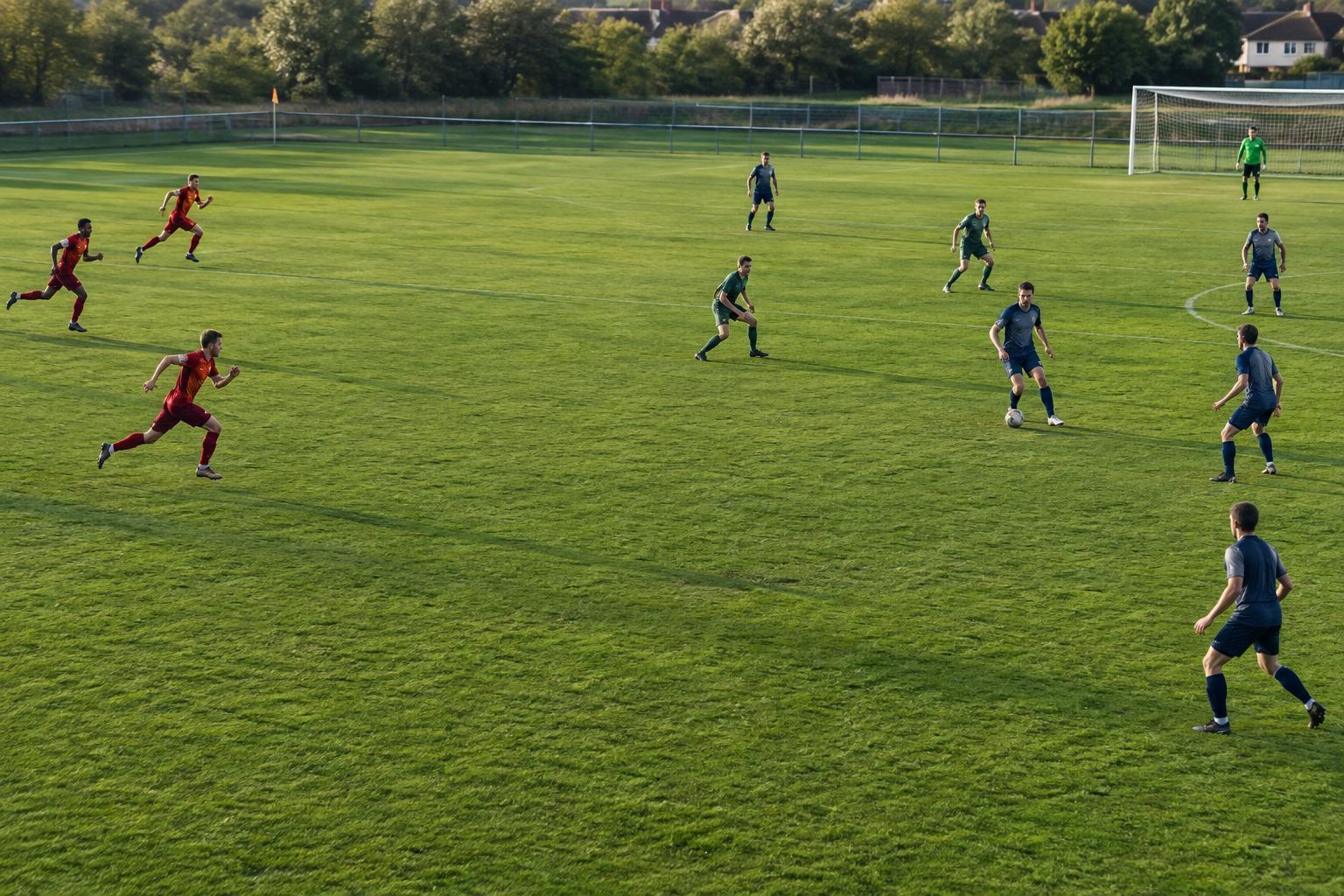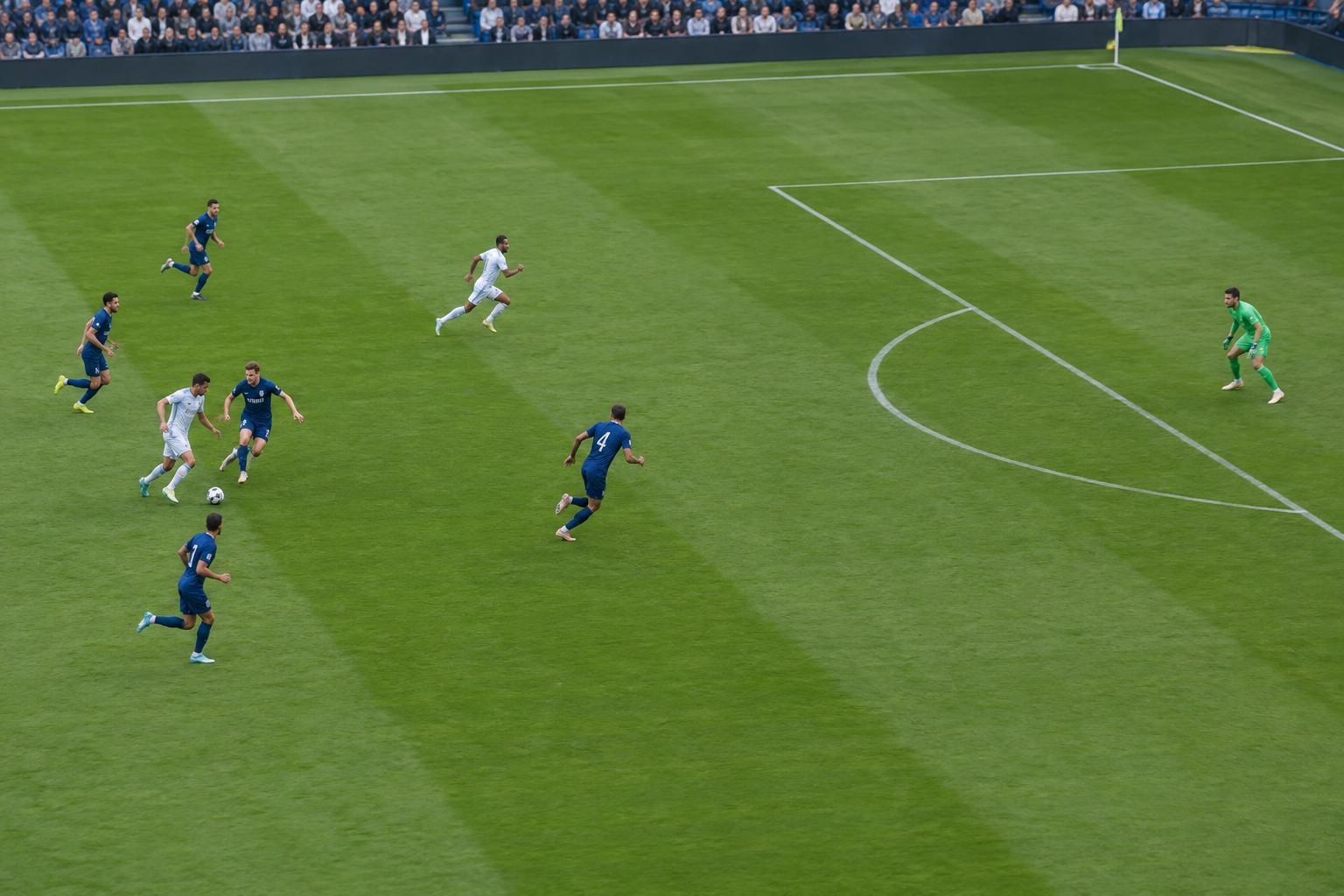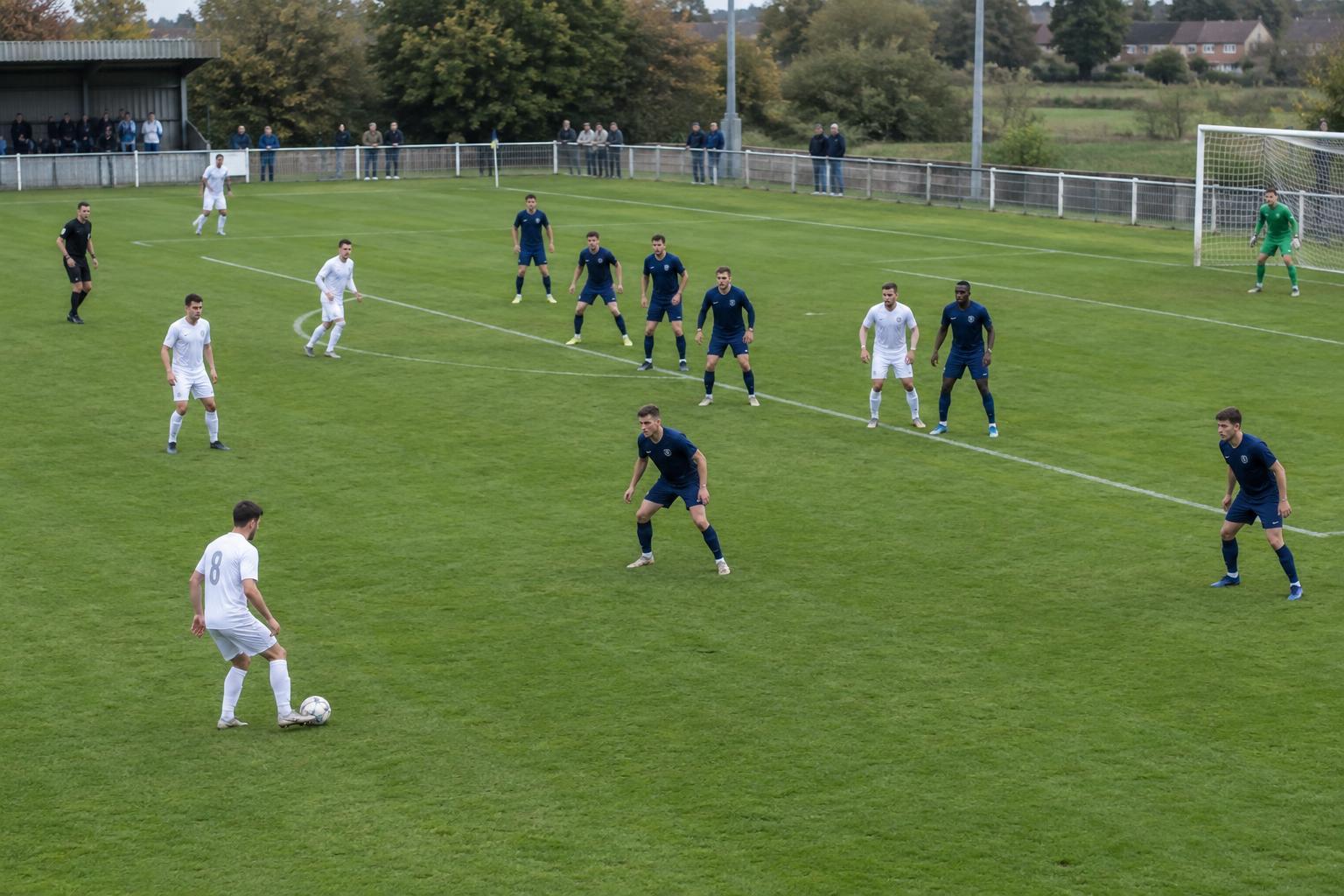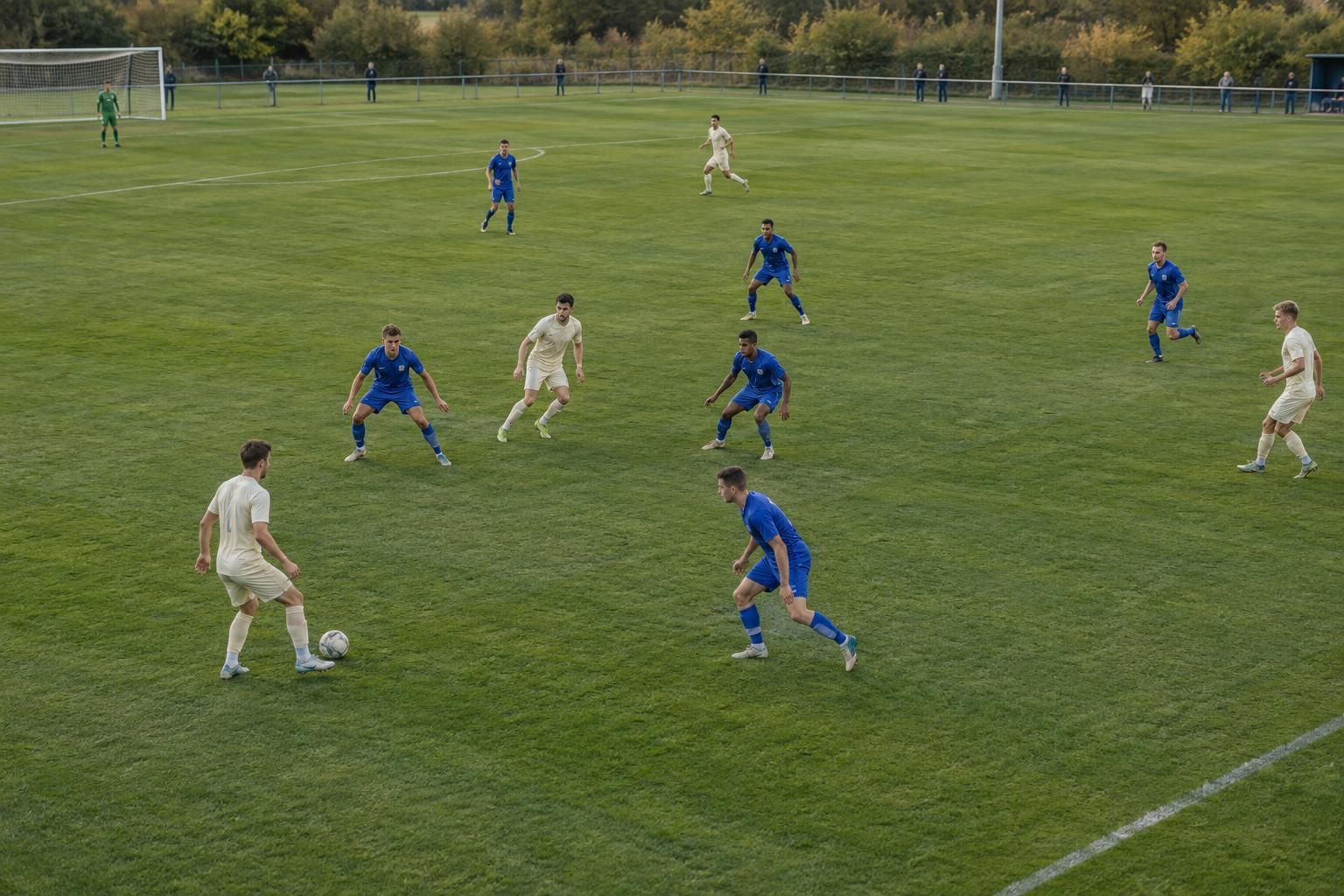
First, understand what the press is taking away
A press is coordinated pressure on the team with the ball. One player may close down the ball carrier while teammates block nearby passing lanes or position themselves to challenge the next receiver. The aim is not always to win the ball immediately. It may be to force a rushed pass, push play toward a touchline, or make a team give up possession with a clearance.
For the team building an attack, the key question is where the press leaves space. Opponents cannot crowd the ball, cover every short option and protect the space behind them equally well. Playing through, around and over the press are three ways to use those trade-offs. They are not fixed styles that a team must commit to for an entire match: the best route can change from one pass to the next.
Play through: find a receiver between the pressing players
Playing through a press means progressing with passes into, and then out of, the spaces the pressing team is trying to close. A defender might pass to a midfielder positioned behind the first line of pressure. If that midfielder can receive facing forward, the team has moved beyond at least one opponent without sending the ball a long distance.
This route depends on angles and timing as much as technical skill. A receiver needs to be visible to the passer, far enough from a marker to control the ball, and aware of what to do next. Supporting players can create a passing lane by moving a defender away or offering a quick return pass. Sometimes a short pass draws a presser toward the ball, opening a new lane for the following pass.
The danger is clear: losing the ball in a central area can give the opposition a short route to goal. Playing through is more promising when the passer has time to see the lane and the receiver has an exit pass or room to turn. If the receiver is tightly marked with their back to play, forcing the pass may serve the press rather than beat it.
Play around: move the ball beyond the crowded side
A press often concentrates players near the ball. Playing around it uses passes across or outside that concentration to reach a teammate with more space. A centre-back, for example, may pass back to the goalkeeper, who switches play to the opposite side. The return pass is not necessarily a retreat: it can change the angle of the attack and make pressing players cover more ground.
The wider route can involve several short passes or one longer switch. What matters is whether the ball travels faster than the defenders can shift across. A wide receiver with space can carry forward, combine with a teammate or draw a new challenge before passing inside. Positioning on the far side matters too; if everyone moves toward the ball, there may be nobody available when the switch arrives.
Playing around a press can be safer than threading a central pass, but it still requires care. A slow pass across the back line may invite an interception, while a pass toward the touchline can leave its receiver with fewer escape routes. Players need to judge whether the far side is genuinely open or whether the pressing team is waiting to trap the ball there.
Play over: use the space behind the pressure
When opponents push forward to press, they may leave room behind them. Playing over the press sends the ball beyond the crowded area, either to a teammate making a run or into space for one to contest. The pass need not be a hopeful clearance. Its direction, height and timing can help the receiving team retain possession or challenge for the second ball.
A pass over the first line might find a midfielder in space; a longer ball might target a forward running beyond the defence. Those are different levels of risk. For the longer option, nearby teammates must be ready for a knockdown, a loose ball or an immediate defensive challenge. Without that support, the team may escape pressure only to return possession to the opponent.
This route is useful when short lanes are closed and there is a clear runner or an area worth attacking. It can also discourage opponents from pressing quite so high if they have to keep protecting the space behind them. But a long pass with no realistic receiver offers little control, even when it moves the ball upfield.
Choose the route that the next pass makes possible
The three routes work best as connected options. A team may attempt a short pass through the first line, then switch around the next group of defenders. A few successful switches may pull opponents wide enough to open a central lane. Showing a short option can draw pressure forward and create room for a pass over it.
For players, a useful habit is to look beyond the first available pass. Can the receiver turn, pass on or secure a loose ball? Where will teammates be if possession is lost? The answer depends on the opponents’ positions, the quality of the passing lane and the support around the ball. Beating a press is not simply about choosing the boldest pass. It is about finding a route that advances play while giving the next player a workable decision.