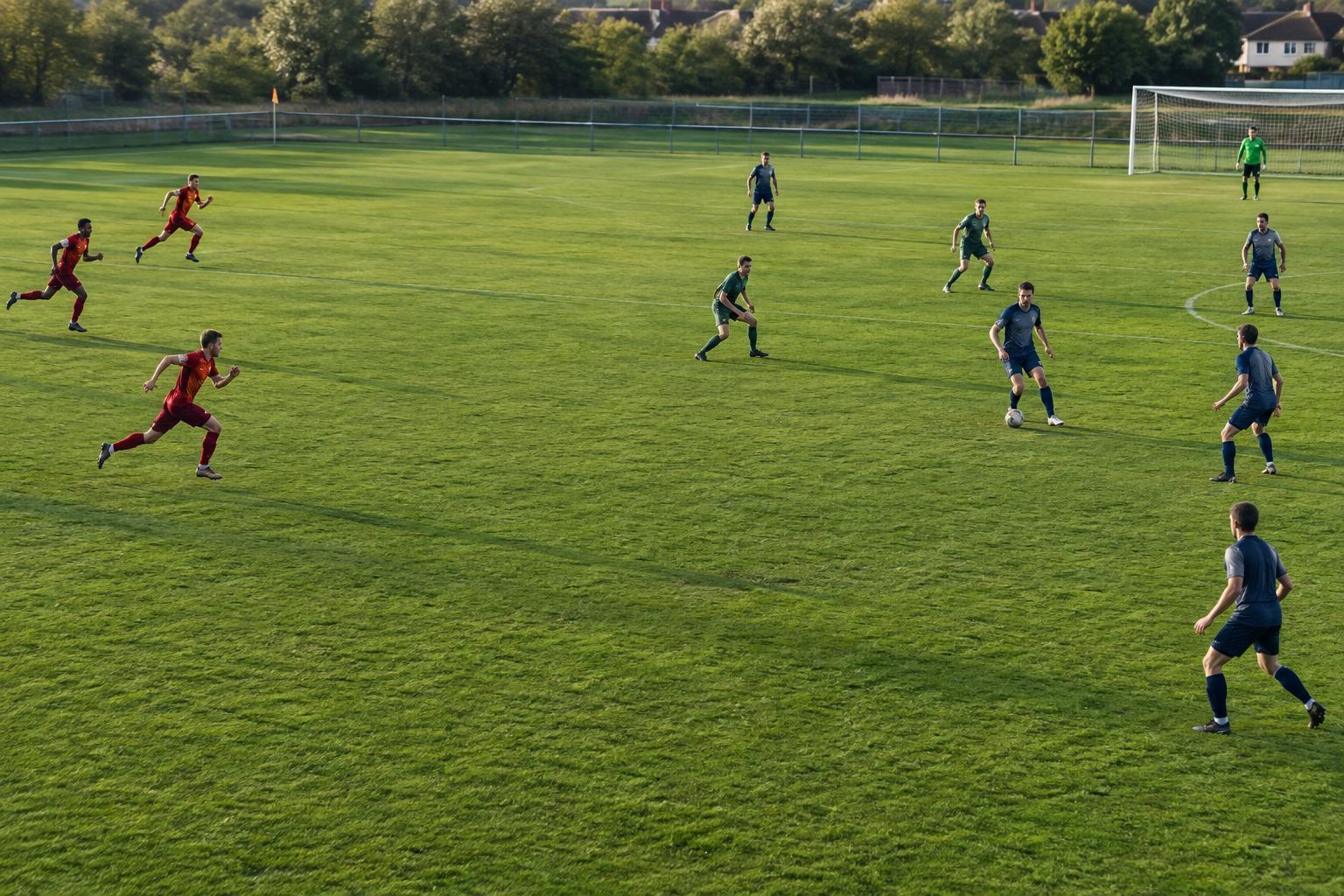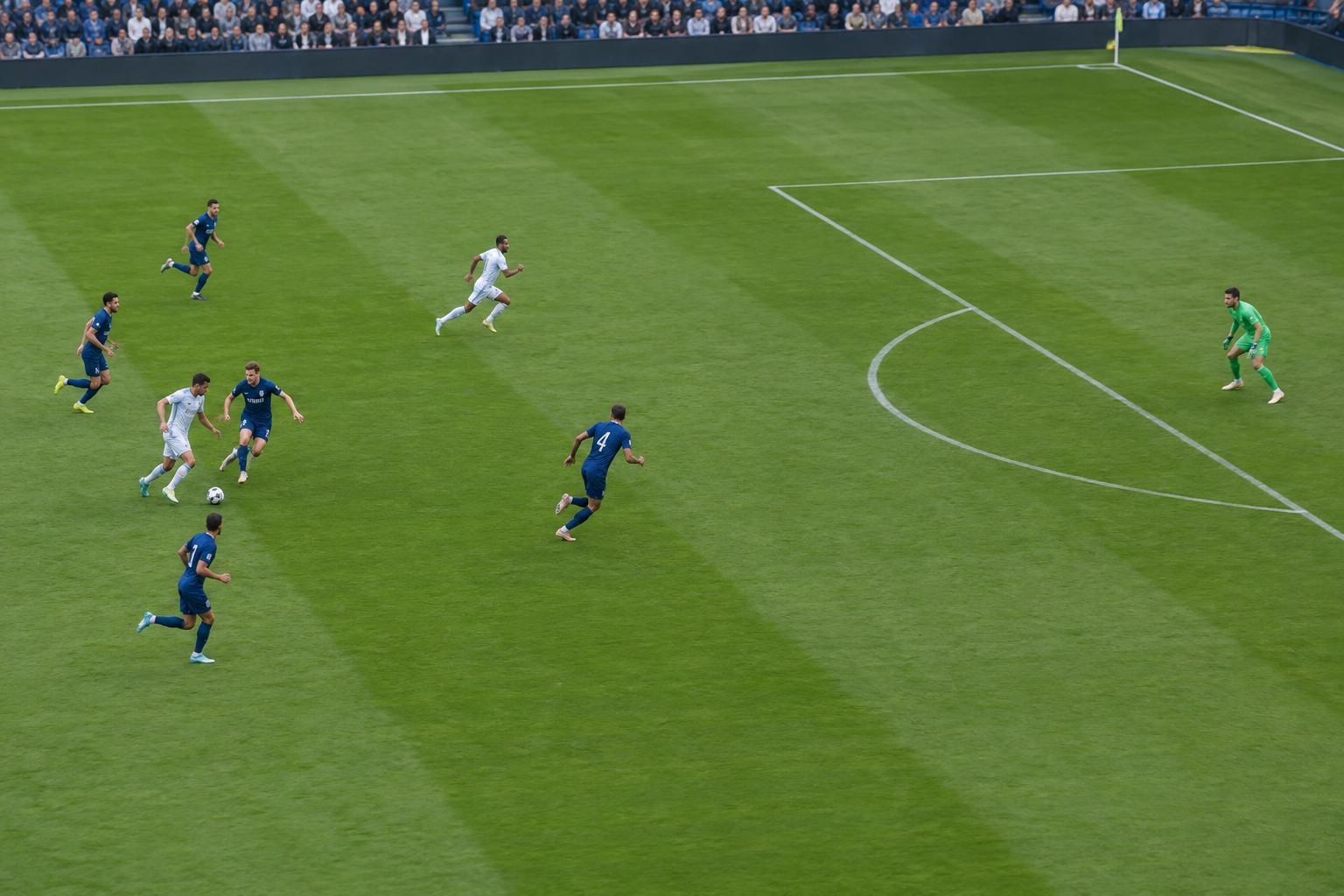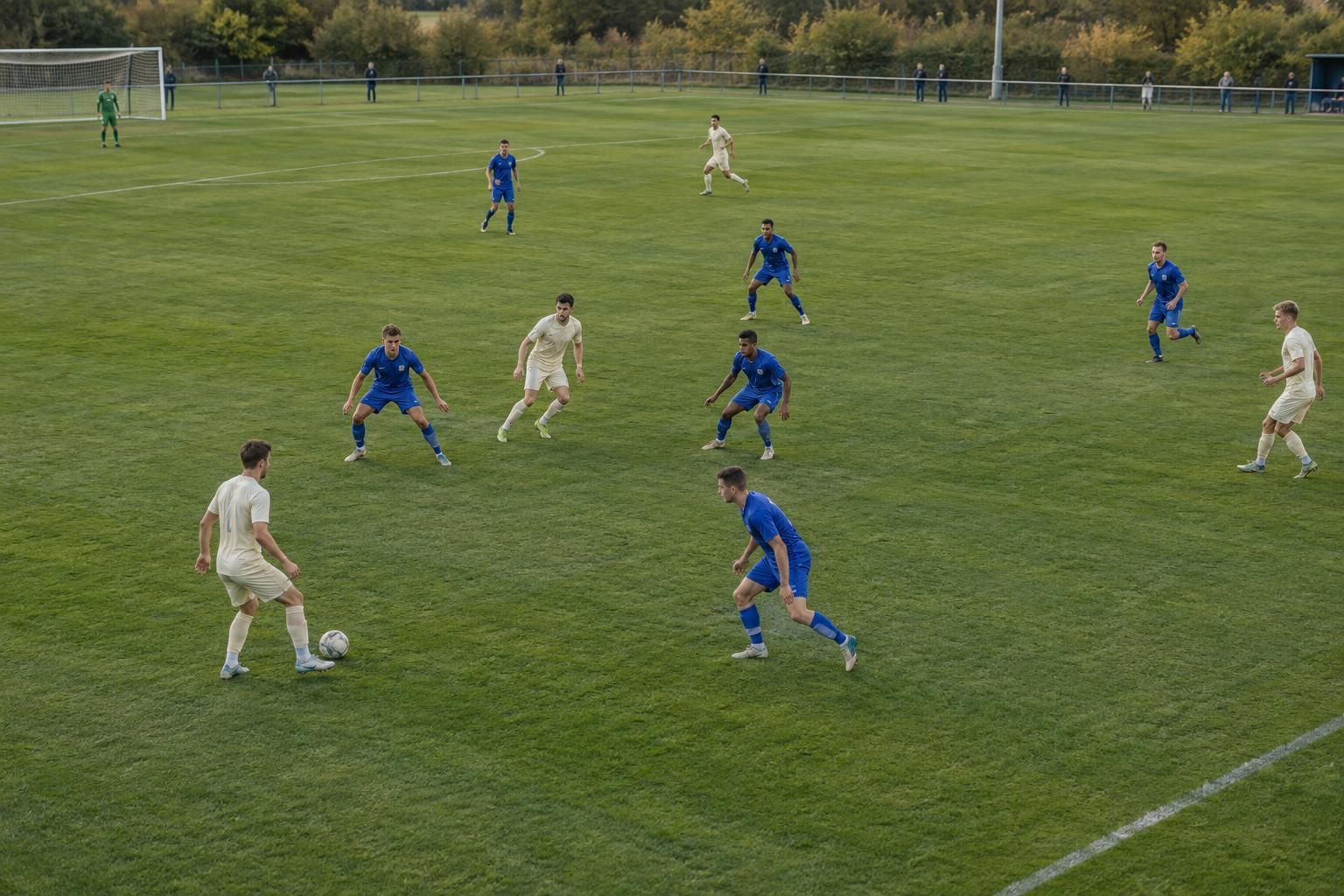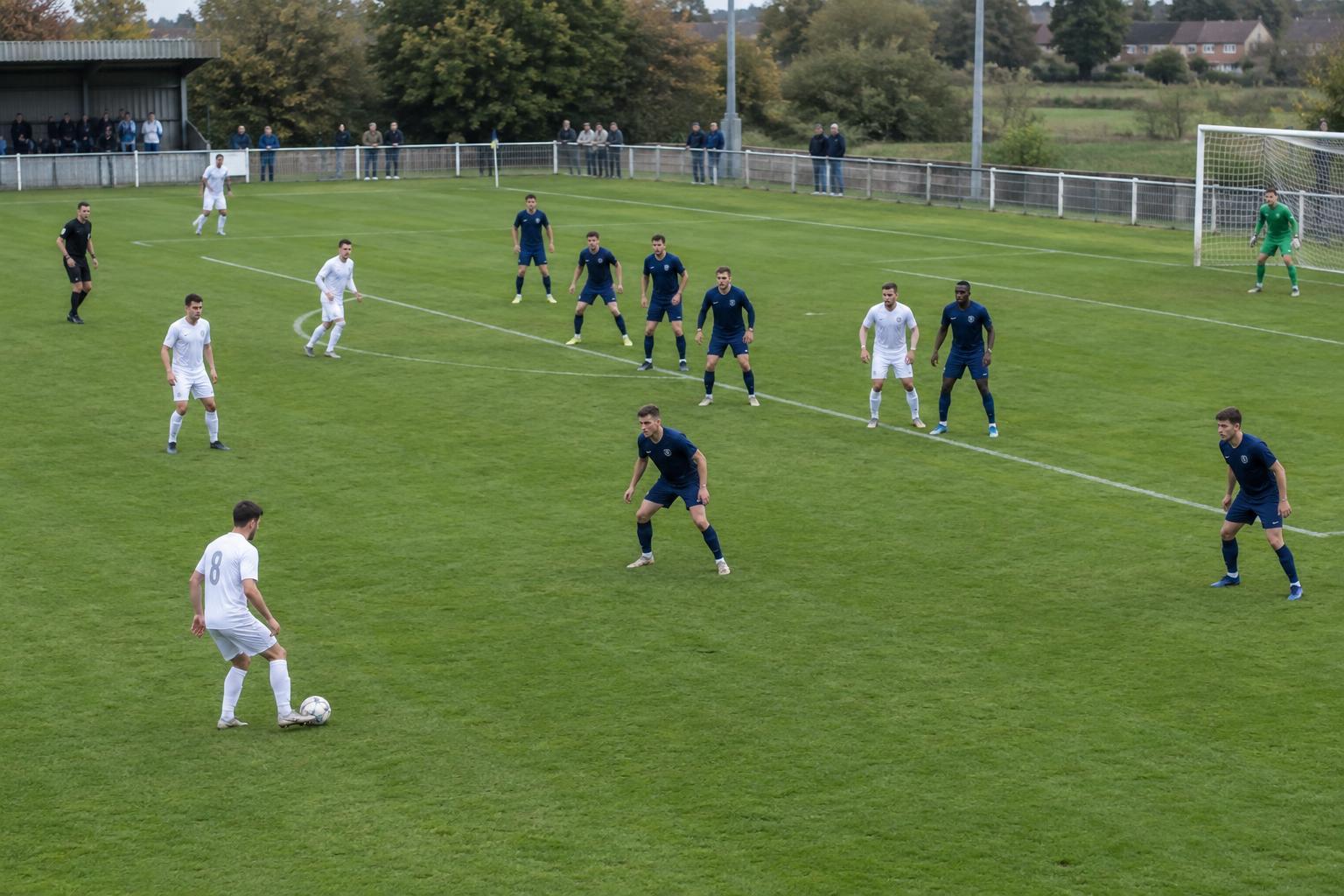
Compactness is about usable space
A team is defensively compact when its players are positioned close enough to protect important spaces and help one another. The aim is not to squeeze every player into the smallest possible patch of grass. It is to make useful attacking options difficult: a pass into a central midfielder, a turn between the lines, or a run through a gap in the defence.
Compactness has two dimensions. Vertical compactness describes the distance from the forwards to the midfielders and from the midfielders to the defenders. Horizontal compactness describes the distance across a line, such as the gaps between defenders. A team can be narrow but still leave a large gap behind its midfield; it can also keep its lines close while leaving an easy passing lane between players on the same line. Good defensive spacing considers both.
Why the gaps between lines matter
The space between midfield and defence is especially valuable to an attack. A player receiving there may be able to turn, combine with a teammate or draw a defender out of position. If the midfield and back line stay connected, the receiver has less time to control the ball and choose a forward pass. The defender can challenge while a midfielder applies pressure from behind.
The forwards matter too. If they press the ball while the midfield stays far back, an opponent may pass through the first line into an open central area. If the midfield steps up without the defence following, space can appear behind it instead. Compactness depends on coordinated movement: when one line advances, drops or shifts toward the ball, the others need to adjust. The useful distance between lines is not fixed; it changes with the ball’s position, the pressure on it and the threat of a run behind.
How compact teams guide the attack
Defending compactly often means protecting the centre first. Players can position themselves to block passes into dangerous pockets, then shift together as the ball moves. This may encourage the opponent to play wide, where the touchline limits the directions available to the player on the ball. A wide pass is not automatically safe for the defending team, but it can provide a clear moment for nearby players to close down and offer cover.
Pressure and compactness work together. A back line that pushes high without pressure on the ball may leave room for a pass over or through it. A deep, tightly packed defence may protect the area near goal but give the opponent time to circulate the ball outside it. Teams therefore choose different shapes and heights according to their players and their plan. The shared principle is that the spaces they want to protect should remain difficult to access.
The trade-off: protecting one space exposes another
No defensive shape can cover the whole pitch equally. A narrow team may make central passes difficult but allow the opponent time near the touchlines. A team that moves across aggressively to stop a wide attack may leave space on the far side if the ball is switched quickly. Closing the distance between midfield and defence can also create space behind the back line, particularly when the defenders step up.
Compactness is therefore not a promise that the opponent will have no chances. It is a decision about which chances to make harder. Defenders must judge when to stay in their shape and when to leave it to press, track a runner or challenge for the ball. Cover from teammates makes those decisions less risky. Without it, one player stepping out can turn a compact block into a clear passing lane.
What to watch during a match
To spot compactness, look away from the ball for a moment. Where are the defending team’s midfielders in relation to their back line? When the ball travels across the pitch, do the players shift together, or do gaps open between them? Notice whether an attacker can receive between lines facing goal, or has to play backward because pressure arrives immediately.
Also watch what happens after possession changes. A team may briefly be spread out from its own attack and need time to recover its shape. That moment can reveal why spacing matters: a pass that would be blocked against an organised defence may become available before the lines reconnect. Compactness is best understood as a moving relationship between players, not a still image of a formation.