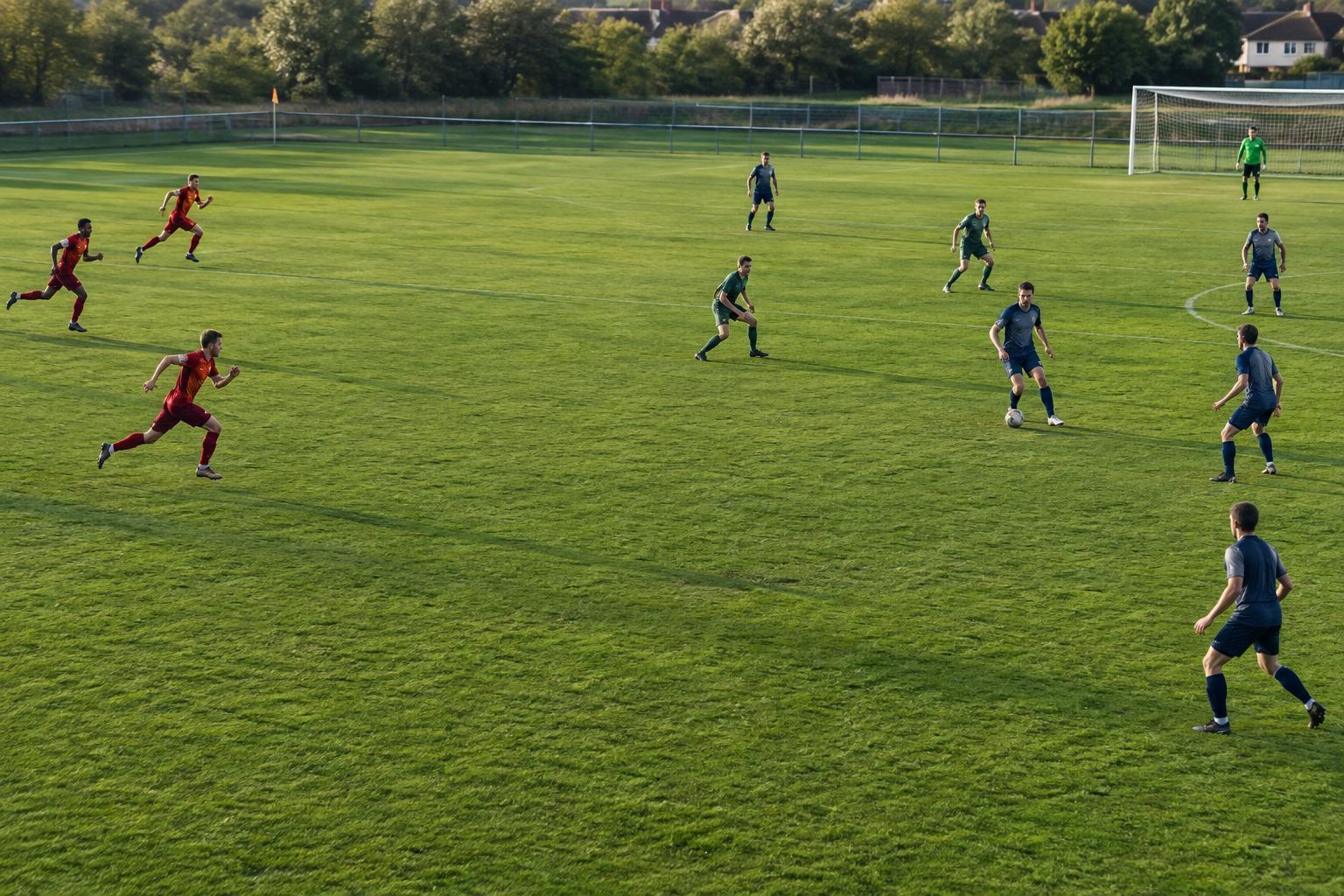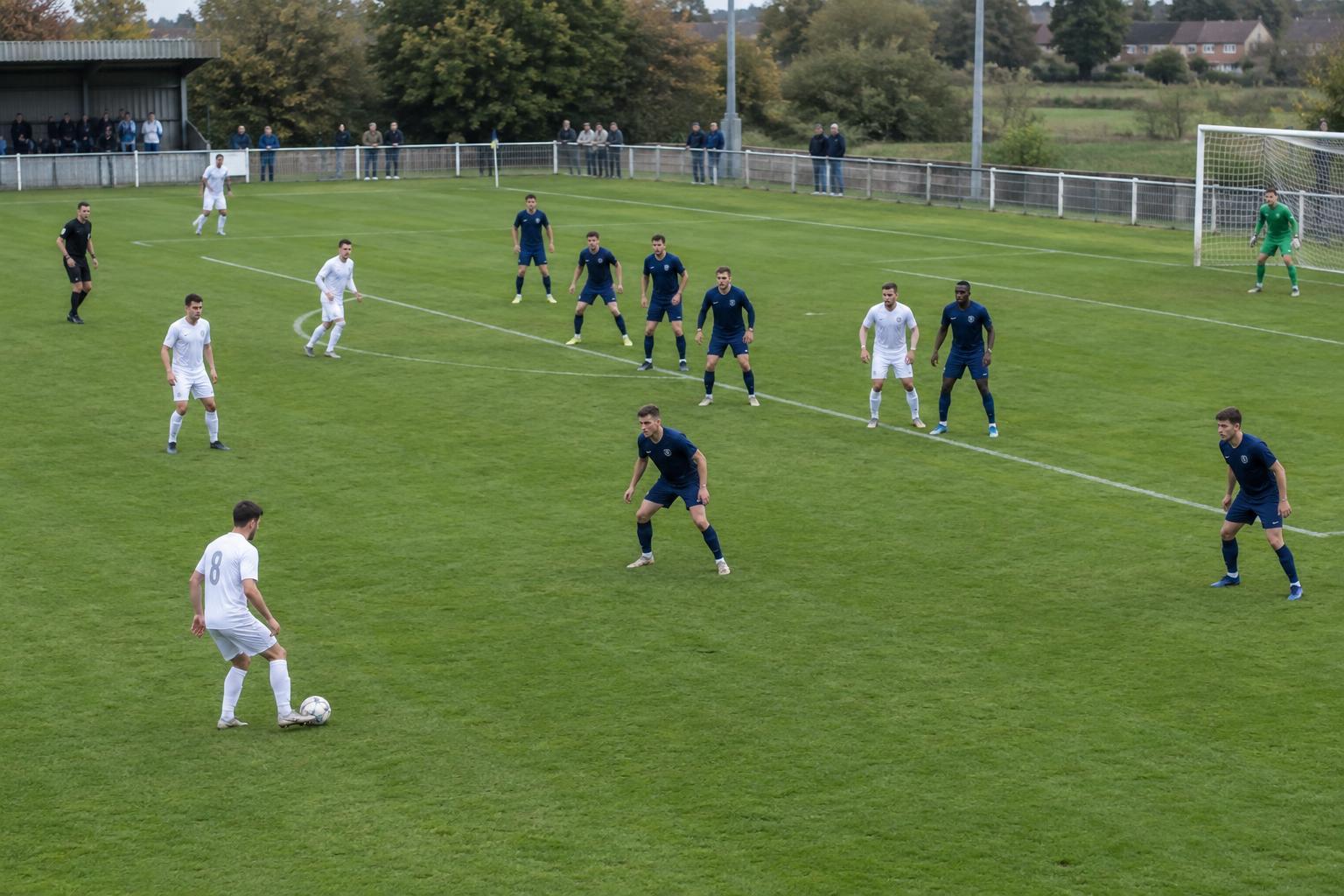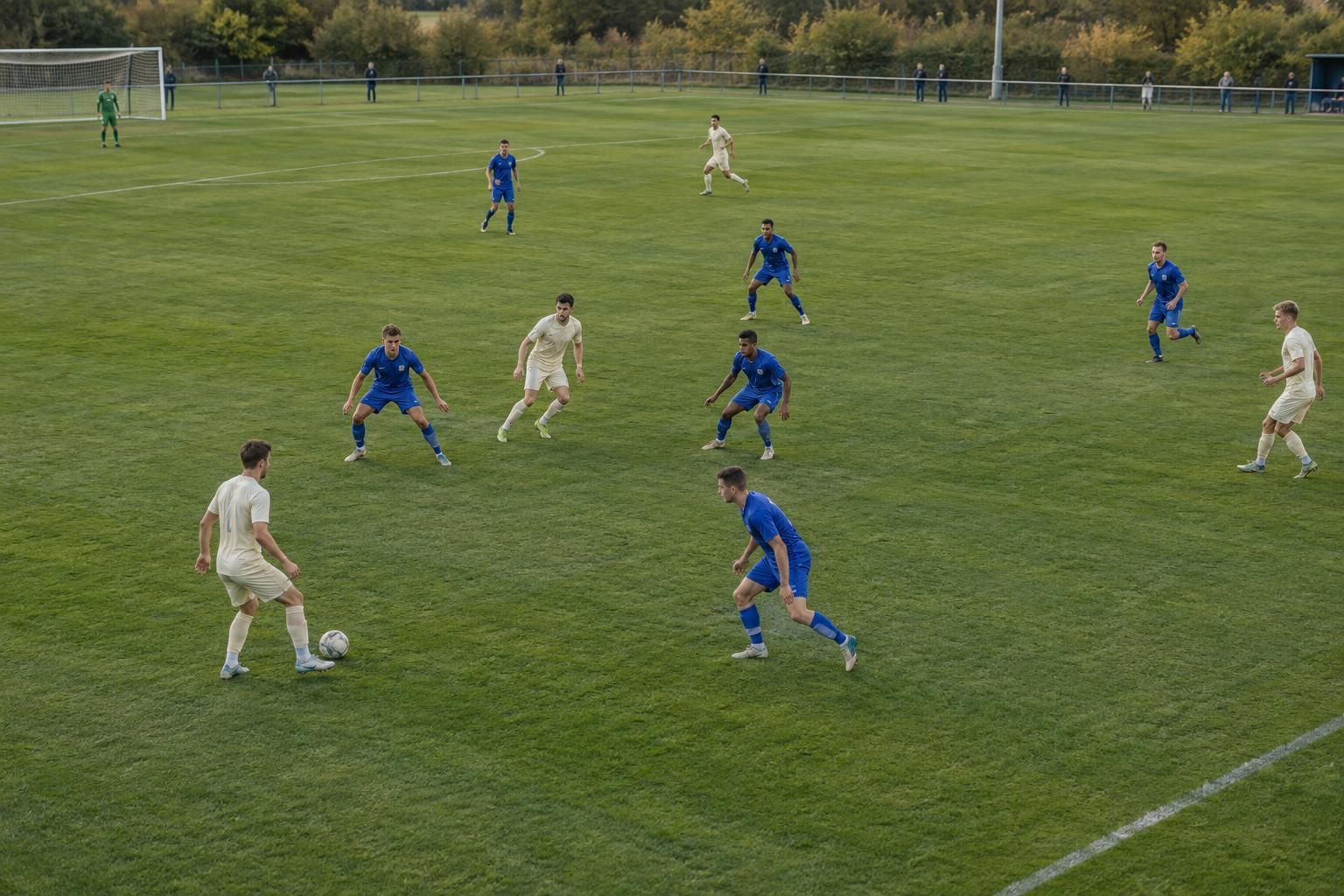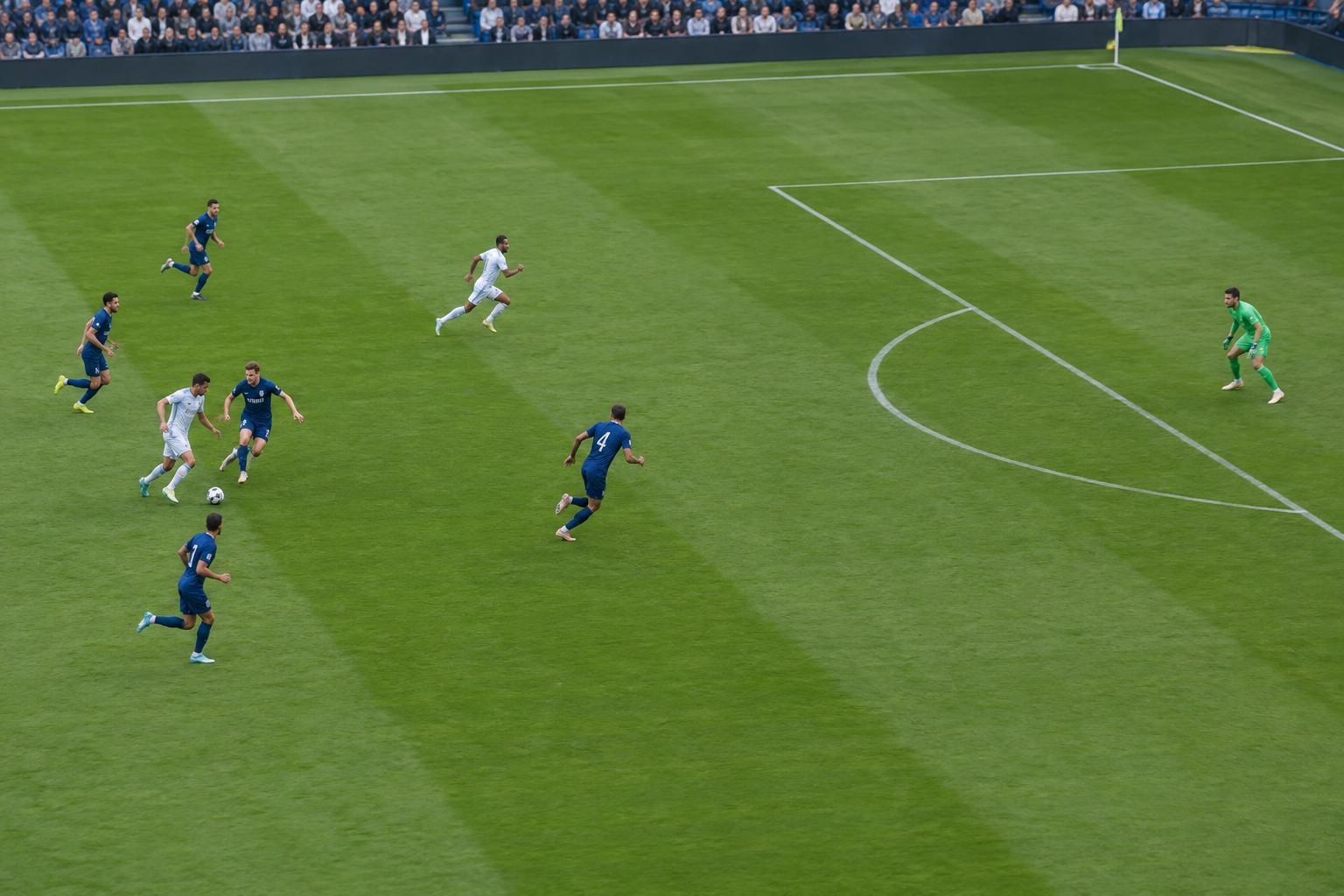
Why play with space behind the defence?
A high defensive line means the defenders position themselves relatively far from their own goal, particularly when their team has the ball or is pressing. Moving up reduces the distance between defenders, midfielders and forwards. That compact shape can make it easier to contest loose balls, limit room between the lines and sustain pressure in the opposition half.
The trade-off is visible whenever an opponent looks up with time to pass. There may be a large area between the defenders and their goalkeeper, and a well-timed run can turn one pass into a chance. Teams do not protect that area simply by asking their fastest defender to win a race. They try to control whether the pass can be played, where it can go and who is ready to deal with it.
Pressure on the ball is the first layer
The most important protection often comes from players well ahead of the defensive line. A forward or midfielder who closes down the ball carrier can reduce the time available to spot a runner and deliver an accurate pass. The presser may also approach from an angle that discourages a pass through the centre, making the opponent play toward the touchline or onto a less comfortable foot.
Behind that first challenge, teammates cover nearby passing options. If the ball carrier cannot receive cleanly, turn and look forward, a run behind becomes harder to use. This is why a high line and an organised press usually belong together: defenders can hold a bold position more safely when the players in front of them are restricting the pass.
Pressure is not an on-off switch. If an opponent escapes the press and has time with their head up, defenders may need to retreat before the pass is made. Holding the same line regardless of the ball carrier’s freedom turns an advantage in compactness into an avoidable risk.
The line moves together, but not blindly
Defenders protect space by coordinating their starting positions. When the ball is under pressure, they can step up together, narrowing the area an attacker can use while remaining onside. The offside rule can help, but an offside trap is not a complete defensive plan. One defender dropping deeper than the others may keep a runner onside, while a perfectly legal run from an attacker’s own half can still threaten the space behind.
Communication matters because each defender sees a different part of the pitch. Centre-backs may direct the line, while a full-back on the far side must stay alert rather than drifting deeper without noticing. Their positions also depend on the opponent’s shape. A forward standing on a centre-back’s shoulder, for example, demands different attention from a midfielder making a late run through a gap.
Good line management includes knowing when to drop. If a passer has room to lift a ball over the defence, an early step toward goal gives defenders a better chance of tracking the runner. That adjustment need not mean abandoning the high line for the rest of the match; it is a response to a specific moment.
Recovery runs and covering angles
Even a coordinated press and line will sometimes be beaten. At that point, the defenders’ job changes from preventing the pass to managing the chase. A recovering defender may aim to run between the attacker and goal rather than directly toward the ball. That route can slow the attack, limit the shooting angle or give a teammate time to recover.
Cover is especially important when one defender steps out to challenge a receiver. Another defender can move across to guard the space left behind, while midfielders sprint back to pick up runners arriving later. The closest player does not always need to win the ball immediately. Delaying the attacker can be more useful than making a risky challenge that opens a clearer route to goal.
The goalkeeper completes the picture
A goalkeeper behind a high line often starts farther from the goal than one behind a deep block. From there, they may be able to reach an overhit through ball before the attacker. Their position also affects the attacker’s choices: a ball played into the space must have the right weight to evade both the defenders and the goalkeeper.
Coming out carries its own risk. The goalkeeper must judge the speed of the pass, the runner’s head start and whether a defender can recover. A late or uncertain decision may leave the goal exposed. Effective high-line defending therefore depends on shared decisions across the team, not just bravery from the last player back.
The guiding question is whether an opponent can play behind the line right now. When the ball is pressured, defenders can often hold or advance. When the passer has time and a clear view, they prepare to drop, cover or intercept. Watching that relationship between pressure on the ball and movement at the back is a useful way to understand how a high line survives its apparent vulnerability.