Start with shape, not the material label
Boot shopping often begins with a choice between leather and synthetic uppers. It is a useful distinction, but it cannot tell you whether a particular pair will fit. The last—the shape around which a boot is built—affects the room available at the toes, the width through the forefoot and how securely the heel sits. Two leather boots may feel less alike than a leather and a synthetic boot made on similar lasts.
A good fit should hold the foot without pinching it. Your heel should not slide noticeably when you change direction, and your toes should have enough room to avoid being pressed against the front. Try boots with the socks you play in, lace them fully, then walk, jog and make a few gentle cuts if the shop allows it. Notice pressure points as well as overall tightness: material may soften, but an awkward shape is unlikely to become the right shape.
How leather tends to fit and change
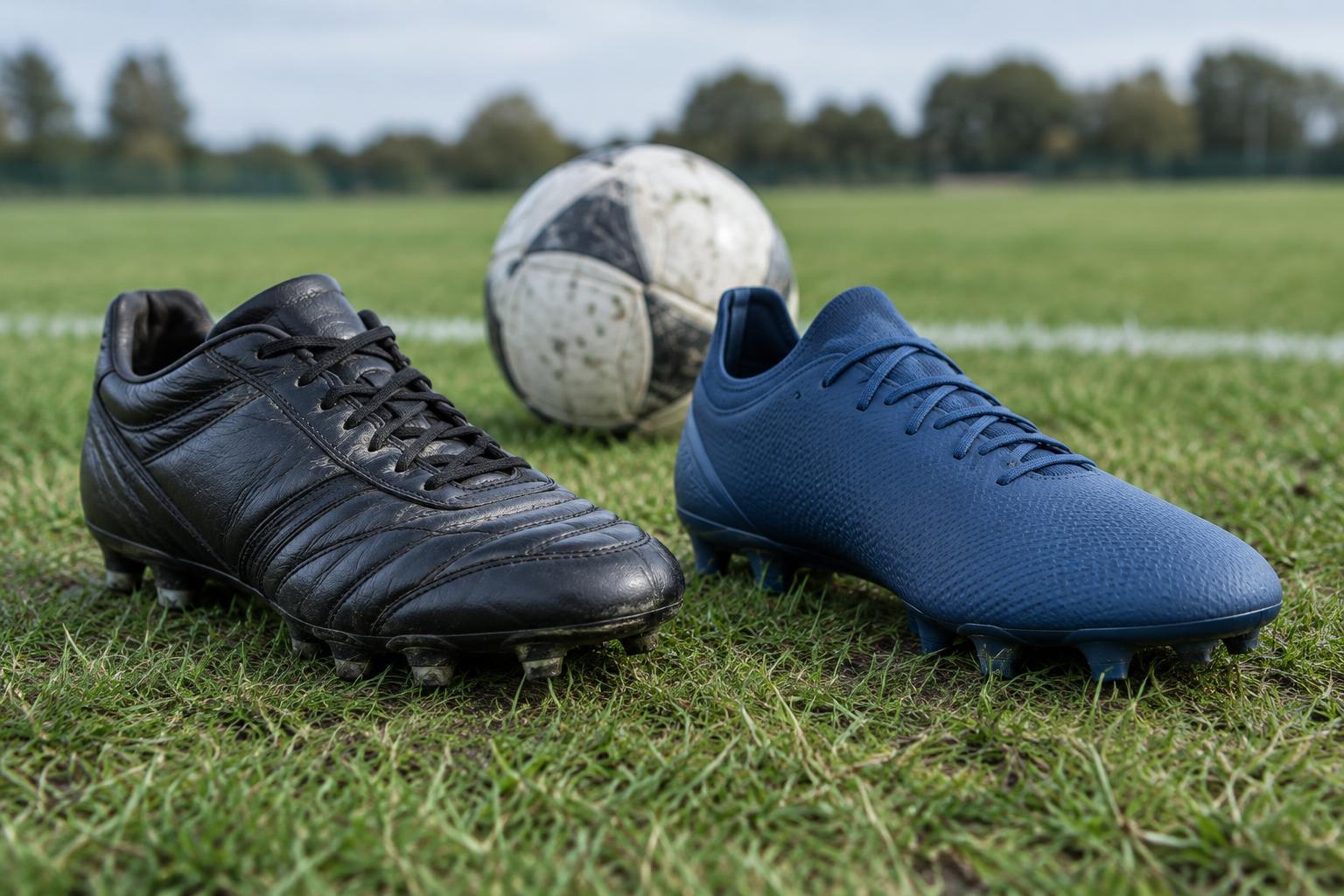
Leather uppers are often valued for a supple feel that can adapt to the foot with wear. That does not mean every leather boot will stretch dramatically. The amount of give depends on the type and thickness of leather, the lining, seams and any reinforced areas. A snug leather forefoot may become more comfortable, while a cramped toe box or a heel that slips from the start is a different problem.
Leather can feel soft around the ball at close range, particularly when the upper is relatively thin. Players sometimes describe this as a cushioned touch, though much of that sensation also comes from padding and construction. The trade-off is that leather needs some attention after muddy or wet sessions. Remove surface dirt, let the boots dry away from direct heat and follow the maker’s care guidance. Soaking them or placing them by a radiator can leave the upper stiff or misshapen.
What synthetic uppers offer
Synthetic is a broad category, not a single feel. A thin synthetic upper may feel close to the ball, while a padded or textured one can feel quite different. Some models are built to keep a consistent shape over time; others soften with use. Compared with leather, it is safer to expect less change in width, so a synthetic boot that feels painfully narrow in the shop is a poor bet.
Many synthetic uppers are straightforward to wipe clean, and some absorb less water than leather. That can be convenient for regular training, although no upper alone determines how a boot performs in rain. Seams, the tongue and the way the boot is made all matter. Nor does a synthetic label guarantee a lighter boot: weight varies by model and size, as well as by material.
Touch is personal—and fit affects it
It is tempting to treat leather as the choice for touch and synthetic as the choice for speed. Neither shorthand is reliable. A boot that moves around your foot can make contact with the ball feel less predictable, whatever its upper is made from. Likewise, an overly tight boot can distract you during a match. A secure, comfortable fit gives you a better basis for judging the feel of the material itself.
Look beyond the upper when comparing pairs. Lacing placement, padding, the shape of the toe and the stiffness of the soleplate can all change how a boot feels during passing, striking and running. You may prefer the softer sensation of one leather design or the more direct sensation of a thin synthetic design. Neither preference needs to be universal: the useful question is whether the boot feels natural during the movements you actually make.
A practical way to choose
Try on more than one model in your usual size and, where available, a nearby size. Do not choose an uncomfortable pair on the assumption that it will eventually break in. Check for toe pressure, rubbing at the heel and tight spots across the widest part of your foot. If you can, compare the boots later in the day, when your feet may be a little fuller than they are first thing in the morning.
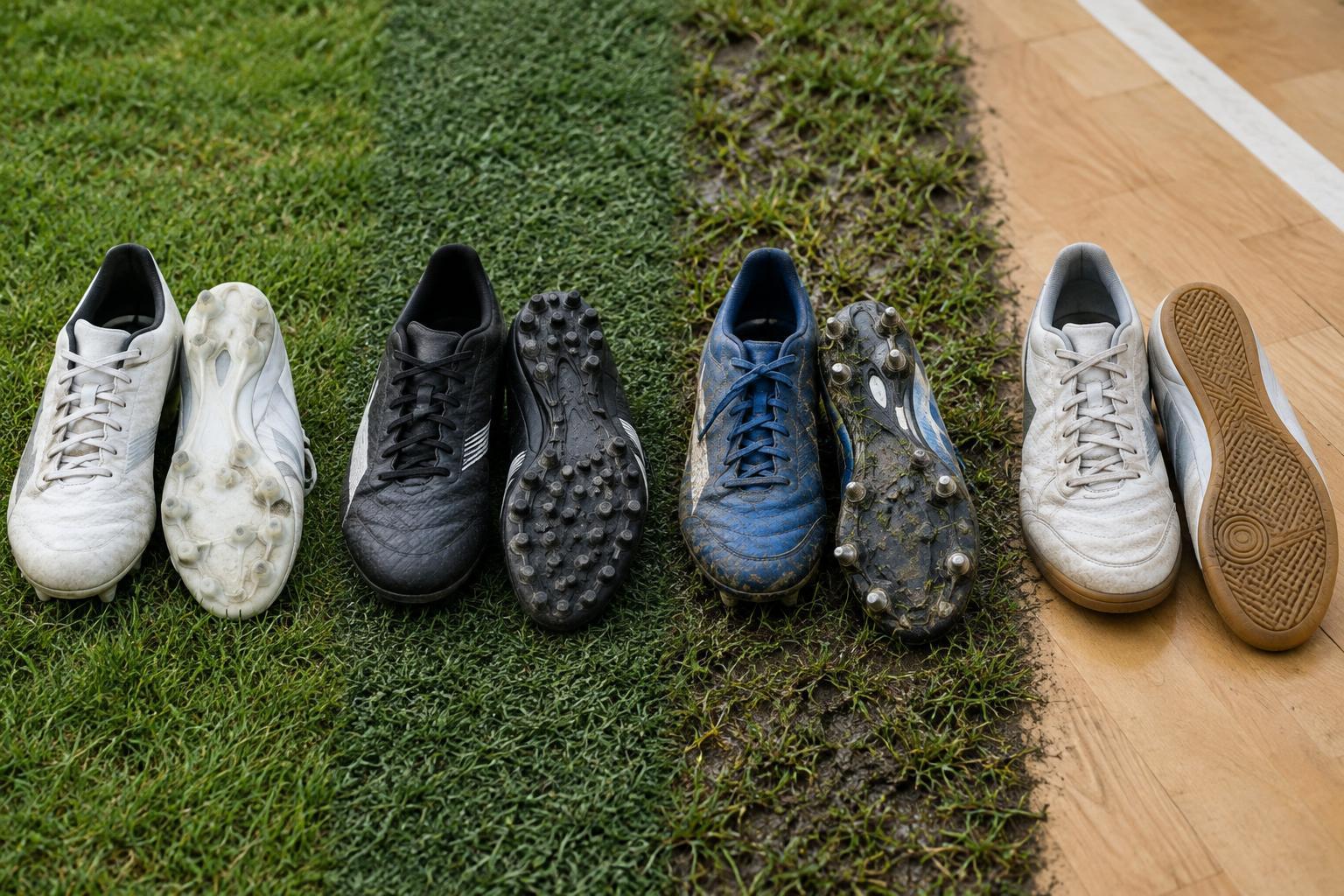
Finally, choose a stud pattern suited to the surface you play on; upper material does not make an unsuitable soleplate appropriate. If you want a boot that may mould somewhat to your foot and you do not mind caring for it, leather is worth trying. If you prefer a fit that is closer to what you feel out of the box, explore synthetic options. In either case, the best choice is the pair that fits securely, feels comfortable in motion and suits your playing conditions.