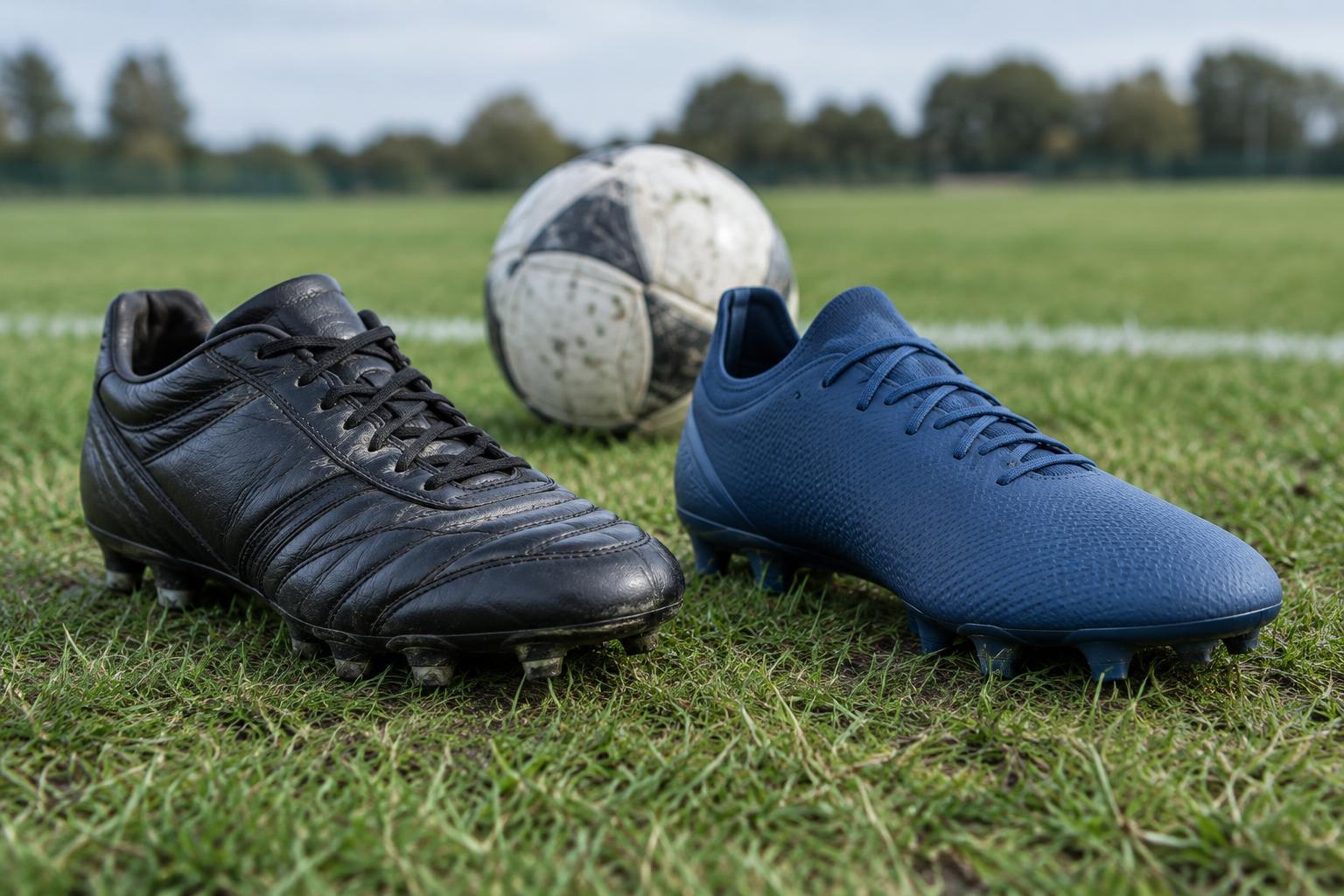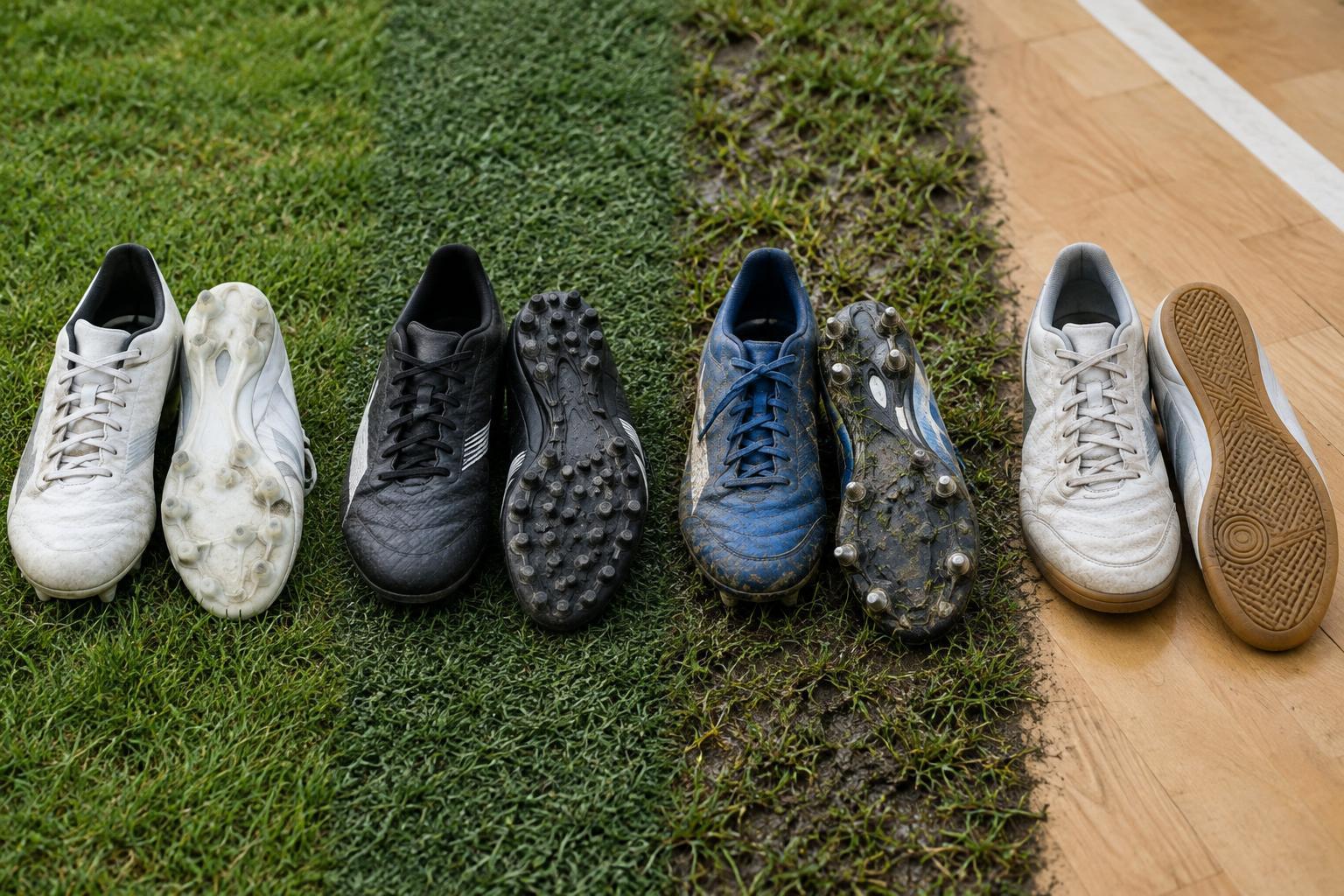
Start with the surface, not the boot
Football boots are often chosen for their colour, upper or connection to a favourite player. The sole matters just as much. Studs and flat outsoles are designed to grip different surfaces, and a pair that feels secure on one pitch may feel slippery or overly anchored on another. Before choosing a boot, find out whether you usually play on natural grass, artificial grass, a short synthetic turf pitch or an indoor court.
Look at the playing surface rather than relying only on its name. Natural grass can be dry and hard or wet and yielding. Artificial pitches vary in pile length and condition. A venue may also restrict particular studs. If you move between pitches, check the footwear rules for each one; a single pair will not necessarily be suitable everywhere.
Firm ground: a versatile choice for natural grass
Firm-ground boots, usually labelled FG, are intended primarily for natural-grass pitches that are reasonably dry or moderately firm. Their moulded studs are spaced to give traction while still allowing the foot to release from the ground. Stud shapes and layouts vary between models, so the FG label is a starting point rather than a promise that every pair will feel the same.
FG boots can be a sensible choice for players whose regular pitch is grass that does not become deeply muddy. On hard, worn ground, however, prominent studs may feel uncomfortable underfoot. And while some boots are marketed for use on both firm ground and artificial grass, do not assume every FG sole is suited to an artificial pitch. Check the maker’s stated surface guidance and the venue’s rules.
Artificial grass and turf: know the difference
Artificial-grass boots, labelled AG, are made for synthetic pitches with a grass-like pile. They commonly use more numerous, shorter studs than a typical FG sole, distributing contact across the surface. The aim is useful grip without an unnecessarily aggressive bite. Because artificial pitches differ, the right option also depends on how the particular surface feels and what the facility permits.
Short, dense synthetic turf is a different proposition. Footwear labelled TF or turf usually has many small rubber lugs across the sole and can be a practical option on this kind of pitch. It may also appeal to players who want a less studded feel on a hard surface. But turf shoes and AG boots are not interchangeable labels: check whether you are playing on a long-pile artificial pitch or a shorter, carpet-like surface before deciding.
Soft ground: traction for yielding grass
Soft-ground boots, labelled SG, are designed for natural-grass pitches where the soil gives way underfoot, particularly when conditions are wet and muddy. Their longer studs can reach into softer ground for traction. Some models have removable studs, while others combine different stud types. Neither arrangement makes them an all-purpose wet-weather boot: the important question is whether the ground is soft enough for the studs to sink in.
On firm grass, artificial surfaces or indoor floors, long SG studs can feel awkward and may be unsuitable. Some leagues and venues also have specific rules about stud types or checks for damaged studs. If your football is mostly played on firm pitches, buying SG boots solely for occasional rain may not be useful. A damp pitch is not always a soft pitch.
Indoor courts, fit and the final check
For smooth indoor courts, choose indoor football shoes, often labelled IN or IC, with a flat rubber outsole rather than studs. The sole is designed to make broad contact with the floor and is commonly non-marking, though it is worth confirming the venue’s requirements. Indoor shoes are not intended to dig into grass, just as outdoor studs do not belong on a sports-hall floor.
Once you have the right sole category, try on boots with the socks you play in. Your heel should feel secure, your toes should have room to move without sliding forward, and the boot should not pinch when you turn. Walk and make a few gentle changes of direction if the shop allows it. A comfortable fit is more valuable than hoping a painful pair will improve with wear.
For players who use several surfaces, a second pair may be more practical than asking one sole to do every job. Keep the outsoles clean enough to inspect the studs or lugs, and replace footwear when traction or support has noticeably deteriorated. Match the sole to the pitch you actually play on, then choose the boot that feels right on your feet.