Start with the label and the details
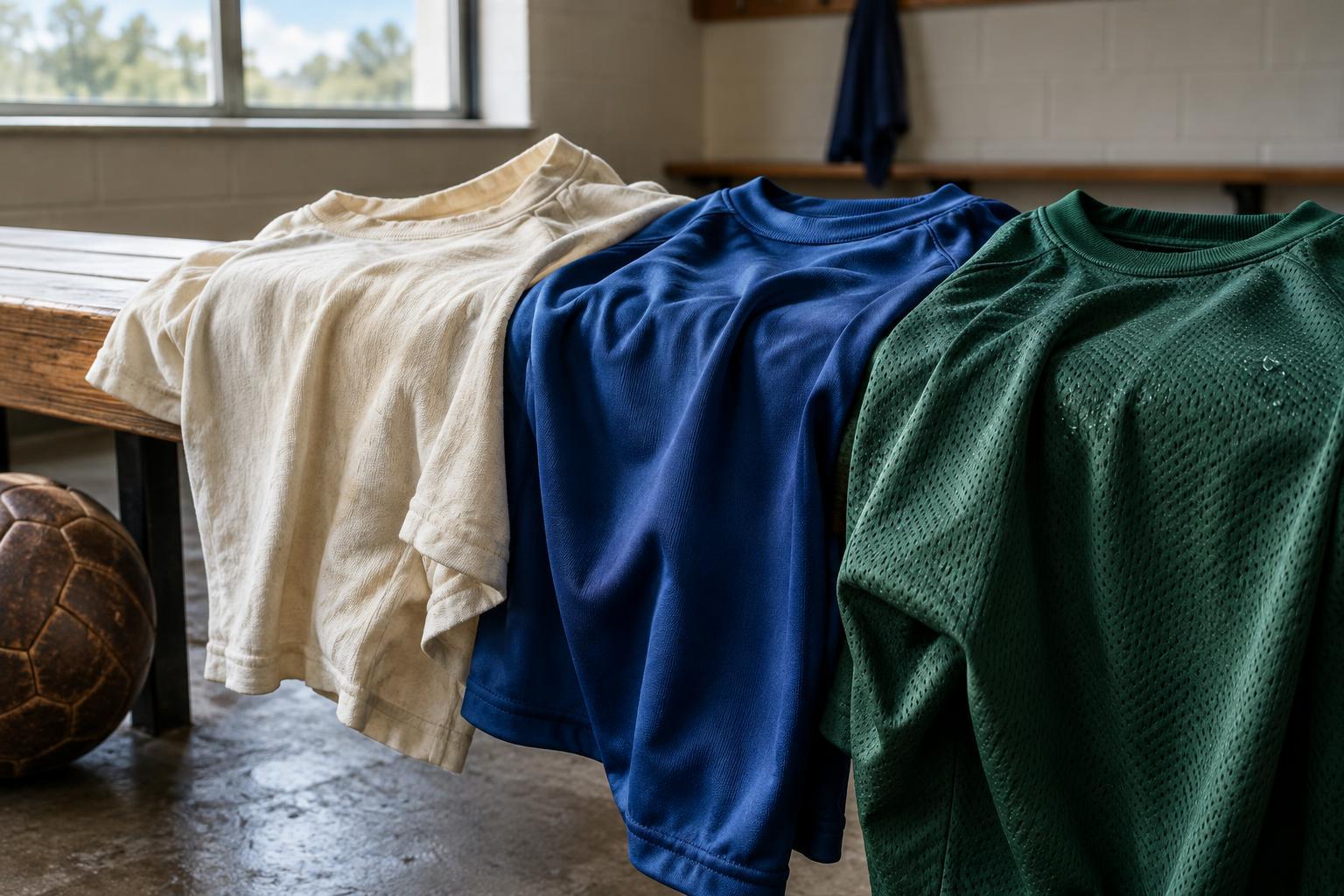
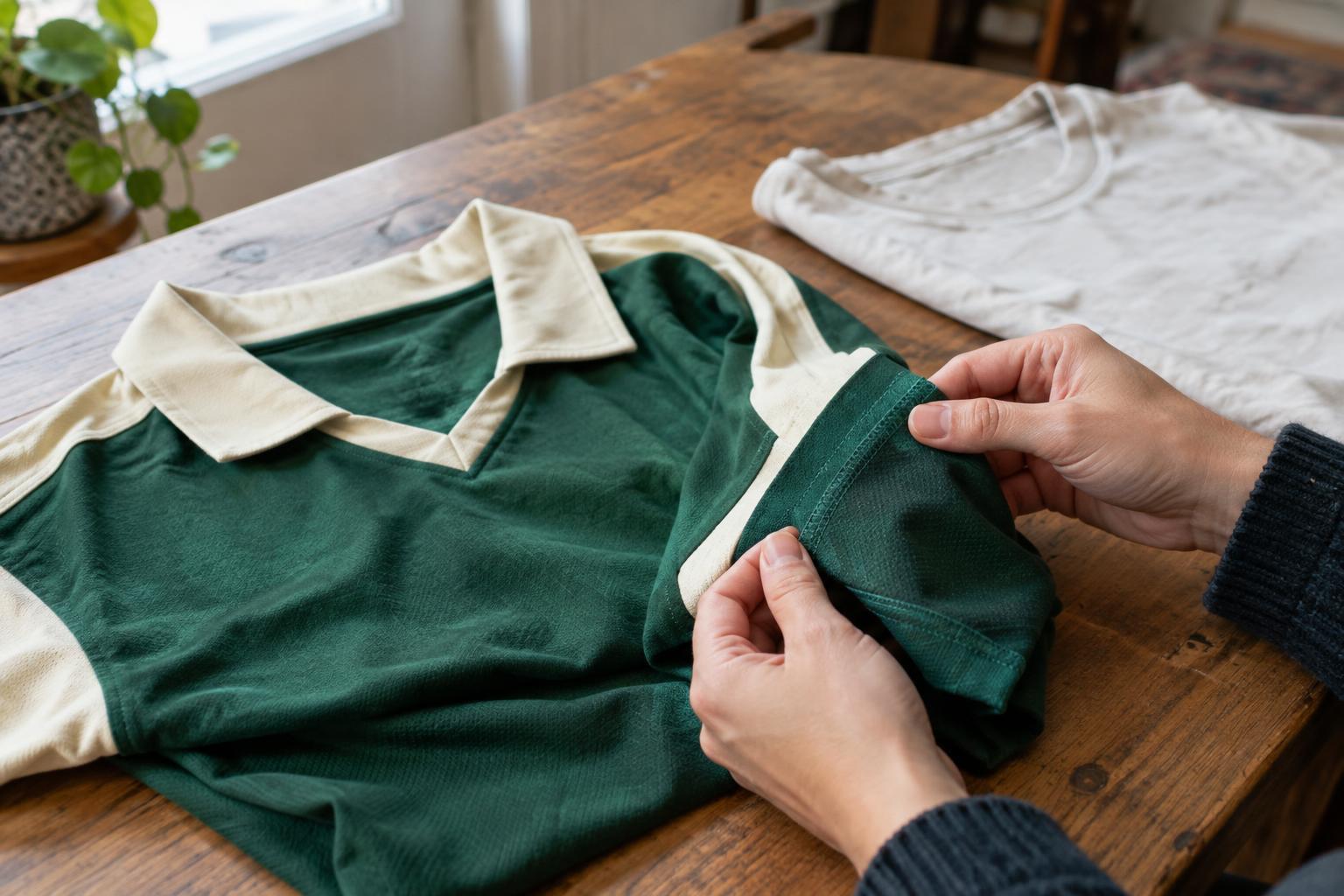
A football shirt may look like a straightforward piece of sportswear, but its parts can respond differently to washing. The fabric might tolerate regular use while a heat-applied name, number or sponsor print needs gentler handling. Embroidered badges can also catch on other garments, and older details may already be loose. Before washing, read the care label and inspect the shirt so you know what you are trying to protect.
Check the edges of prints and badges for lifting, cracking or loose threads. If a detail is already coming away, a wash will not repair it; friction may make the problem worse. A valuable vintage shirt or one with fragile decoration is a good reason to pause rather than automatically put it in the machine. When the label and general advice differ, follow the label, provided the shirt’s condition makes that safe.
Prepare the shirt before it goes in
Treat visible marks before washing, but do it gently. For a fresh spill, blot rather than rub, then rinse the affected area with cool water if the care label allows. A small amount of mild liquid detergent can help with ordinary dirt: work it in lightly with your fingers and rinse. Test any stain treatment on an inconspicuous area first, particularly on an older shirt or one with several colours. Avoid scrubbing across prints or badge edges.
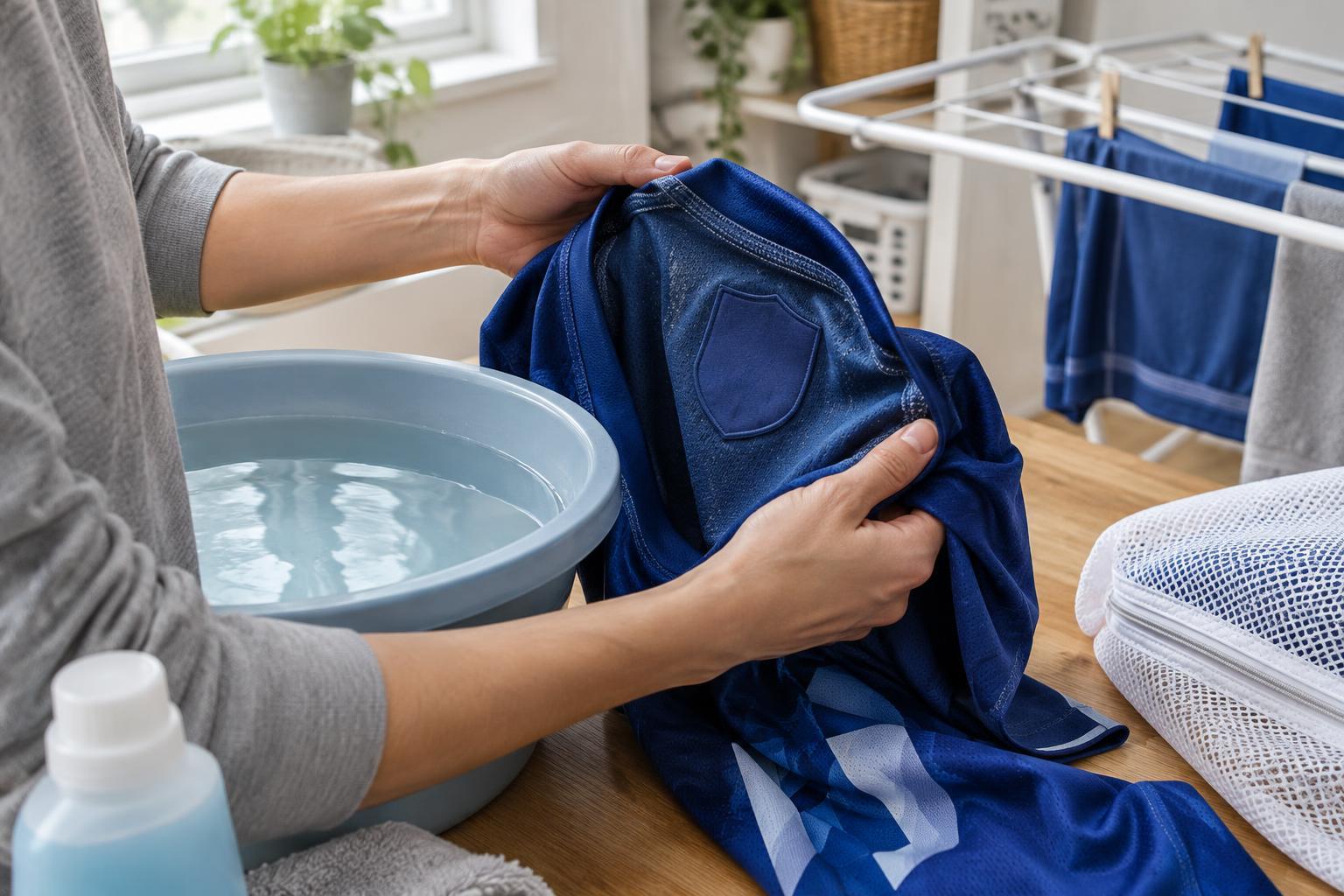
Turn the shirt inside out to reduce direct rubbing against the decorated front and back. Wash it with similarly coloured, lightweight items rather than towels, jeans or clothing with exposed zips and hook-and-loop fasteners. A mesh laundry bag can provide another barrier against snagging, though it cannot make a damaged print wash-proof. Do not overload the machine: a crowded drum gives the shirt less room to move and rinse.
Choose a gentle wash
A cool wash and a gentle cycle are sensible defaults for many modern football shirts, subject to their care labels. Heat, vigorous agitation and a strong spin can put extra strain on applied details. Use a modest dose of mild detergent; more detergent does not necessarily mean a cleaner shirt and may leave residue behind. If you wash by hand, move the shirt through cool water gently instead of twisting or scrubbing it.
Be cautious with bleach and strong stain removers, which may affect fabric colours or decoration. Fabric conditioner is usually unnecessary for a football shirt and can leave a coating on performance fabrics. Do not leave a printed shirt soaking for a long time in the hope of loosening a stubborn stain. If the mark remains after one careful wash, let the shirt dry and reassess it rather than repeatedly treating the same area aggressively.
Dry it without stressing the print
Take the shirt out soon after the wash finishes. Do not wring it: squeezing and twisting wet fabric can pull at badges and distort prints. Instead, press out excess water gently, or lay the shirt between clean towels and press lightly. Reshape it while damp, paying attention to the collar, seams and any large printed area.
Air-dry the shirt according to its care label, away from strong direct heat. Laying it flat on a drying rack can help a heavy, wet shirt keep its shape; if you hang it, use a broad hanger that supports the shoulders. A tumble dryer can expose prints to heat and tumbling friction, so avoid it unless the label explicitly permits it. Likewise, do not iron directly over names, numbers, sponsor logos or badges. If pressing is allowed and necessary, keep the iron away from those details and follow the label’s temperature guidance.
Make care part of the routine
After a match or a day in the stands, let a damp shirt air out rather than leaving it bundled in a bag. Wash it when needed, following the same checks each time: look for loose details, deal with marks gently and keep it away from rough garments. Once fully dry, store it without folding sharply through a large print. These small habits cannot prevent every sign of wear, but they can help you avoid the damage that comes from unnecessary heat, friction and rushed washing.