Know what the shirt is meant to be
Before inspecting a football shirt, establish exactly what the seller claims it is. An official supporter shirt, a player-issue version, a training top and a retro reissue can look similar while using different fabrics, fits and labels. A shirt sold as an unofficial fan design is not necessarily a counterfeit; the concern is a shirt presented as an authentic club or manufacturer product when it is not.
Pin down the club, season or era, manufacturer, and intended version. If you can, compare the listing with clear images of that same version, rather than a shirt from a neighbouring season. Sponsors, sleeve patches and names can also be added after purchase, so a genuine base shirt may have later or non-original printing. Treat the shirt and its customisation as separate things to check.
Look closely at the listing
Good photographs should show the full front and back, collar, cuffs, badge, manufacturer mark, sponsor, inside labels and any product tags. For a used shirt, look for close-ups of wear as well. If the listing relies on distant images, stock photos or angles that hide key details, ask for fresh photographs of the actual item. A seller who cannot provide them may simply be unfamiliar with shirts, but you do not need to buy on incomplete evidence.
Read the description for contradictions. A claimed vintage match shirt that is also described as brand-new in multiple sizes deserves closer scrutiny. So does a listing that calls a modern reissue an original from the period. Price is context, not proof: a bargain may reflect condition or a quick sale, while an expensive listing can still be inaccurate.
Compare construction, not just one label
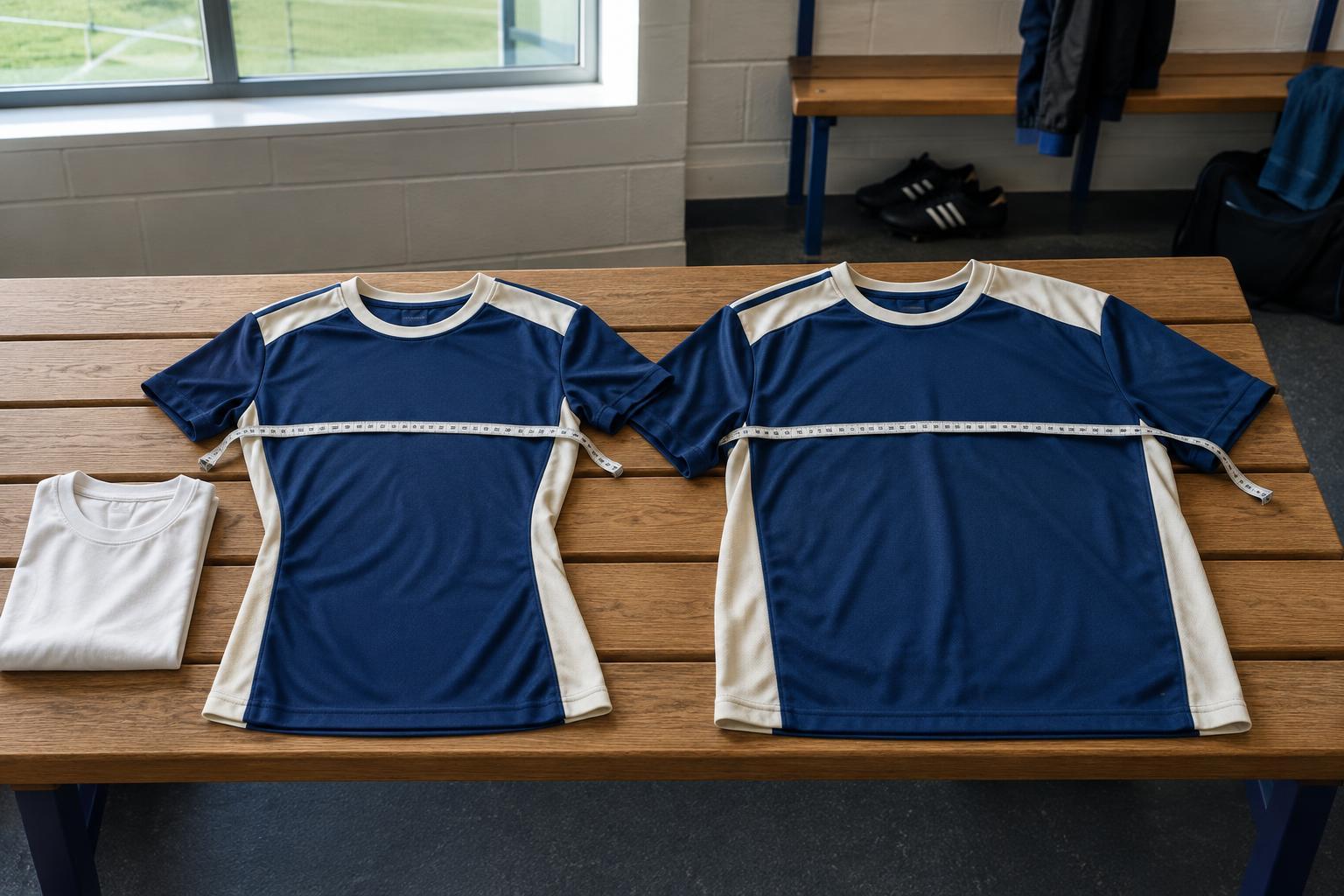
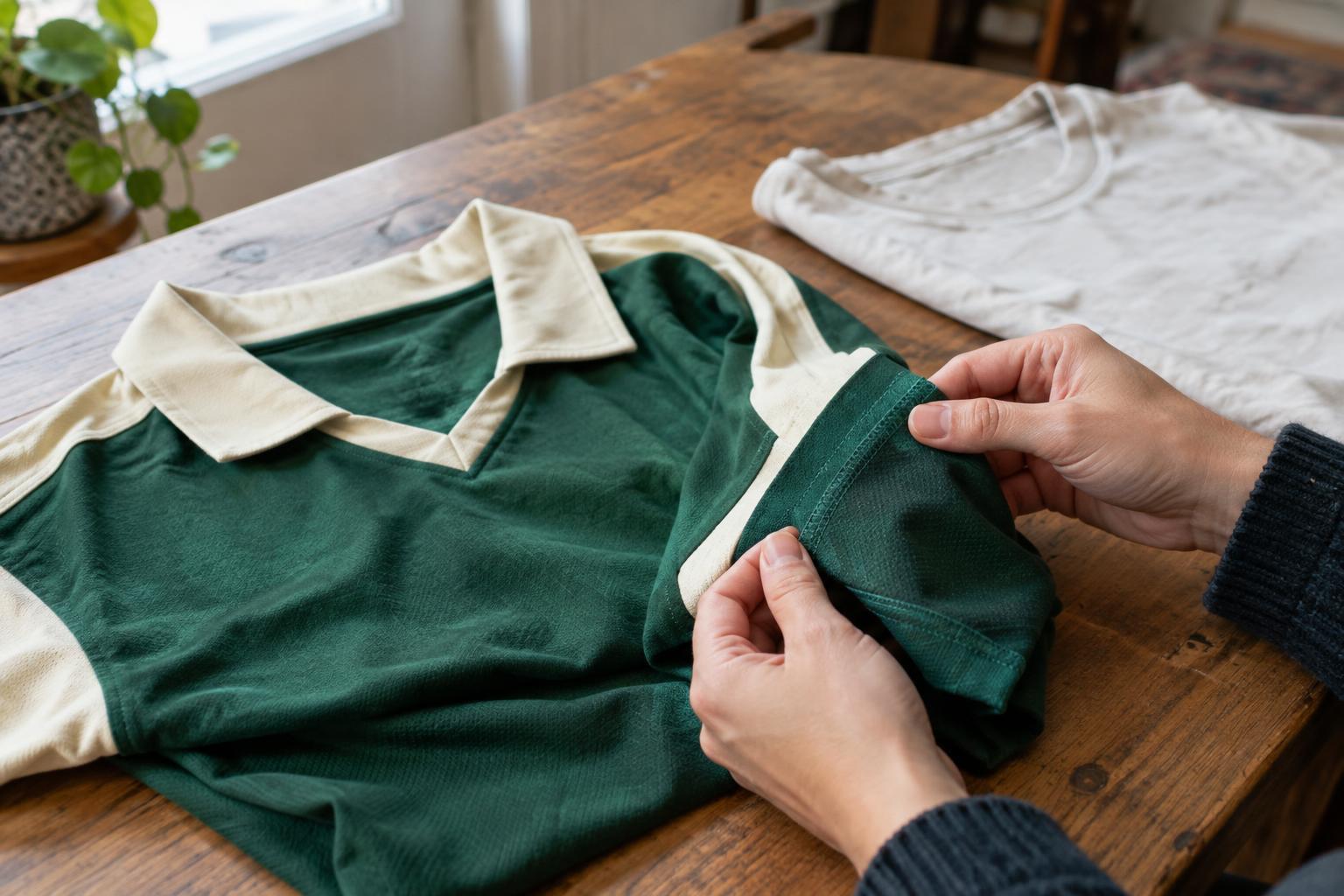
Counterfeit shirts often reveal themselves through a combination of small mismatches. Check whether colours, panel shapes, collar construction and fabric texture resemble the version being advertised. Look at the placement and proportions of the crest, manufacturer mark and sponsor. Uneven stitching, rough edges or printing that appears poorly aligned can be warning signs, particularly when other details are also wrong.
Labels and product codes can help narrow the comparison, but they should not settle it alone. Labels vary by era, region, size and production run, and copied labels can appear on counterfeit items. Search for reliable images of the exact shirt version and compare several features together. If you are examining the item in person, pay attention to how the fabric feels and how the details are attached; photographs do not always convey those differences.
Check names, numbers and patches separately
A convincing shirt can still carry inaccurate customisation. Nameset fonts and league patches may differ between competitions or seasons, and sellers sometimes add modern printing to older shirts. Ask whether the printing was present when the shirt was originally sold or applied later. Neither answer automatically makes the base shirt fake, but it affects what you are buying.
Look for clear photos of the print surface, edges and placement. If a seller makes a specific claim, such as match-worn or player-issued, ask what supports it. Those claims require more than a familiar name on the back or a patch on the sleeve. When the evidence is thin, consider the item a shirt you like rather than paying extra for an unverified story.
Make the buying decision at your own pace
A useful final check is to write down what you know, what you can verify and what remains uncertain. If the seller answers questions clearly and provides consistent photographs, you have a better basis for deciding. Review the condition description and return terms before paying, especially when buying from an individual seller. Keep the listing and messages in case the item that arrives differs from what was shown.
No single loose thread, low price or unusual tag proves a shirt is counterfeit. Equally, a familiar-looking badge is not proof of authenticity. The safest approach is patient comparison of the claimed version, the physical details and the seller’s account. If those pieces do not fit together—or you cannot see enough to judge—walking away is a reasonable choice.