Start with the shirt, not a set of rules
Football shirts already carry plenty of personality. Their colours, crests and patterns can make an outfit feel complete before you add anything else. Styling one for everyday wear does not mean hiding that identity. It means deciding which part of the shirt you want to stand out and giving it room to do so.
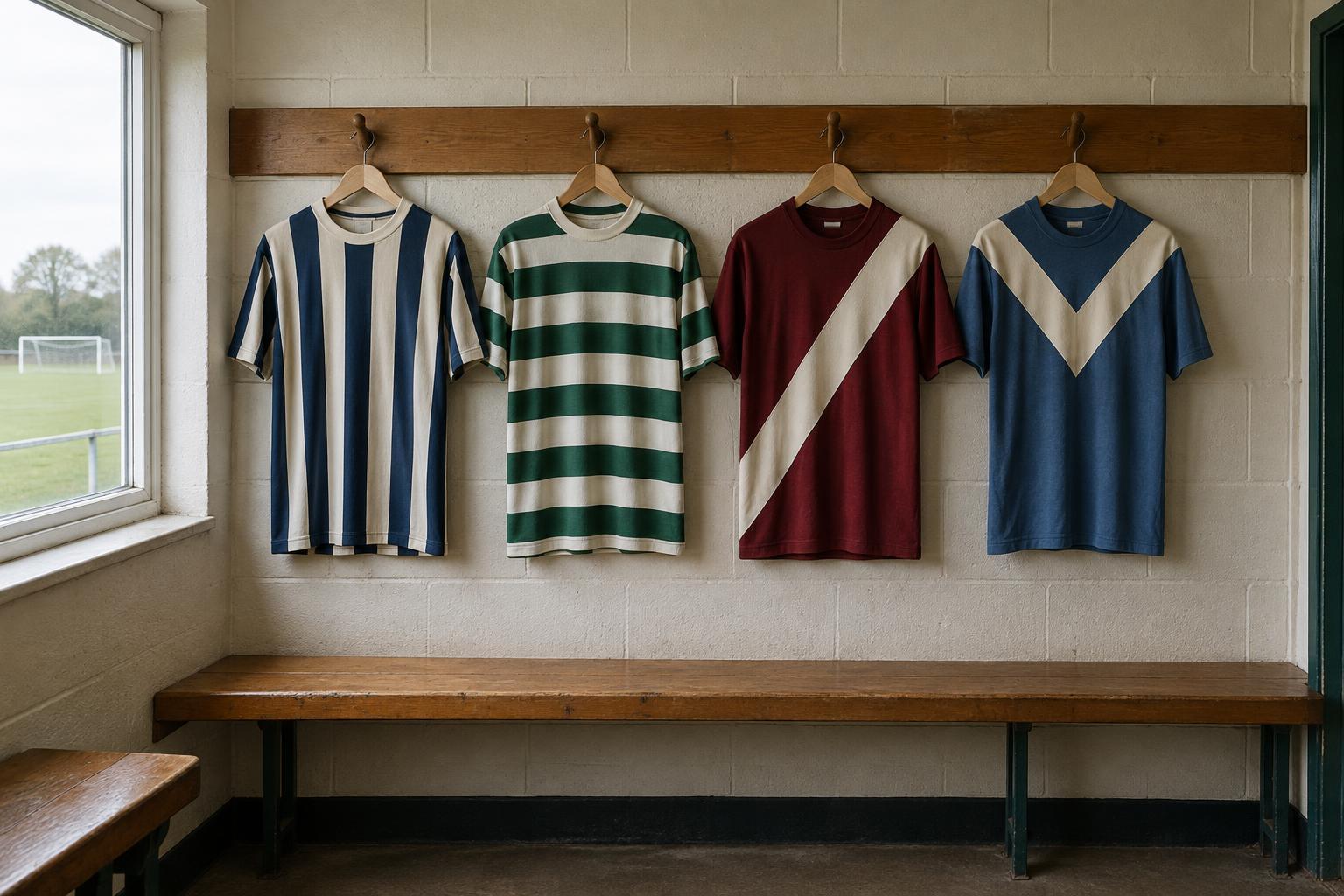
Look at the shirt as you would any other patterned top. A bold design with large blocks of colour may be easiest to pair with plain trousers and shoes. A simpler shirt can sit comfortably alongside a patterned jacket or a more colourful pair of trainers. The point is balance, not a rule that every item must match.
You do not need a rare vintage shirt to put together a good outfit. A current shirt, an older one or the one you wear for your own team can all work. Choosing a shirt you enjoy wearing is a better starting point than choosing one because you think it will impress someone else.
Find a fit that works off the pitch
Match shirts vary in shape. Some sit close to the body; others have a roomier cut or longer sleeves. Try the shirt with the trousers you normally wear and notice where the hem falls. If it bunches over a waistband or feels restrictive when you move, a different size or style of shirt may be more comfortable.
A relaxed fit pairs naturally with straight-leg jeans, loose chinos or casual shorts. A slimmer shirt can look neat with trousers that have a little structure, rather than another close-fitting piece. You can leave the shirt untucked for an easy look, or try a small front tuck if you want to show the waistline of your trousers. Neither choice needs to look perfectly arranged.
Think about the fabric, too. Many football shirts are made from lightweight synthetic material that feels different from a cotton T-shirt. If you find the texture uncomfortable, a thin base layer may help. On warmer days, wearing the shirt on its own will usually keep the outfit simpler.
Build the outfit around one or two colours
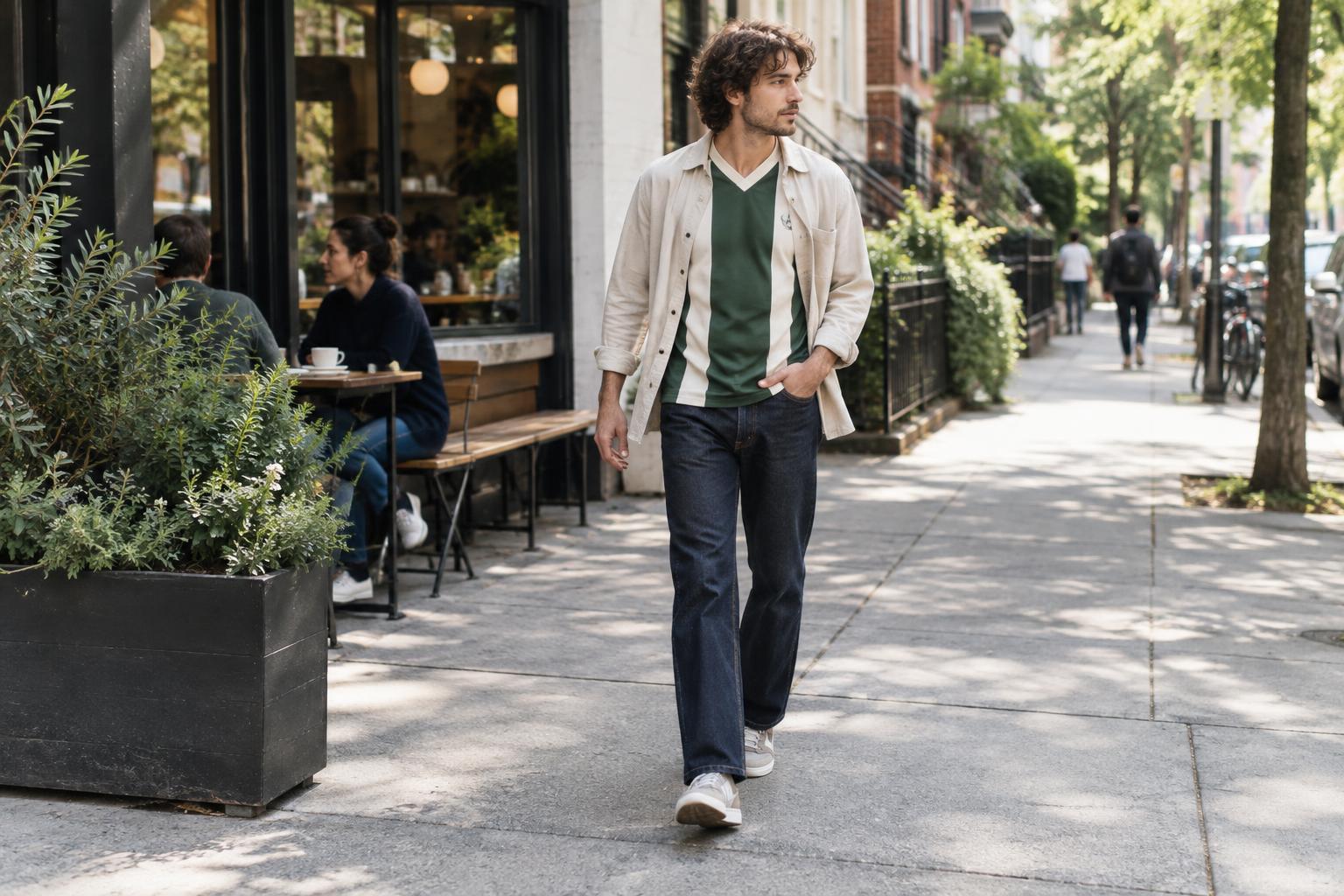
The easiest way to bring a football shirt into your usual wardrobe is to repeat one of its quieter colours. If the shirt has a bright main colour and dark trim, dark trousers or shoes can pick up the trim without making the whole outfit feel coordinated from head to toe. Neutral pieces such as denim, black, grey, cream or olive can also give a busy shirt some space.
You can take the opposite approach with a restrained shirt. A plain-coloured pair of trousers or an overshirt can add interest without competing with the crest. It helps to look at the outfit as a whole rather than trying to match every detail: the socks, shoes and jacket do not all need to echo the kit.
If a shirt features a large sponsor graphic or a striking pattern, let that be the focal point. Adding several other prominent logos can make the outfit feel crowded. If you enjoy a louder look, though, there is no reason to avoid it; the useful question is whether the combination feels intentional to you.
Use layers and footwear to change the mood
A football shirt can sit under an open overshirt, a denim jacket or a simple zip-up layer. Leaving the layer open keeps the shirt visible while softening its matchday feel. A lightweight jacket is often easier to wear over a roomy shirt than a closely fitted one, especially if the sleeves or collar add bulk.
Footwear changes the outfit quickly. Trainers keep things casual, while plain canvas shoes or boots can make the shirt feel less like sportswear. The same shirt worn with shorts and trainers may suit a weekend walk; worn with dark trousers and a jacket, it can feel more considered for an informal evening out. Dress codes vary, so it is worth thinking about the setting before making a football shirt the centre of an outfit.
Accessories can be useful without turning the look into a full kit. A cap, watch or small bag may be all you need. Wearing the shirt with matching club shorts and socks can be fun for playing or watching football, but separating it from the rest of the kit often makes it easier to wear in everyday settings.
Keep it comfortable and let it mean something
Football shirts are personal clothing. One might remind you of a local club, a team you followed growing up or a match you attended with friends. That connection can be part of the appeal. You do not have to explain the shirt to everyone who notices it, but enjoying its story can make it feel more natural to wear.
Before heading out, check that you can sit, walk and layer comfortably in the outfit. If you plan to wear the shirt often, follow its care label and take particular care with printed details when washing and drying it. A well-kept shirt is easier to reach for again.
There is no single correct way to dress around football colours. Begin with pieces you already wear, change one thing at a time, and keep the combinations that feel like you. The best everyday outfit lets the shirt be recognisable without making you feel dressed for a match you are not playing.