Start by identifying the match
Before searching for a score, write down what you already know: the two clubs, the competition, the approximate season, the round or stage, and any possible venue. This matters because the same opponents may have met several times in league, cup and friendly fixtures. A bare score beside two club names is not enough to establish which match it describes.
Treat the match date as a clue rather than a fixed point until it is verified. A report might appear a day or more after a match, while a later competition record may list a postponed fixture under its original scheduled date. Older accounts may also use a club name, town name or competition title that changed over time. Keep alternative names and dates in your search notes so that an apparent mismatch does not hide a relevant source.
Look for contemporary accounts
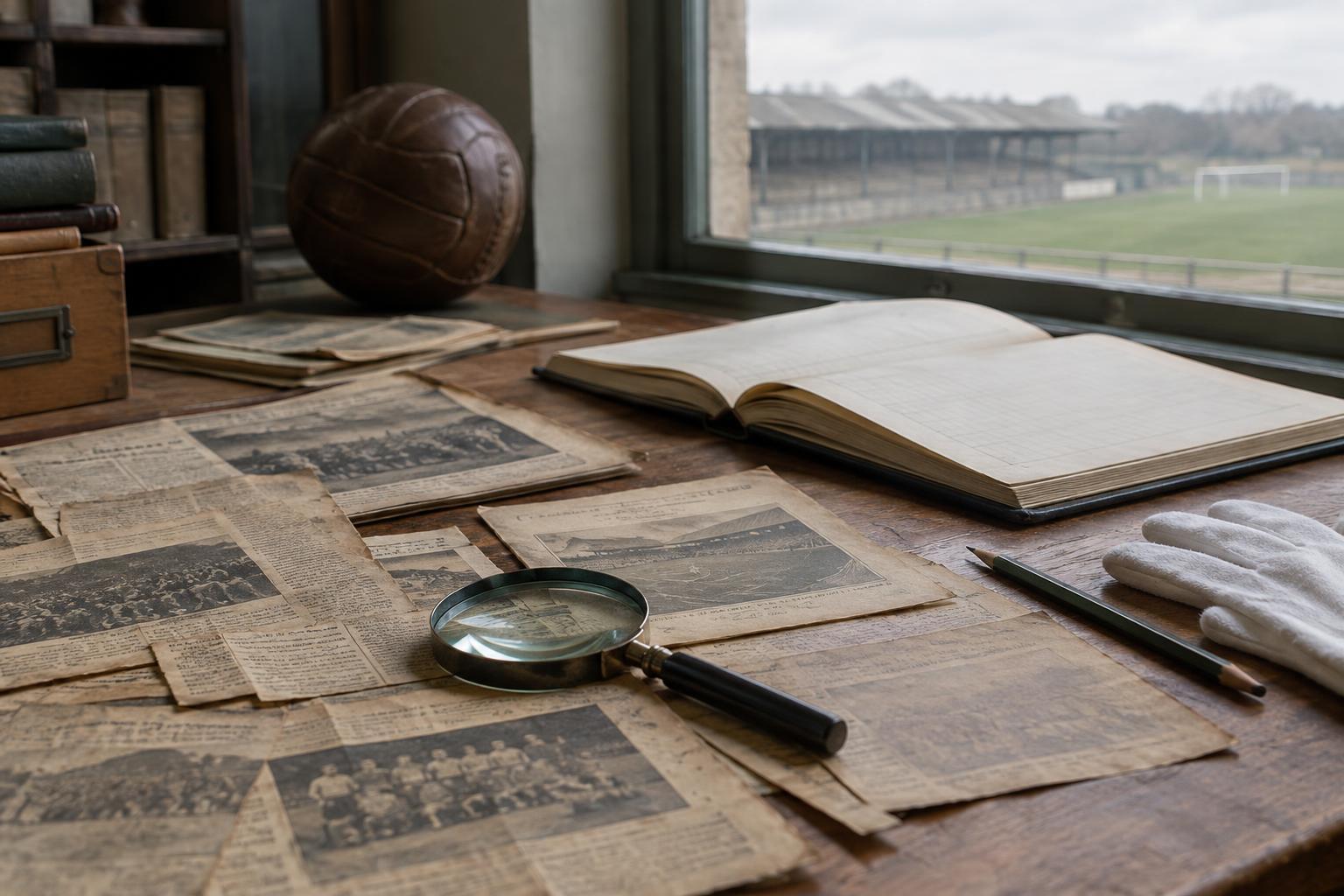
Newspapers, club programmes and other material produced around the time of a match can show what observers believed had happened. Search for the fixture using different combinations of club names, competition, venue and likely dates. Check the page itself where possible, rather than relying only on a search snippet or a transcription: small print, damaged scans and column breaks can all change the meaning of a result.
Read beyond the scoreline. A match report may explain that extra time was played, a protest was lodged or a fixture was stopped before completion. A results column may be briefer but can help confirm how a score was presented at the time. When two reports disagree, record both versions and consider whether one was written before a correction appeared. Contemporary does not automatically mean correct; it means the account is useful evidence from close to the event.
Compare competition records
Competition records can answer a different question from a match report: what result was ultimately entered in the competition? Look for official round lists, tables, fixture registers or published histories that state how a match counted. In a knockout competition, trace the surrounding tie as well as the individual game. Replays, two-legged ties and aggregate scores are easy to confuse, especially when a short listing omits the leg or replay number.
Pay particular attention to matches that were abandoned, voided, awarded or replayed. The score on the pitch when play stopped may differ from the result later recorded. Similarly, a reported friendly should not be silently treated as a competitive fixture. If a competition record and a contemporary report give different answers, ask whether they describe different things: the play witnessed that day, a subsequent ruling, or the final competition entry.
Check details before declaring a result
Build a short evidence note for each candidate result. Include the source title, publication or record date, page or entry location, the names used, the stated score, and any explanation of the match status. Separate observations from interpretations. For example, note that a report prints one score and a later record lists another before deciding whether a correction, ruling or transcription error explains the difference.
Cross-check the basic sequence. Does the reported winner appear in the next round? Do the league standings or fixture lists make sense alongside the proposed result? Such checks can expose a mistaken date or swapped home and away teams, but they are not proof on their own: records can contain errors too. Be especially careful with scores written in abbreviated form, where the source’s layout may be needed to tell which team scored which number.
Publish the finding with its uncertainty intact
A useful account lets a reader see both the conclusion and the reason for it. State the competition, match date, teams and score, then clarify whether the score was reported on the day or entered as the final competition result. If the evidence remains mixed, say so plainly rather than choosing the tidiest version. Phrases such as “reported as” or “later recorded as” can preserve an important distinction without making the explanation cumbersome.
Keep enough source detail for someone else to repeat the search, even if your published article uses a shorter note. An image of a results page, a transcription and a later competition summary may each serve a different purpose; none should quietly replace the others. Historic football research is strongest when the trail remains visible. The goal is not merely to collect a score, but to show which match it belongs to, what happened to its status, and why the available evidence supports the result you give.