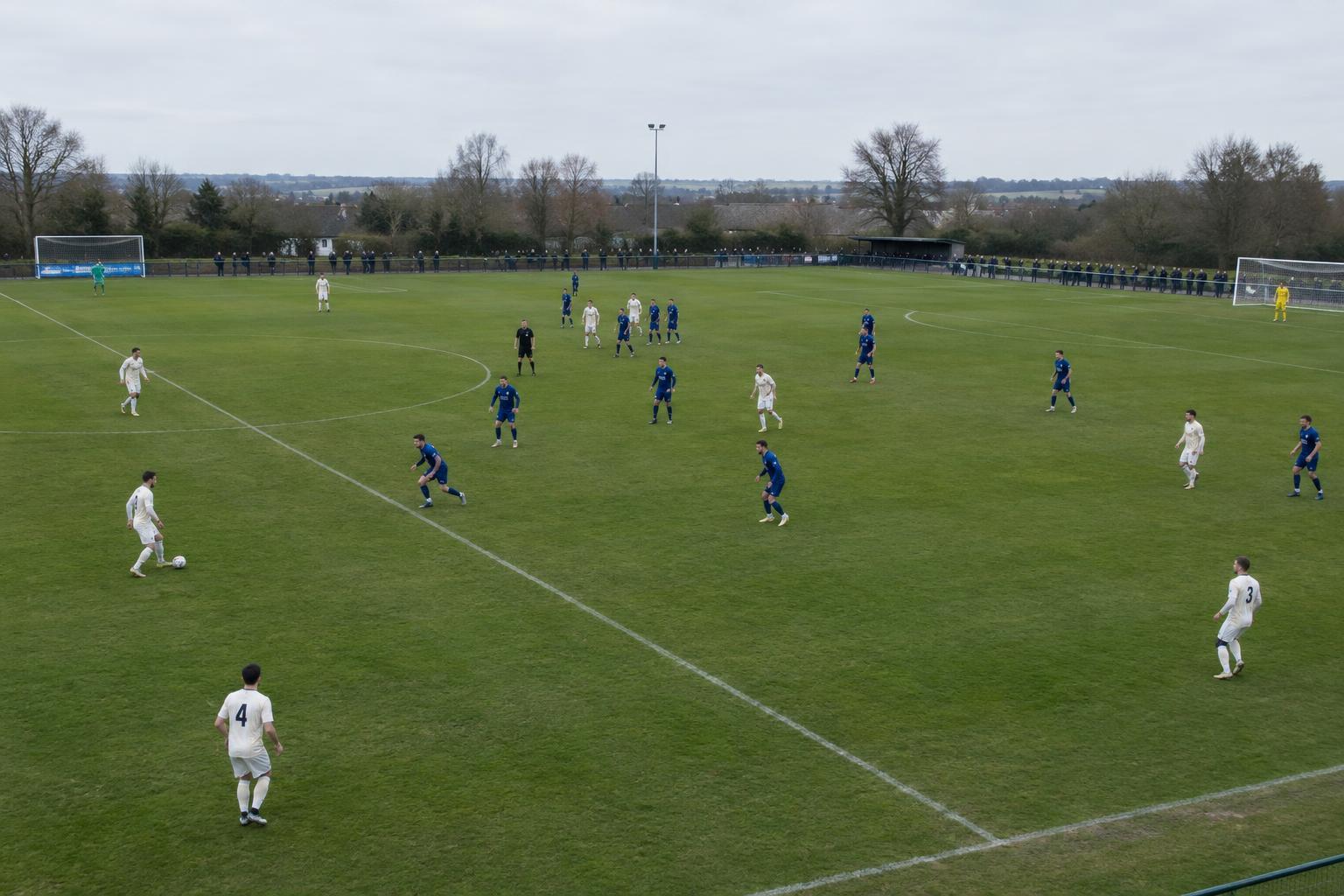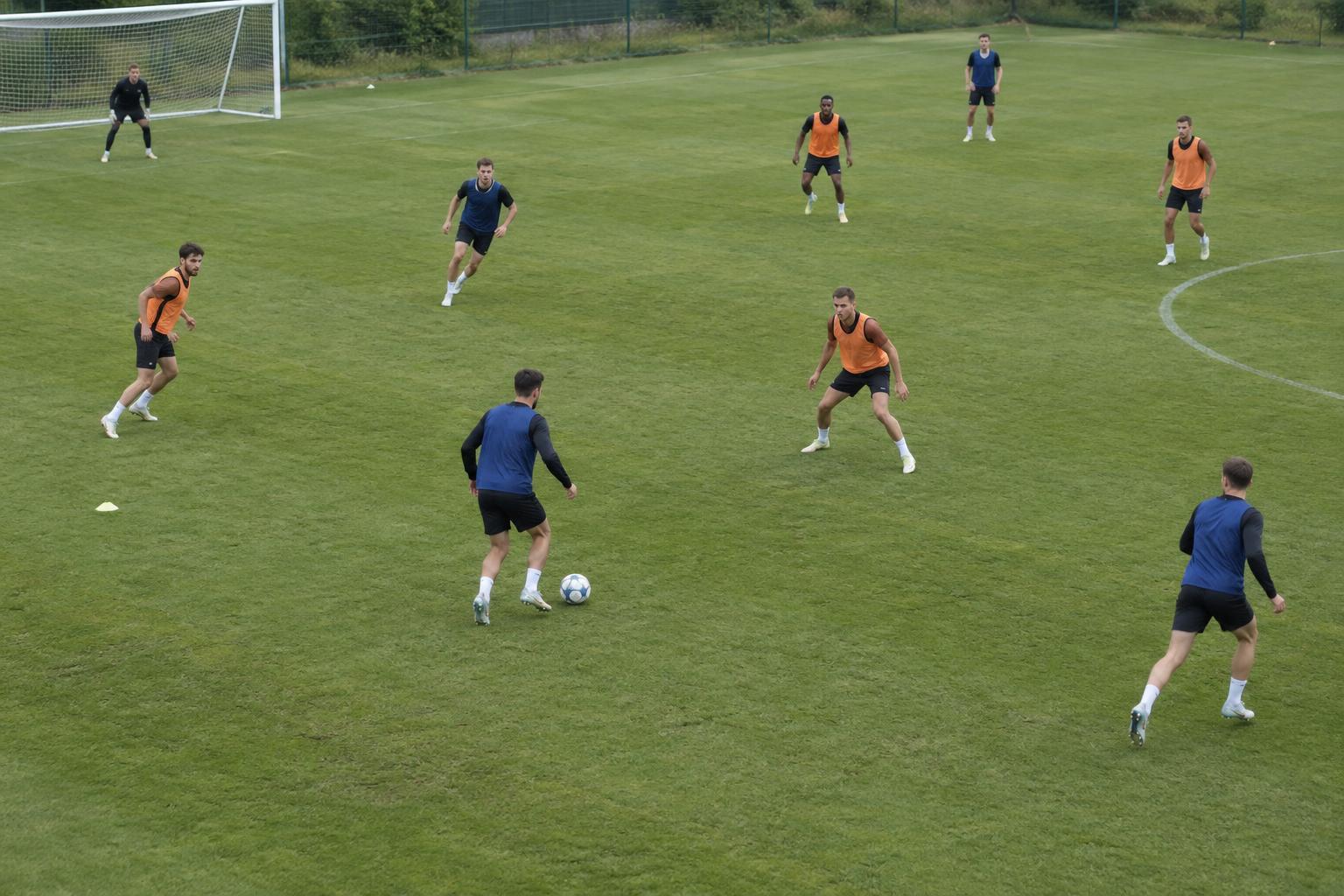
Start with the numbers, then look beyond them
A formation such as 4-3-3 or 4-2-3-1 describes a broad arrangement of outfield players, usually from defence to attack. It can help you identify how many players are expected to start in each line. It does not tell you where everyone will stand at every moment. The goalkeeper is normally left out of the numbers, and labels such as midfielder or winger cover a wide range of jobs.
Treat a listed formation as a map legend rather than a photograph. It gives you a way into the match, but the movement on the pitch supplies the detail. A team introduced as a 4-3-3 might defend with its wide forwards alongside the midfielders, then spread out again when it has the ball. Neither view makes the original label useless; each shows a different part of the same plan.
Read the shape by phase of play
The simplest way to avoid seeing a formation as fixed is to ask who has the ball. When a team builds from the back, a full-back might move inside next to a midfielder, or both full-backs might push high while a midfielder drops toward the defenders. Those movements change the passing options available without necessarily changing the positions named on a team sheet.
When the opponent has settled possession, look for the team’s defensive lines. Count the players across the back, then notice who joins the midfield line and who stays higher. A winger dropping deep can make a 4-3-3 resemble a 4-5-1 for a spell. During a high press, the same winger may step up toward the opposition defenders. The useful question is not “Which drawing is correct?” but “What is the team trying to protect or pressure right now?”
Follow roles rather than just starting positions
Two players can begin in similar areas and perform very different roles. One full-back may stay wide to offer a passing outlet; another may move into central midfield to help circulate the ball. A forward may hold a position near the centre-backs, or drop between the lines to receive and draw a defender away. A formation label rarely captures these distinctions.
To work out a player’s role, watch a few repeated actions rather than one isolated run. Where do they go when their side has controlled possession? Who covers the space they leave? Where do they position themselves when the ball is lost? These observations are especially helpful with players whose movement seems to break the diagram. Their movement may be the point of the system, supported by teammates adjusting around it.
Notice what happens between settled shapes
Teams spend important stretches of a match neither fully attacking nor fully defending. When possession changes, players may be far from the positions they would take in an organised block. A full-back caught high, for example, might leave space behind, while a nearby midfielder moves across to slow a counterattack. The shape you see in that moment reflects both the previous attack and the immediate response to losing the ball.
The same applies after winning possession. A team may first play forward into open space rather than move patiently into its usual attacking arrangement. Watch the first few decisions after a turnover: who presses the ball, who provides cover, and who offers a forward pass? Those choices can explain a team’s approach more clearly than a static formation graphic.
Use a simple viewing routine
For a practical reading of any formation, begin with the advertised numbers, then check them against three recurring situations: possession near the team’s own goal, possession in the opponent’s half, and settled defending. In each situation, look for the width of the team, the number of visible lines and the spaces between them. You do not need to count every player perfectly. Look for patterns that repeat.
Next, pick one player whose movement changes the picture. If a full-back moves inside, note who stays wide. If a forward drops deep, note who threatens the space ahead. This helps distinguish a planned rotation from a player simply chasing the ball. A formation is most useful when it prompts these questions. It names a starting structure; watching the relationships between players reveals how that structure works.