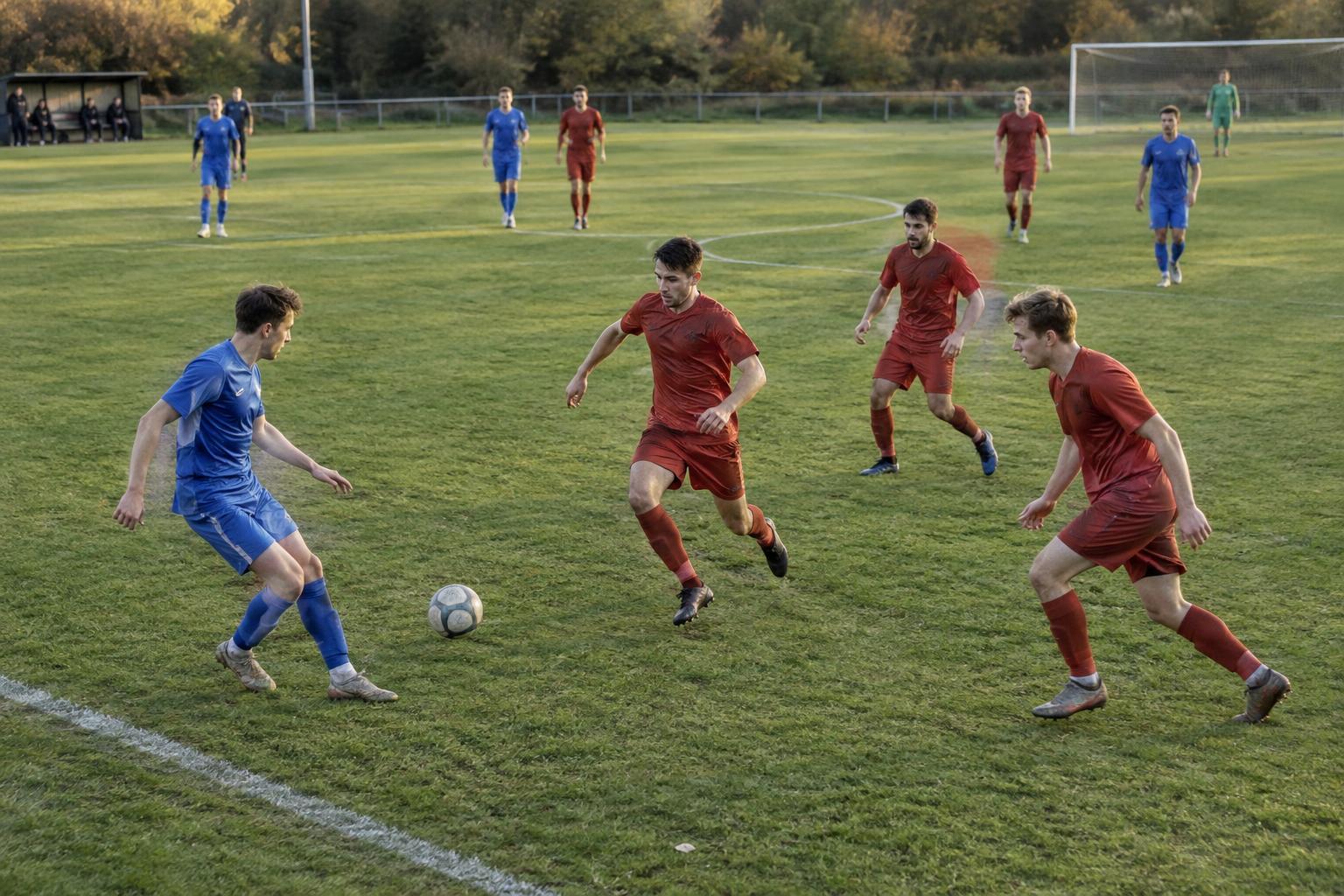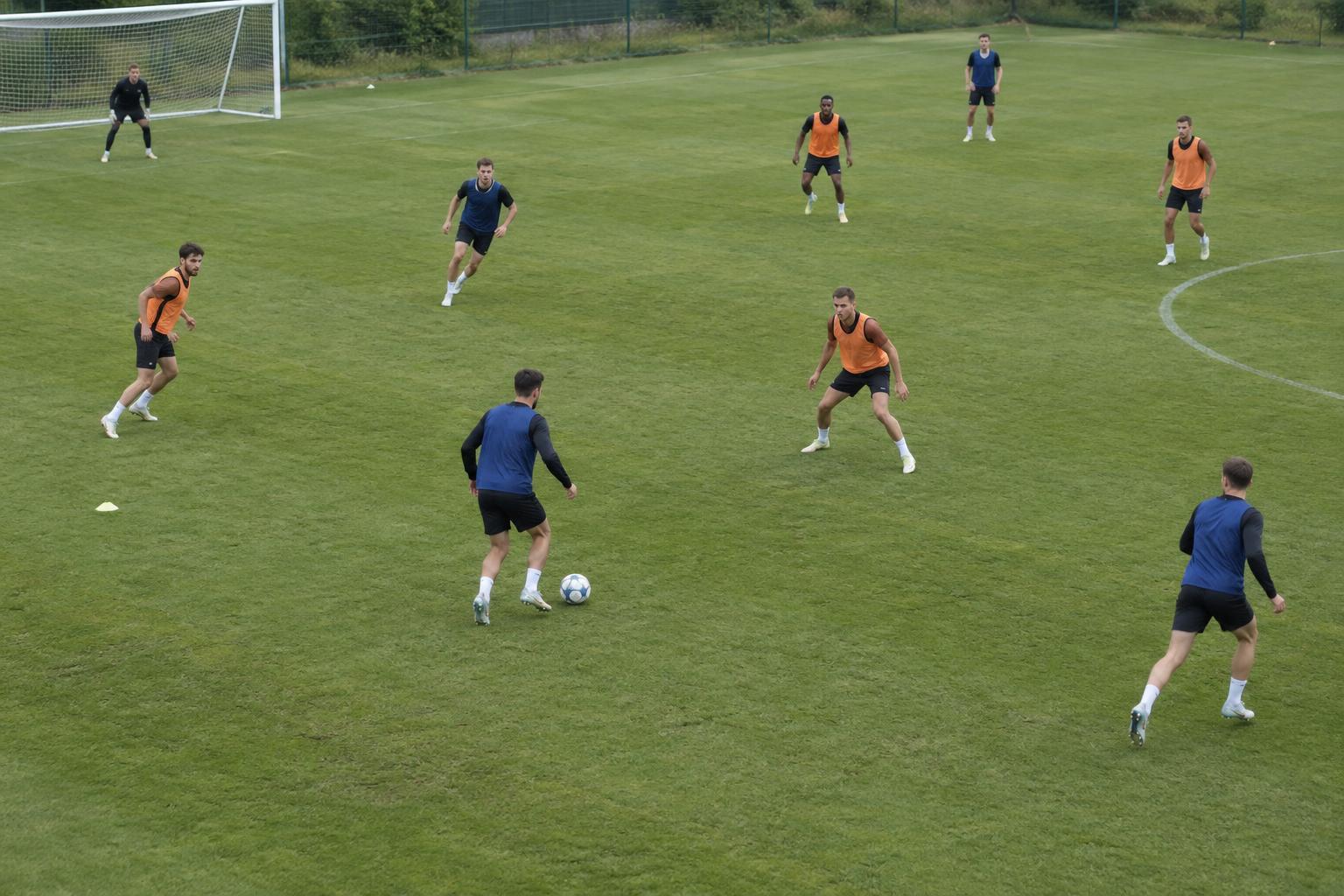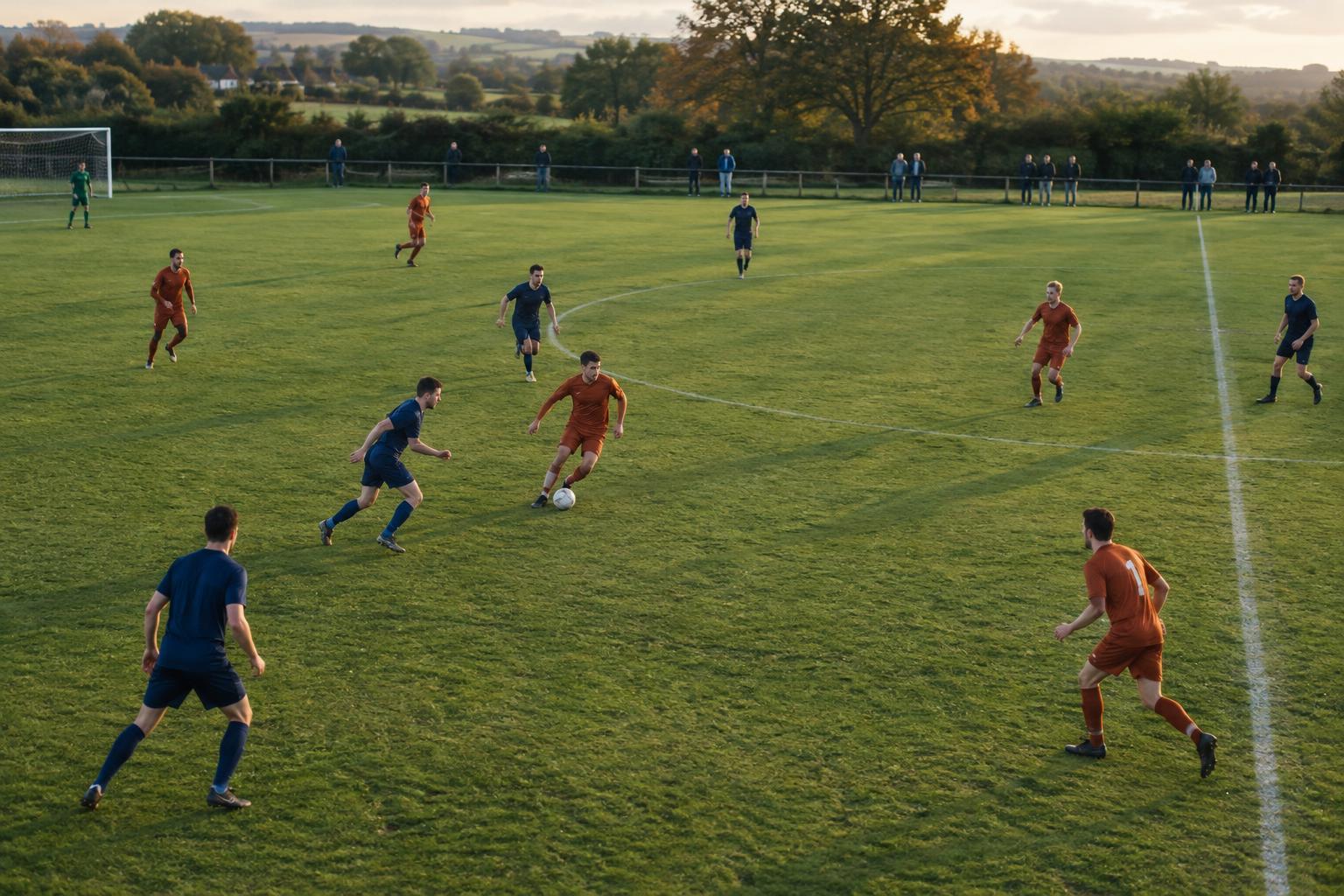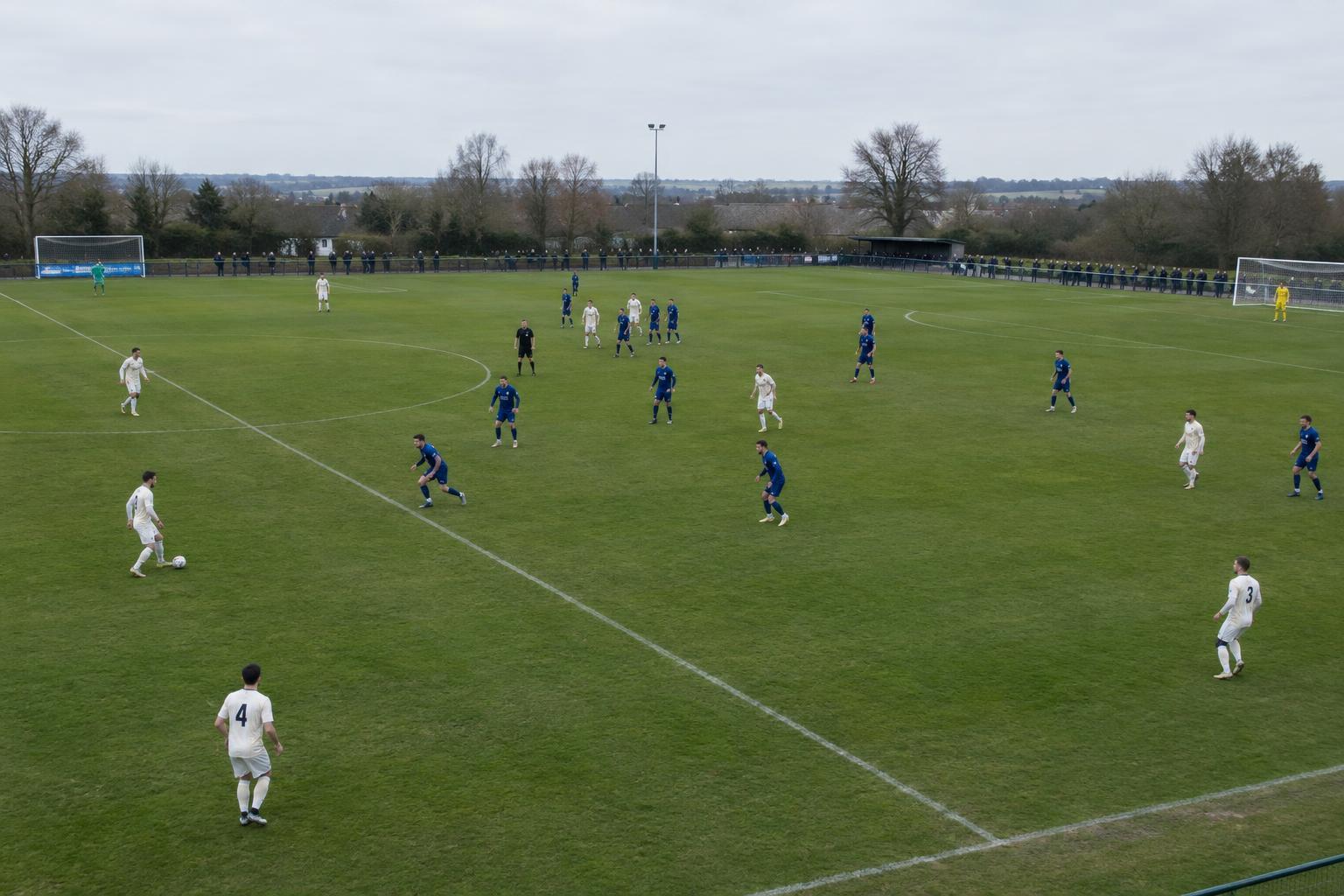
The difference is where pressure begins
A high press, mid-block and low block describe where a team tries to engage an opponent in possession. In a high press, defenders move up the pitch and challenge the first stages of the opponent’s build-up. A mid-block allows the opponent some space near their own goal before applying pressure around midfield. A low block defends closer to its own penalty area, prioritising the space between the ball and the goal.
These are starting points, not fixed formations. A team may use the same shape in all three approaches while changing its height, distances between players and instructions for when to step forward. Nor does a low block mean nobody presses: pressure still matters, but it usually begins later. Understanding where a team wants to win the ball is more useful than judging its defending solely by how many players are behind it.
High press: disrupt the build-up early
A high press aims to make the opponent’s first passes difficult. Forwards may close down centre-backs, block passing lanes into midfield or steer the ball toward a touchline. Teammates then move up behind them so the player receiving the next pass has few easy options. A poor touch, a backward pass or a pass to a player facing their own goal can act as a cue for several defenders to accelerate together.
Teams use this approach when they want to regain possession near the opponent’s goal, prevent a controlled build-up or keep play in the attacking half. It can be especially effective when the whole side is ready to move as a unit. One forward sprinting alone is rarely enough: if midfielders and defenders remain deep, the opponent may simply pass through the space left behind.
The trade-off is the space beyond the pressing line. If an opponent plays through or over the press, defenders may have to cover large distances while running toward their own goal. Pressing repeatedly also demands concentration and coordinated movement, so a team may use it in selected spells rather than for every opposition possession.
Mid-block: protect the centre and choose the moment
A mid-block lets the opponent begin possession without an immediate challenge from every forward. The defending team holds a compact shape around midfield, making central passes awkward and waiting for a better moment to engage. Pressure might begin when the ball travels wide, when a receiver has their back to play or when a pass arrives slowly enough for a defender to close the distance.
Teams often choose a mid-block when they want a balance between pressure and protection. They can keep players close enough to contest passes in midfield without leaving as much open space behind the defence as a high press might. Winning the ball there may also create an opportunity to attack before the opponent has settled into its defensive shape.
The difficulty is deciding when to step out. If one player rushes toward the ball while teammates hold their positions, a gap can appear behind that player. If everyone waits too long, the opponent may advance without being challenged. A mid-block works best when players understand which passes they are trying to deny and which passes will trigger pressure.
Low block: defend valuable space near goal
In a low block, a team retreats closer to its own goal and keeps the distances between its lines small. Its immediate aim is to protect central routes into the penalty area and make clear shots difficult. Defenders may allow passes across the back or into wide areas, then shift together to challenge crosses and passes back toward the middle.
A team may use a low block to protect a lead, respond to sustained pressure or reduce the space available to an opponent that wants to run behind the defence. It can also provide a starting point for counterattacks if players are positioned to receive an outlet pass after a recovery. But defending deep does not remove danger. Repeated entries into wide areas, loose clearances and rebounds can keep a team under pressure, while a long distance to the opponent’s goal can make it hard to turn a regain into an attack.
Good low-block defending therefore involves more than standing near the penalty area. Players must track movement, decide when to challenge the ball and remain ready to move out together when possession is won.
Why teams switch between approaches
Few teams defend at one height throughout a match. A side might press a goal kick, settle into a mid-block if the opponent escapes, then drop into a low block as the ball reaches its defensive third. Scoreline, available energy, player roles and the opponent’s passing options can all affect those choices.
When watching, look for the first defender to apply pressure, the teammates who support that move and the space the team leaves behind. Then ask what happens after a regain: does the team have nearby passing options, or is it simply trying to clear the ball? Those clues reveal the purpose of a defensive approach. The best choice is not automatically the most aggressive one; it is the one the players can execute together while managing the spaces they leave open.