Decide what fair means for your team
Fair playing time does not always mean identical minutes in every match. A player may arrive late, need a rest or miss part of a game through injury. But on a community team, everyone should understand what opportunity they can expect over time. Before the season starts, coaches can agree on a simple principle: available players will get regular, meaningful time on the pitch, not just a brief appearance at the end.
The details should suit the team’s purpose. A team focused on participation may aim to share minutes as evenly as practical. Another may use different roles during a match while still making sure no one is repeatedly left out. Whatever the approach, explain it to players and, where appropriate, parents or carers. It is easier to address disappointment when the standard was clear before team selection became personal.
Plan substitutions before kick-off
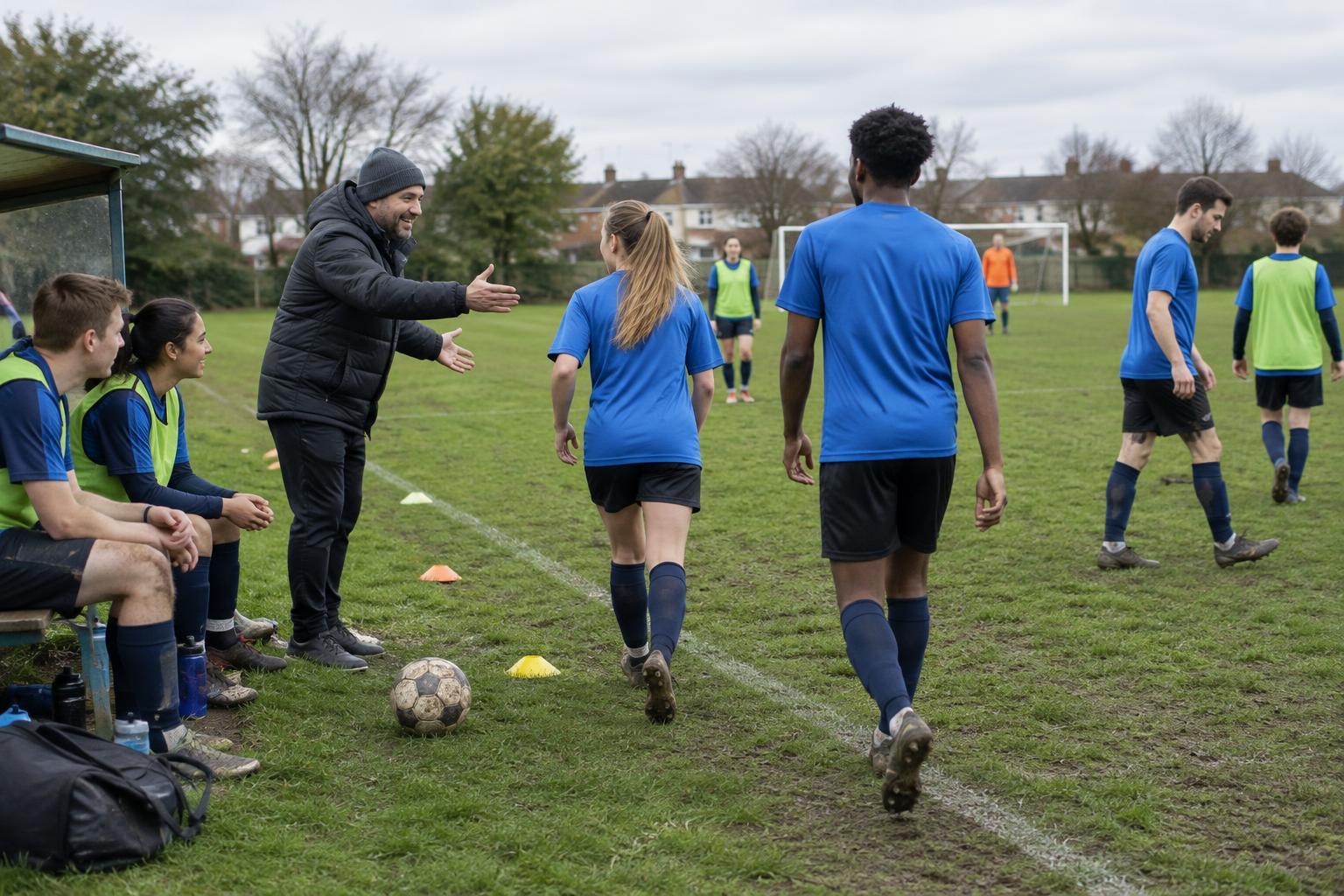
Waiting until the match becomes tense makes it easy to forget a player on the bench. Before kick-off, note who is available, who can cover each position and roughly when substitutions can happen. A simple rotation sheet can be enough. Leave room to change the plan if someone is tired, uncomfortable or unable to continue.
Think about the quality of minutes as well as the total. Ten minutes in a familiar position during an open passage of play may offer more involvement than ten minutes in an unfamiliar role when a team is simply trying to see out a match. Avoid treating the same players as permanent substitutes or moving them only into positions nobody else wants. Rotating roles in training can make match-day changes easier and help players understand different parts of the game.
Look across several matches, not just one
A single match rarely provides a perfect measure of fairness. Fixtures, attendance and players’ needs vary. Keeping a basic record of starts, substitute appearances and approximate minutes can reveal patterns that memory misses. The record need not be complicated: its purpose is to help the coach notice who has had opportunities and who might need more in the next game.
Review that pattern regularly. If one player has played less, ask why before deciding what to change. They may have missed games or asked for shorter spells, or the team may have slipped into a habit of relying on a small group. Records should guide a conversation, not become a rigid formula. Playing time also sits alongside other opportunities, such as taking part in training exercises, learning a new position and being trusted with responsibility on the pitch.
Make decisions players can understand
Players are more likely to accept a difficult decision when the reason is specific and respectful. “You will start on the bench today, and I plan to bring you on during the first half” gives a clearer expectation than a vague promise to get them involved. If the plan changes, explain afterward what happened and how you will account for it next time. Do not promise an exact number of minutes if you cannot reliably deliver it.
Invite players to say what helps them contribute. Some are comfortable entering a close game; others need time to settle. A player might want to try a new position but prefer to practise it first. Listening does not mean granting every request, but it can expose problems a coach would otherwise miss. When a player is disappointed, discuss their own opportunities rather than comparing them with teammates.
Protect participation when matches get competitive
Close scores can tempt a coach to abandon the rotation. A clear team policy matters most at that point. Decide in advance how much flexibility the team will allow in unusually demanding matches, then check that those exceptions do not always affect the same people. If a competition has substitution or squad rules, build the rotation around those rules rather than assuming changes can be made at any moment.
Fairness is also about the environment around playing time. Players should not feel pressured to continue when they need a break, and a mistake should not automatically end someone’s chance to play. Encourage teammates to welcome substitutes into the game rather than treating them as a risk. A community team can want to compete and still make room for development, belonging and enjoyment. Over a season, those priorities are easier to uphold when they are part of the plan, not an afterthought.