Why a fixture change takes coordination
An amateur football fixture is a small coordination project. Players arrange travel and time away from other commitments; coaches plan a squad; officials and opponents expect clear details; and someone must make sure the pitch is available. When heavy rain, frost or another disruption puts a match in doubt, the challenge is not just deciding whether football can be played. It is getting one reliable decision to everyone affected.
The first step is to know which decisions belong to the team and which belong to the competition, venue or appointed official. Local rules and arrangements vary, so a captain or fixture secretary should keep the relevant contacts and competition guidance easy to find. A team can report a concern, but it should not assume that a message in its own group chat counts as an official postponement.
Check the pitch before announcing a decision
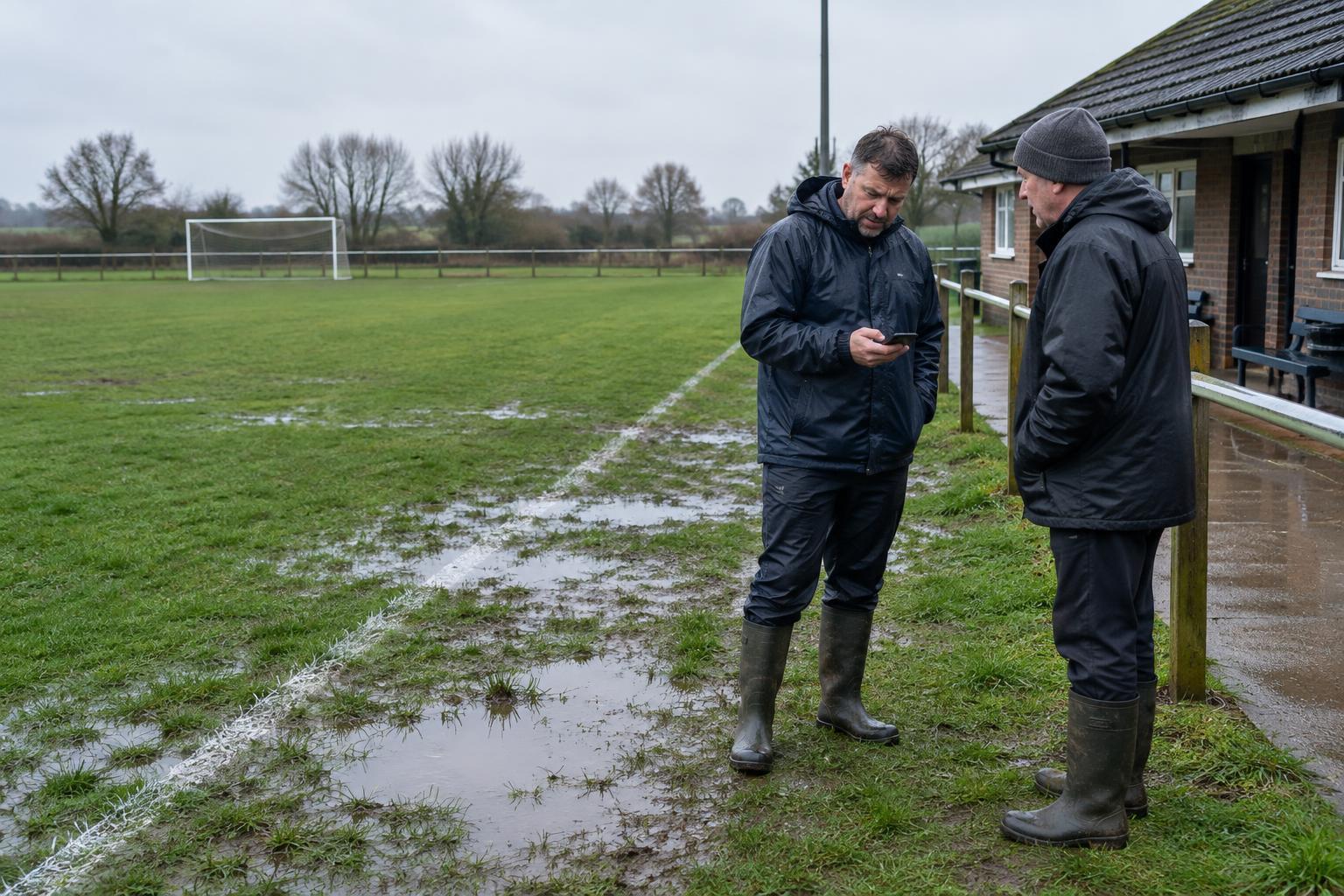
Weather forecasts help teams prepare, but they cannot show exactly how a particular pitch is holding up. Drainage, shade and recent use can make two nearby grounds play very differently. If conditions look doubtful, the person responsible for the ground can check it at an agreed time and pass on a clear description: whether there is standing water, frozen ground, damaged areas or any other concern that affects safe play.
A pitch inspection should be arranged through the people authorised to conduct or accept it under the competition’s procedures. Avoid asking players to travel on the strength of a hopeful guess when an inspection is pending. Equally, avoid announcing a cancellation before the appropriate decision has been made. If conditions remain uncertain, tell people when the next update is expected and who will provide it.
Player welfare matters even when both sides are keen to play. A surface that cannot safely support normal movement is not improved by a strong turnout or a long journey. Teams should also consider access to the ground and any venue instructions, rather than treating the playing surface as the only possible obstacle.
Send one clear message to everyone
Once a fixture is confirmed as on, changed or postponed, send a short message through the team’s usual channel. Put the decision first, followed by the match, venue, original kick-off time and any new details. State whether the information is confirmed or provisional. If there is no rearranged date yet, say so plainly instead of letting a suggested date circulate as fact.
Make sure the message reaches more than the players. Depending on how the team is organised, opponents, match officials, the competition, venue staff, coaches and volunteers may all need an update. One named organiser can keep track of who has been contacted and who has acknowledged the change. That reduces the chance of an official travelling to an empty ground or a player missing a late change of venue.
A single source of truth also helps when several chats are active. The organiser can update the original fixture notice and ask others to share that version rather than screenshots of older messages. For a match that is still awaiting an inspection, give a specific update point so people know when to check again.
Rearrange the match without creating another problem
After a postponement, check the competition’s process before offering a replacement date. Available pitches, officials and opposition all matter, and a date that suits one squad may not be workable for the other club. It can help to propose a small number of realistic options, including likely kick-off times and venues, rather than asking everyone an open-ended question.
Confirm the new fixture in writing through the required channel. Then update calendars, travel plans and player availability using the same details. If the venue changes, include the ground name and practical arrival information so that nobody relies on the location from the original fixture. Keep a record of the agreed change; it gives organisers a straightforward reference if details are questioned later.
Build habits that make the next disruption easier
Teams cannot control the weather, but they can make their response routine. Before the season or a run of fixtures, agree who monitors conditions, who speaks to the venue or competition, and who sends the final message. Keep contact details current and make sure a second person can step in if the usual organiser is unavailable.
It also helps to set expectations with players: a forecast is not a decision, an inspection time is not a kick-off confirmation, and a postponed match still needs an officially agreed replacement. These habits may seem administrative, but they protect the time of everyone who makes grassroots football happen. When changes are handled calmly and clearly, a lost matchday is less likely to become a lasting source of confusion.