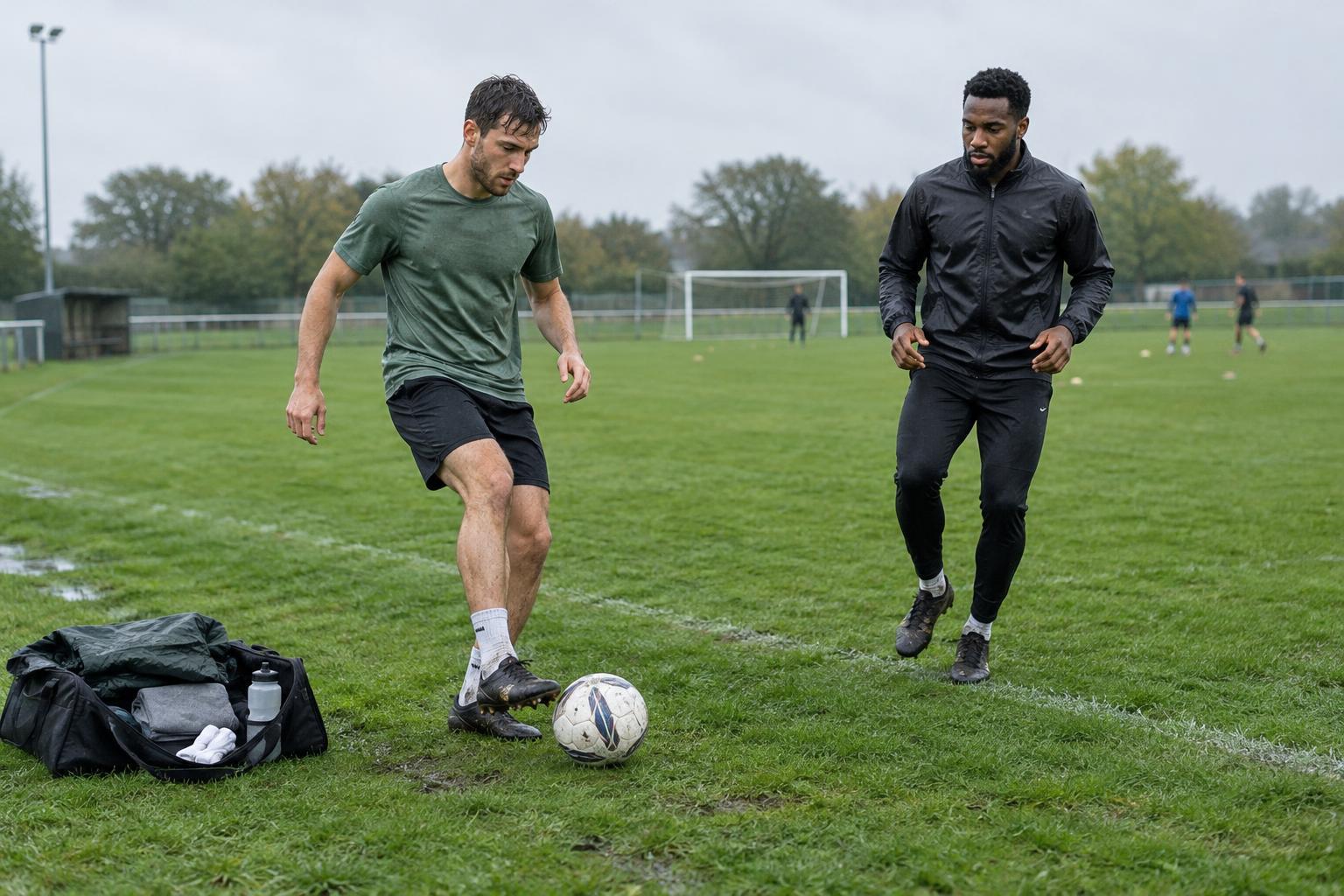
Why your usual size is only a starting point
Football boots have a different job from everyday shoes. They need to hold your foot steady when you accelerate, stop and change direction, often with less padding and a closer-fitting upper. A size that feels comfortable in trainers may feel cramped in one boot or loose in another. Even two models from the same brand can fit differently because of their shape, materials and construction.
Use your usual shoe size to choose the first pair to try, not to settle the decision. The better questions are whether your toes have room to lie naturally, whether the sides of the boot press uncomfortably, and whether your heel stays in place when you move. A close fit can feel unfamiliar without being too small; persistent pinching or curled toes are different signals.
Start with your feet, not the label
If you are shopping online, measure both feet while standing, wearing the type of socks you play in. Place each foot on paper, mark the heel and the tip of the longest toe, and measure between the marks. Compare the longer measurement with the size guide for the particular boot you are considering. Size charts are useful for narrowing your options, but they cannot tell you how a boot’s width, toe shape or heel will feel.
Pay attention to the shape of your feet as well as their length. A narrow-looking boot may press across a broad forefoot, while a roomy toe box can feel unstable on a slimmer foot. One foot may also be slightly larger than the other. Fit the larger foot first, then check whether lacing can secure the smaller one without bunching the upper or creating pressure.
Try them on as you would play
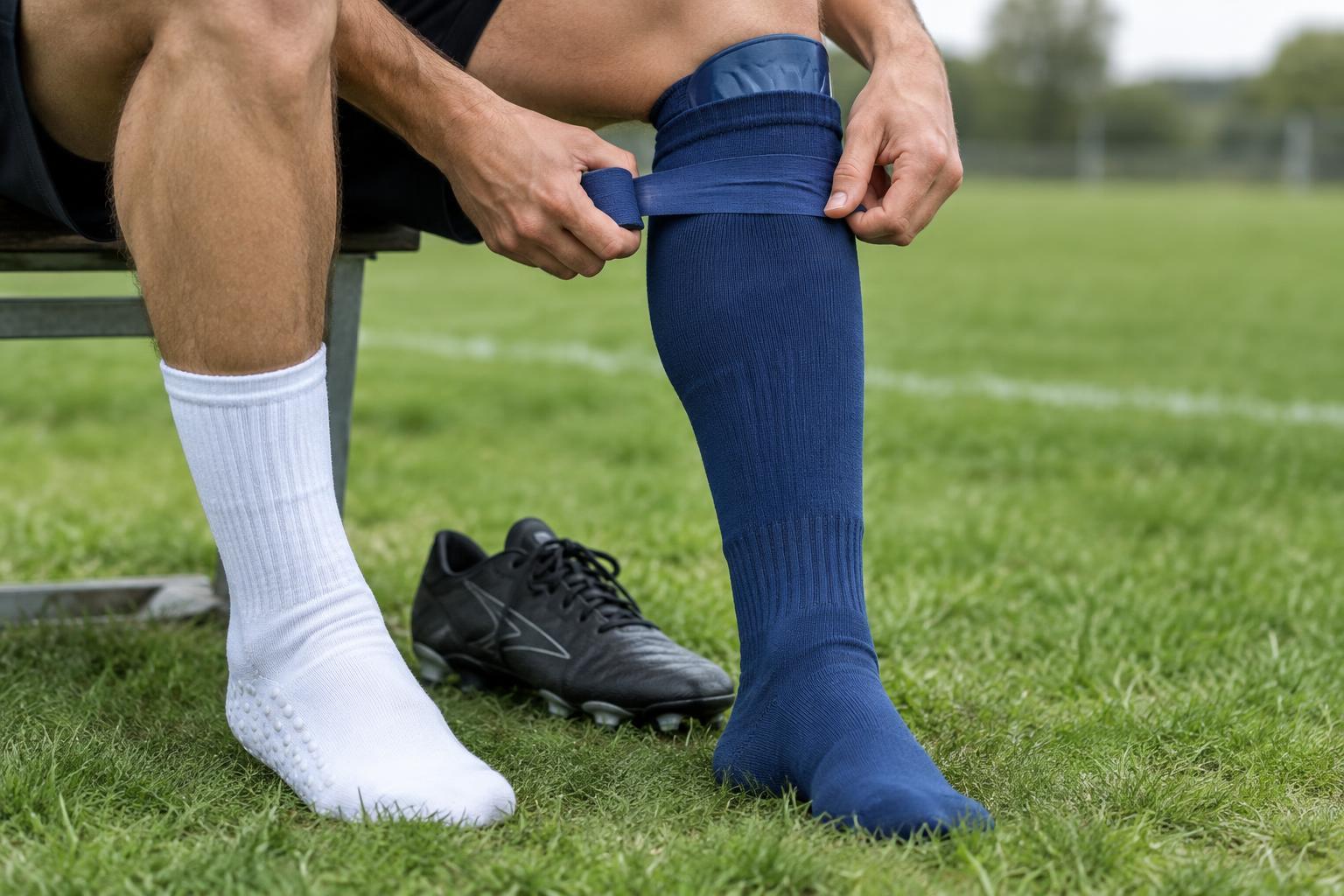
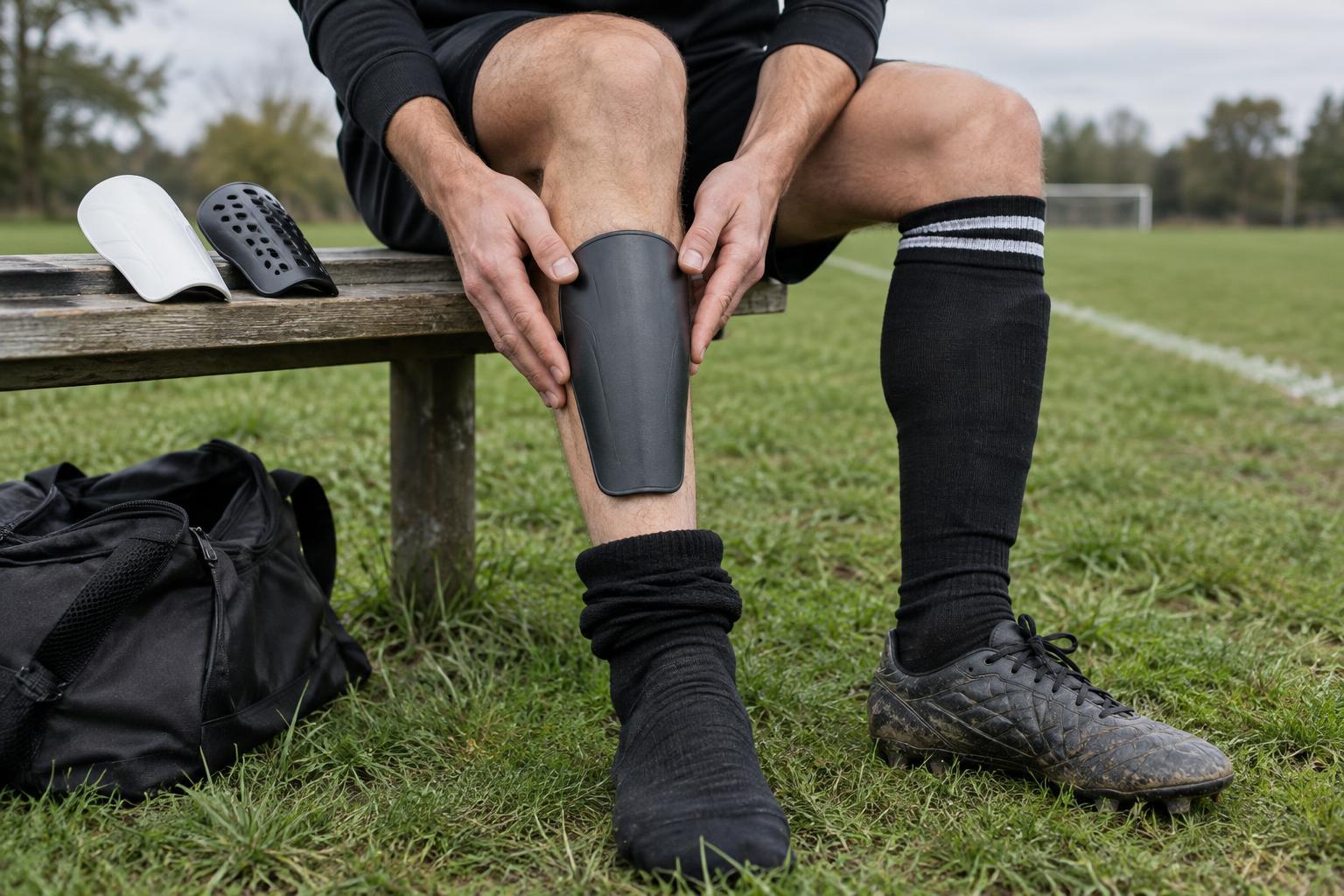
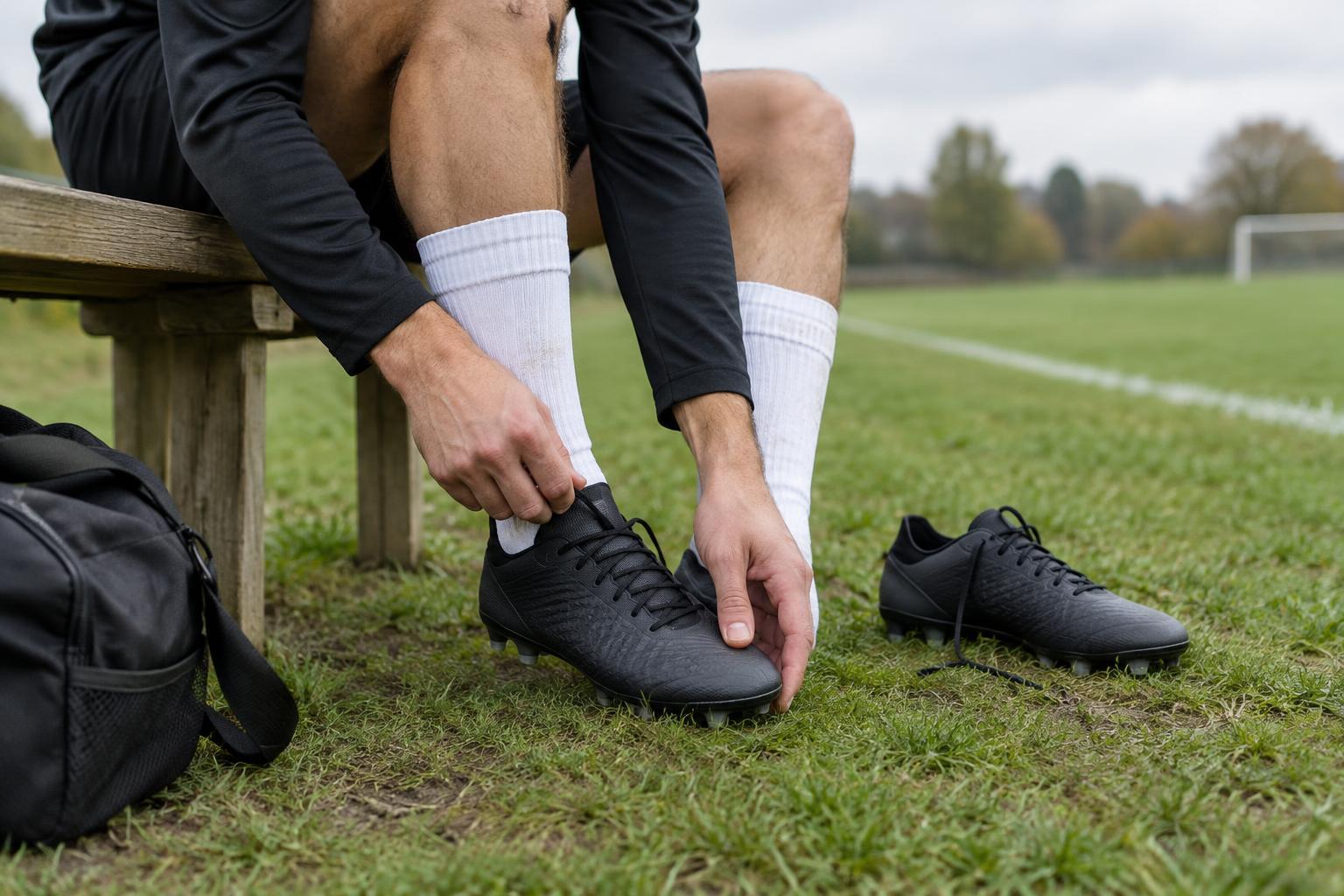
Wear your match socks and any shin-pad sleeves you normally pull into the boot. Loosen the laces before putting each boot on so your foot can settle fully at the back, then lace it firmly but not as tightly as possible. Stand up and walk around. Your toes should not be forced against the front, and you should be able to spread them naturally rather than grip the inside of the boot.
Next, make a few controlled football movements if the shop or your space allows it: rise onto your toes, shuffle sideways and change direction gently. Notice whether your heel lifts, your foot slides forward, or the upper folds into a pressure point. A small adjustment to the laces may solve minor looseness. If you have to overtighten them to stop your foot moving, the boot’s shape may be wrong for you.
Check both boots rather than judging the pair by the first one you put on. If possible, compare nearby sizes or another model back to back. That makes it easier to distinguish a snug, secure fit from a pair you are merely hoping will become comfortable.
Know what might change with wear
Boot materials can soften with use, but the amount and direction of change vary. A stiff upper may become more flexible around your foot; it is less sensible to expect a short boot to gain meaningful length. Do not buy a pair that hurts on the assumption that a break-in period will fix it. Likewise, a boot that already lets your foot slide may feel less secure as it wears.
Consider the soleplate and playing surface while you assess fit. Studs, blades and artificial-ground patterns can change how stable a boot feels underfoot, even when the upper fits well. Choose a soleplate intended for the surfaces you use, and follow the facility’s footwear rules. Comfort while standing in a shop is useful evidence, but it is not the whole test.
Make the final decision before the first match
Before buying, check the retailer’s return conditions, especially if you cannot try the boots on in person. Test a delivered pair indoors on a clean surface, with the socks you will use for football. Keep both sizes available for comparison if returns are permitted, and avoid wearing them outside until you are confident in the fit.
The right boot should feel close and controlled without making you think constantly about your feet. Choose the pair that accommodates your longer foot, holds both heels securely and stays comfortable through basic movement. The number printed on the box helps you find candidates; your feet decide which one fits.