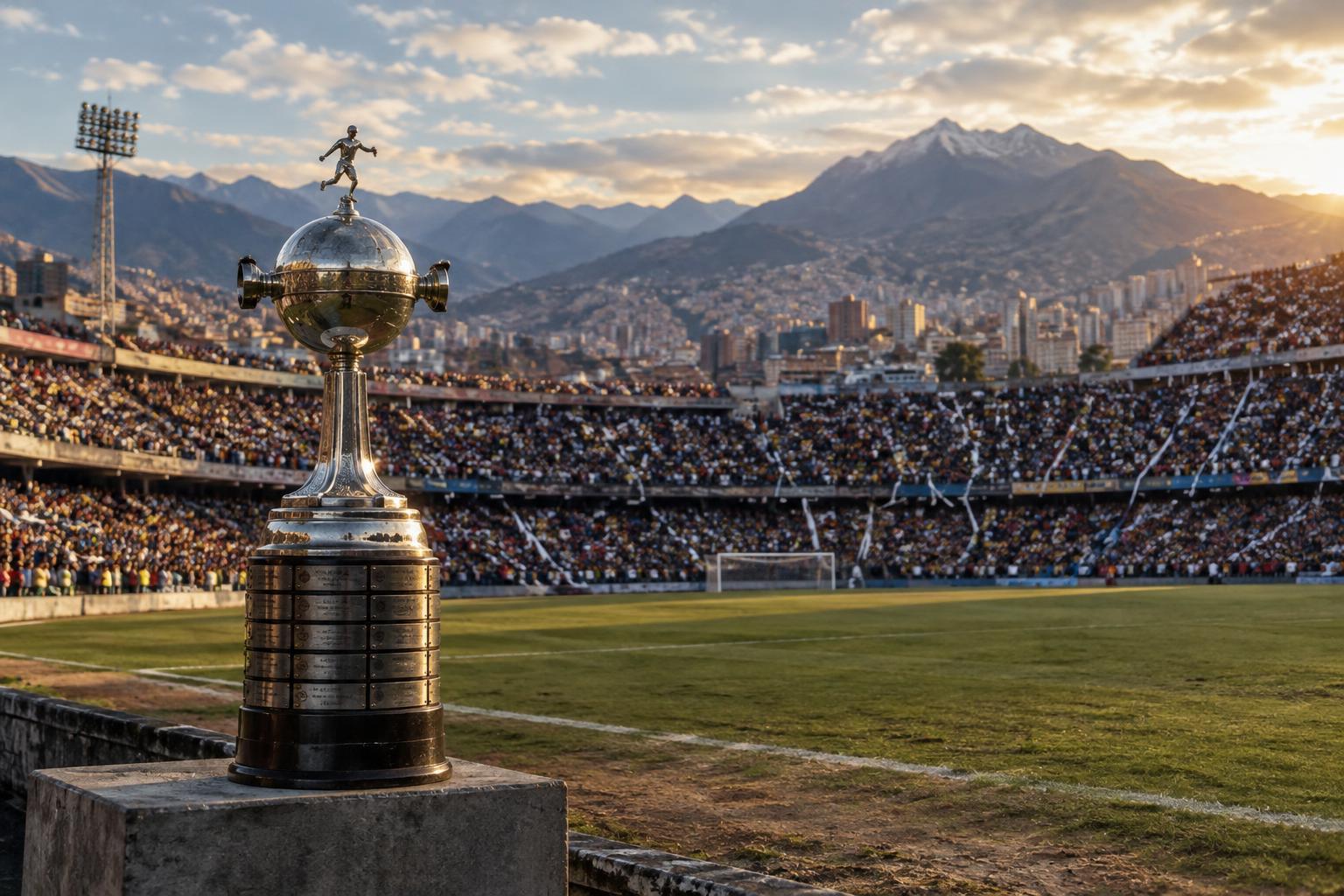
A continental prize for club champions
For much of football’s early history, a club could dominate at home without having a regular way to test itself against the best teams from neighbouring countries. South American clubs had met in international matches and tournaments before, including a champions’ competition held in 1948. But those events did not yet provide an enduring annual contest for the continent’s leading sides.
That changed in 1960, when the South American football confederation, CONMEBOL, launched a competition for national champions. Its first edition was won by Peñarol of Uruguay. The tournament gave domestic success a further purpose: winning a league title could now open the door to a continental one. Known as the Copa Libertadores, the competition took its name from the figures associated with South America’s independence struggles, giving its footballing ambition a distinctly regional identity.
How the competition grew
The early idea was straightforward: bring together leading clubs from different national leagues and determine a continental champion. Over time, the field widened beyond league winners, while the route to the trophy changed. Group stages and knockout ties gave clubs repeated encounters across borders rather than a single meeting. Qualification became possible through a wider range of domestic finishes and competitions, allowing more teams to take part.
Expansion helped the Libertadores reach more clubs and supporters, but it did not make the trophy easy to win. A successful side has to progress through different kinds of tests: collecting results in a group, managing the pressure of an elimination tie and adapting to opponents with unfamiliar strengths. For decades, the final itself was played over two legs, with each finalist hosting a match. The switch to a single-match final in 2019 changed the last step, but not the broader demands of the tournament.
Why playing across South America matters
A continental competition asks more of a team than repeating its domestic routine. Journeys can be long, and away matches may bring differences in altitude, climate, playing surfaces and stadium atmosphere. None of these conditions decides a result on its own, but together they reward preparation and adaptability. A team that controls matches comfortably at home may need a different approach when protecting a lead far from its own supporters.
Those away trips also give the competition much of its character. Clubs carry their colours into unfamiliar grounds, while home supporters get to measure their team against visitors they rarely see in domestic football. When teams meet again in later editions, individual fixtures can become part of a longer shared history. The geography of the Libertadores is therefore more than a scheduling challenge: it is part of what makes a continental title feel different from a national one.
Winners who raised the trophy’s standing
The Libertadores gained stature through the clubs and players who pursued it. Peñarol’s early success helped establish the competition, while Santos, with Pelé in its side, showed how a celebrated domestic team could make its name across the continent. Later champions from Argentina, Brazil, Uruguay and elsewhere added their own chapters. Their achievements made the trophy a point of comparison between clubs from different countries and different eras.
The title also offered a stage beyond South America. For many years, the Libertadores champion could face Europe’s leading club in an intercontinental contest. That opportunity added another reason for clubs to value continental success, although the Libertadores never depended on outside recognition for its meaning. Its central appeal remained the chance to be judged against the strongest opponents available within South American club football.
What its history explains about its appeal
The Libertadores became South America’s leading club competition because it brought several ambitions together. It offered a regular route from domestic achievement to continental competition, expanded that opportunity over time and built a record of champions that new contenders wanted to join. Its format could change without losing the essential question at its heart: which club can succeed against rivals from across the region?
For supporters, that question is tied to more than the final score. A campaign can involve memorable home nights, difficult away journeys and fixtures against clubs with histories of their own. For players and coaches, it demands the ability to handle contrasting opponents and settings. Those experiences have accumulated since the first edition, turning the Copa Libertadores from a new tournament for champions into one of the defining prizes in South American football.