What building from the back is trying to achieve
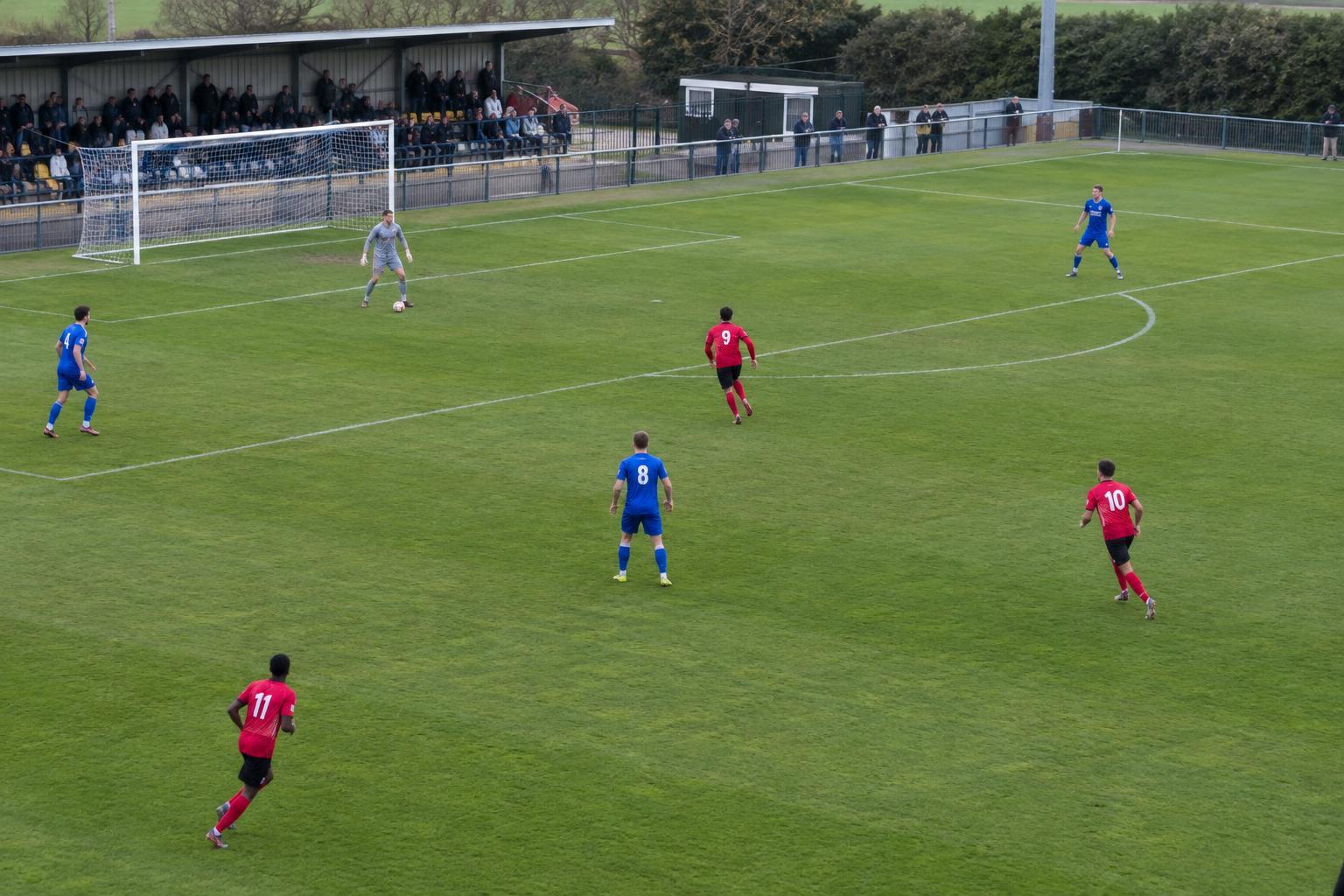
When a goalkeeper has the ball, the attacking team has a chance to choose where its next move begins. Short passing can draw opponents forward, opening space farther up the pitch. It can also help a team keep possession rather than contest a long clearance. But the aim is not to complete as many passes near goal as possible. The aim is to move the ball into a useful area while managing the danger of losing it.
Pressure changes that calculation. An opponent may close the goalkeeper while teammates mark nearby defenders and block passes into midfield. A successful build-up therefore depends on more than composure: players need positions that offer distinct options, an understanding of where the pressure is coming from and permission to change the plan when a short route closes.
Creating passing options around the goalkeeper
The goalkeeper becomes an extra passer at the base of the team. Two centre-backs might separate to either side, giving the goalkeeper angles rather than standing in one straight line. A full-back can offer a pass near the touchline, while a midfielder may position themselves between or beyond the first line of pressure. These movements create choices for the player on the ball and force the pressing team to decide which spaces to leave open.
Spacing matters as much as the number of available players. If two teammates stand close together, one opponent may be able to cover both. If they spread too far apart, a pass may travel slowly enough to be intercepted. Useful positions allow a player to receive with a view of the next pass and enough room to act. Small adjustments before the goalkeeper plays the ball can make a safer passing angle than a last-second sprint toward it.
The player receiving also needs to check their surroundings. A defender facing their own goal may have to return the ball immediately; one who can turn may carry it forward and draw an opponent away from another teammate. The goalkeeper should be available for a return pass, so the first short pass does not become a dead end.
Reading the press and finding the free player
A press often starts with a trigger: a pass toward one side, a slow touch or a receiver whose body shape limits their next move. The pressing team may try to steer play toward the touchline, where the ball carrier has fewer directions to escape. The building team can look for the space left behind that movement. If several opponents rush toward one side, a pass back through the goalkeeper may allow the ball to move to the other.
Not every forward pass needs to go directly from the goalkeeper to midfield. A defender can pass to a teammate who immediately lays the ball off to a third player facing upfield. This third-player movement helps when the direct route is blocked but a brief supporting pass can change the angle. It works best when the players anticipate one another rather than waiting until the receiver is surrounded.
The goalkeeper and defenders must still judge the quality of the opening. A midfielder who appears unmarked may be difficult to reach if an opponent can intercept the passing lane. A receiver with pressure close behind may be unable to turn. Sometimes the better choice is to retain the ball, move the press again and wait for a clearer route.
Why a longer pass can be part of the plan
Building from the back does not require every move to stay on the ground. If opponents commit many players to the press, they may leave space behind them. A goalkeeper can pass or kick toward a wide player, a forward or an open channel. Even when the team does not win the first ball cleanly, teammates positioned nearby may compete for the second ball.
This option can also make future short passes easier. If the pressing team knows a goalkeeper can play beyond it, its players have a harder choice: step forward aggressively or protect the space behind. The decision to go long should be based on the available target and support, not treated as either a failure or an automatic escape. An aimless clearance may simply give possession away.
Managing risk without becoming predictable
Losing the ball close to goal can create an immediate chance for the opponent, so build-up requires sensible limits. A pass into a crowded central area carries a different risk from one played to an open wide player. The goalkeeper and defenders should be ready to use the touchline, return the ball or clear it when their options disappear. Teammates behind the ball also need to be positioned to respond if possession is lost.
For a team learning these ideas, simple habits are more useful than a rigid pattern. Offer at least two passing angles, scan before receiving, communicate whether a teammate can turn and recognize when the press has trapped one side. Practising those decisions under gradually increasing pressure helps players see why a particular pass works. Good build-up play is flexible: it uses short combinations when they create an advantage and a longer route when that is the clearest way forward.