A kit is a system, not just a set
A football kit has to do several things at once. It should let a player run, turn and stretch without distraction. It should make teammates easy to recognise and give a club a consistent appearance. It also has to hold up to repeated use and washing. Shirts, shorts and socks meet those needs in different ways, so a good-looking set is not necessarily a comfortable one.
The design begins with how the pieces relate to each other. A shirt that hangs low may bunch above the waistband of the shorts. A very close-fitting shirt paired with loose shorts can feel unbalanced to some players. Colours and patterns need similar consideration: a bold shirt often reads more clearly alongside simpler shorts and socks. The aim is not perfect visual symmetry, but a kit players can wear and recognise without thinking about it during a match.
The shirt: identity and freedom of movement
The shirt carries much of a team’s visible identity through its colour, crest, numbers and any pattern. Those details need enough contrast to be readable, especially when players are moving. A striking graphic can still work, but placing busy elements behind a number may make the number harder to pick out. The shirt also needs to look distinct enough from an opponent’s kit for players and spectators to follow play.
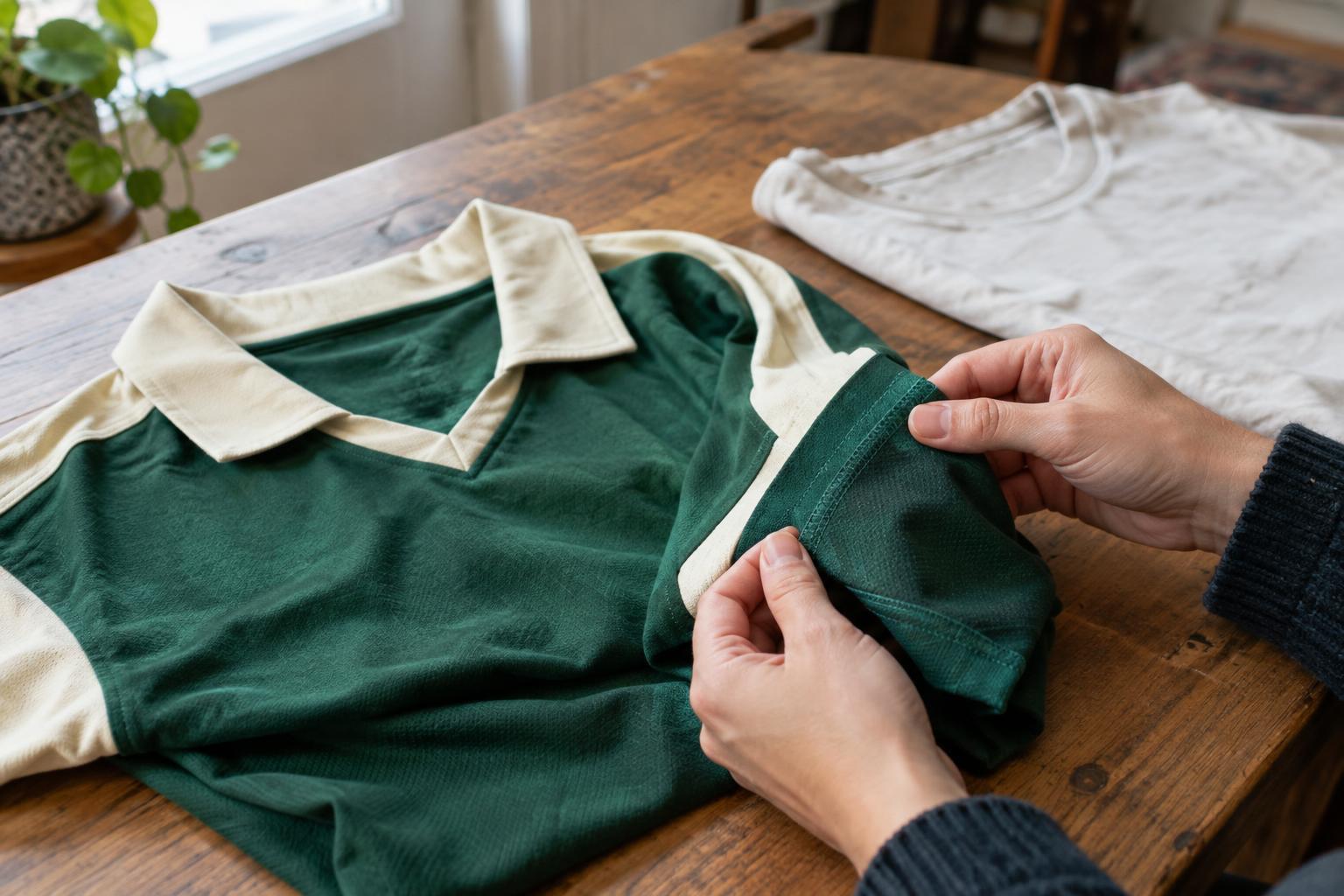
Fit matters beyond appearance. A shirt should allow an arm to reach overhead and across the body without pulling uncomfortably at the shoulders. The collar should sit comfortably when a player looks around or bends forward. Lightweight fabrics can feel cooler or dry faster than heavier ones, though comfort depends on the fabric, cut and conditions. Seams and printed details are worth checking where a bag strap, protective equipment or repeated movement might rub against them.
The shorts: room to run and turn
Shorts have a quieter visual role, but they can strongly affect how a kit feels. A player needs room to accelerate, change direction and lift a leg without the fabric restricting the stride. The waistband should stay in place without constant adjustment. Length is partly a matter of preference, provided the cut gives the wearer the movement they need.
Shorts can also help balance the shirt. A plain colour may give a patterned top space to stand out, while a small stripe or trim can carry a club colour through the whole set. Designers need to think about what happens when the garments move: a shirt may overlap the waistband, and shorts may fold at the thigh. Details that look aligned on a flat product photograph will not always stay aligned on a player. Testing the pieces together is more useful than judging each one in isolation.
The socks: coverage, fit and finishing the look
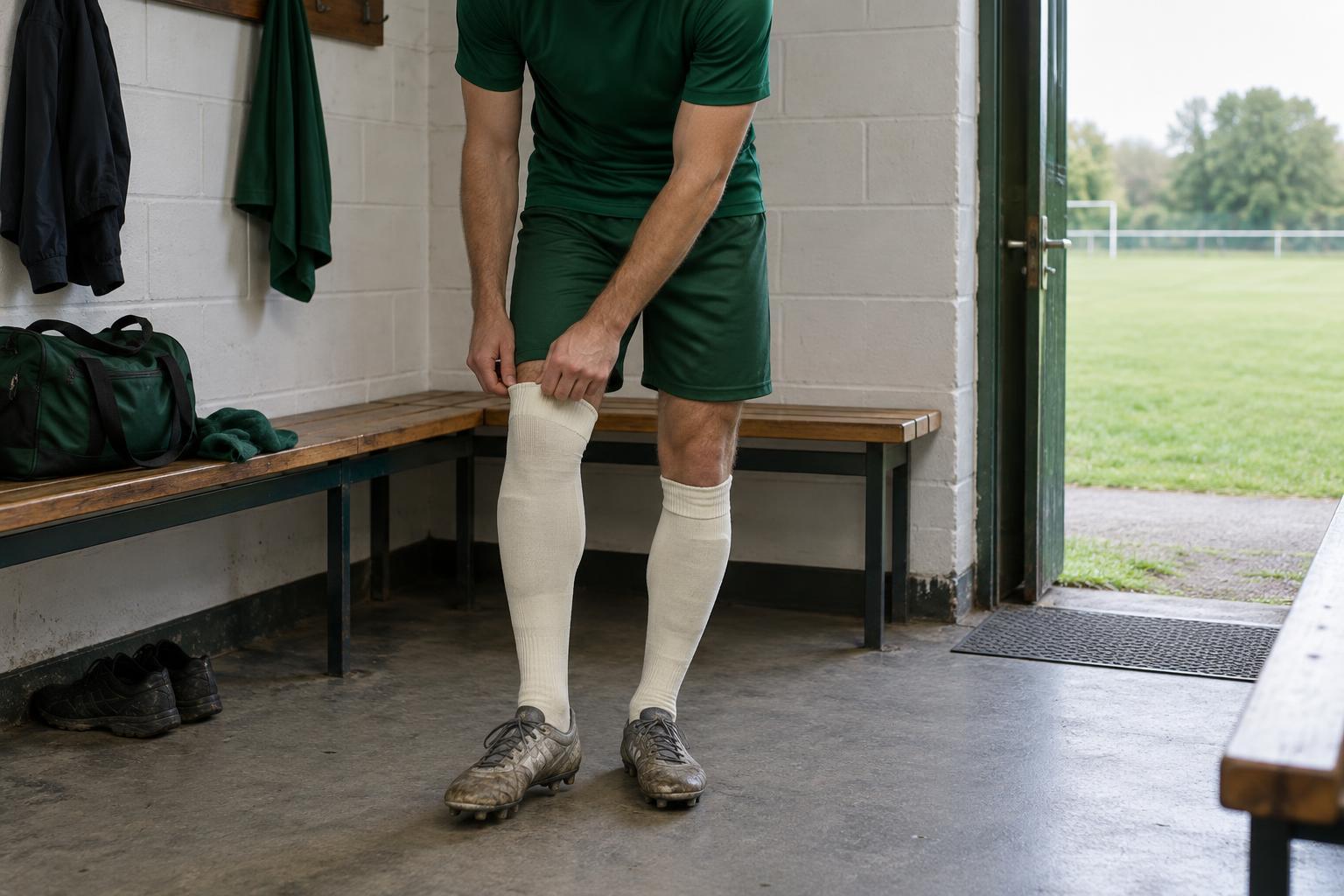
Socks connect the kit visually from shorts to boots, but their practical job is just as important. They should sit securely without slipping down or feeling uncomfortably tight. Players who wear shin guards also need enough coverage to keep them in place during play. How a sock feels inside a boot depends on its thickness, seams and fit; extra fabric around the foot can create pressure or bunching.
Sock colour can make a team easier to distinguish at a glance, particularly when two sides have similar shirts or shorts. A contrasting turnover, stripe or cuff can repeat a colour from the shirt without making the whole kit busy. The best choice is one players will actually wear comfortably, not merely the one that completes a drawing. Trying socks with match boots and shin guards can reveal issues that are easy to miss when they are worn alone.
Choosing and caring for the complete kit
For a grassroots team, start with the people who will wear the kit. Check that the available sizes and cuts give players a useful choice, then try a full set during football movements rather than relying on a standing fit. Consider whether the colours remain distinct when viewed from a distance and whether numbers are clear against the shirt. If replacement pieces may be needed later, a simple, consistent colour scheme can make mismatched batches less noticeable.
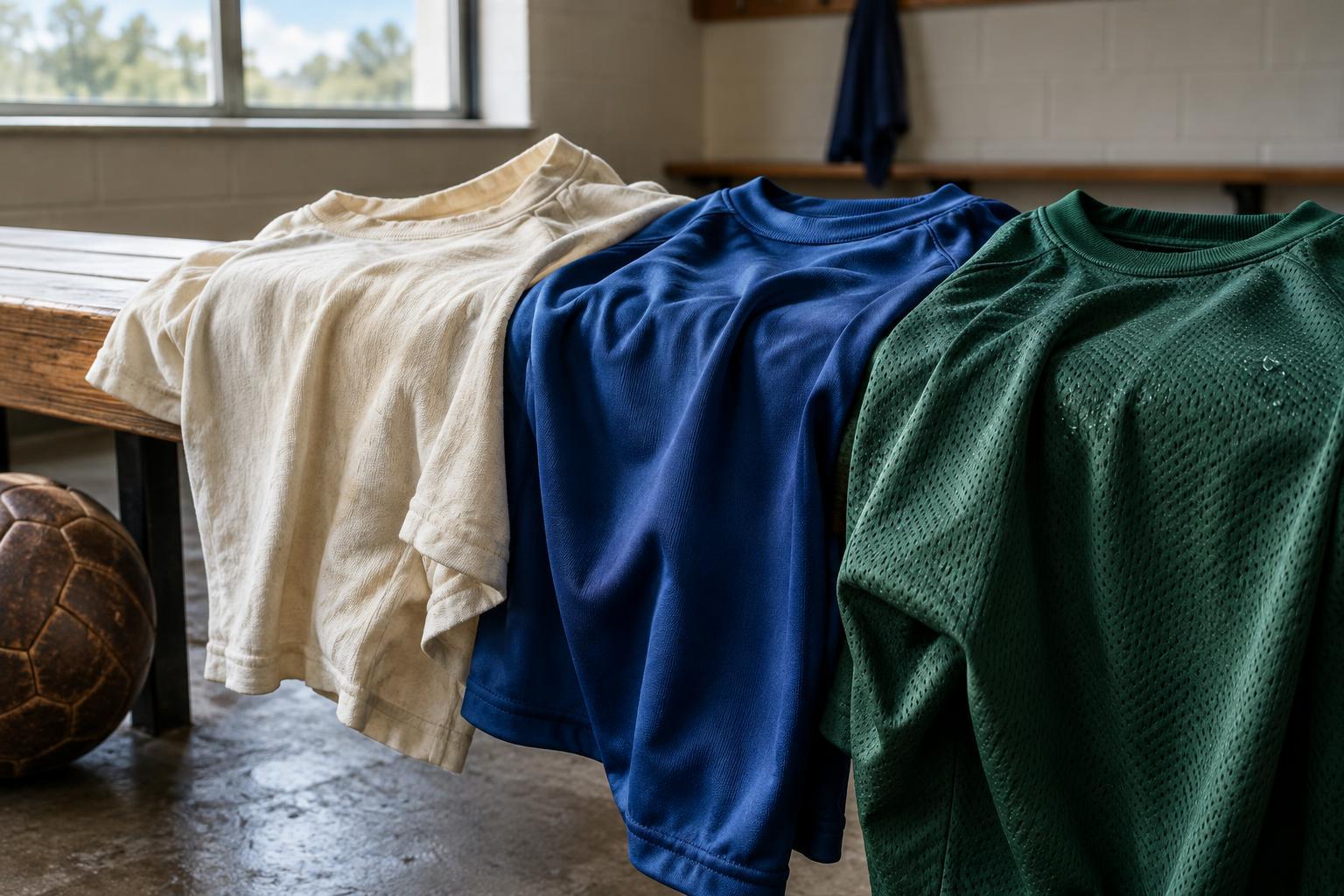
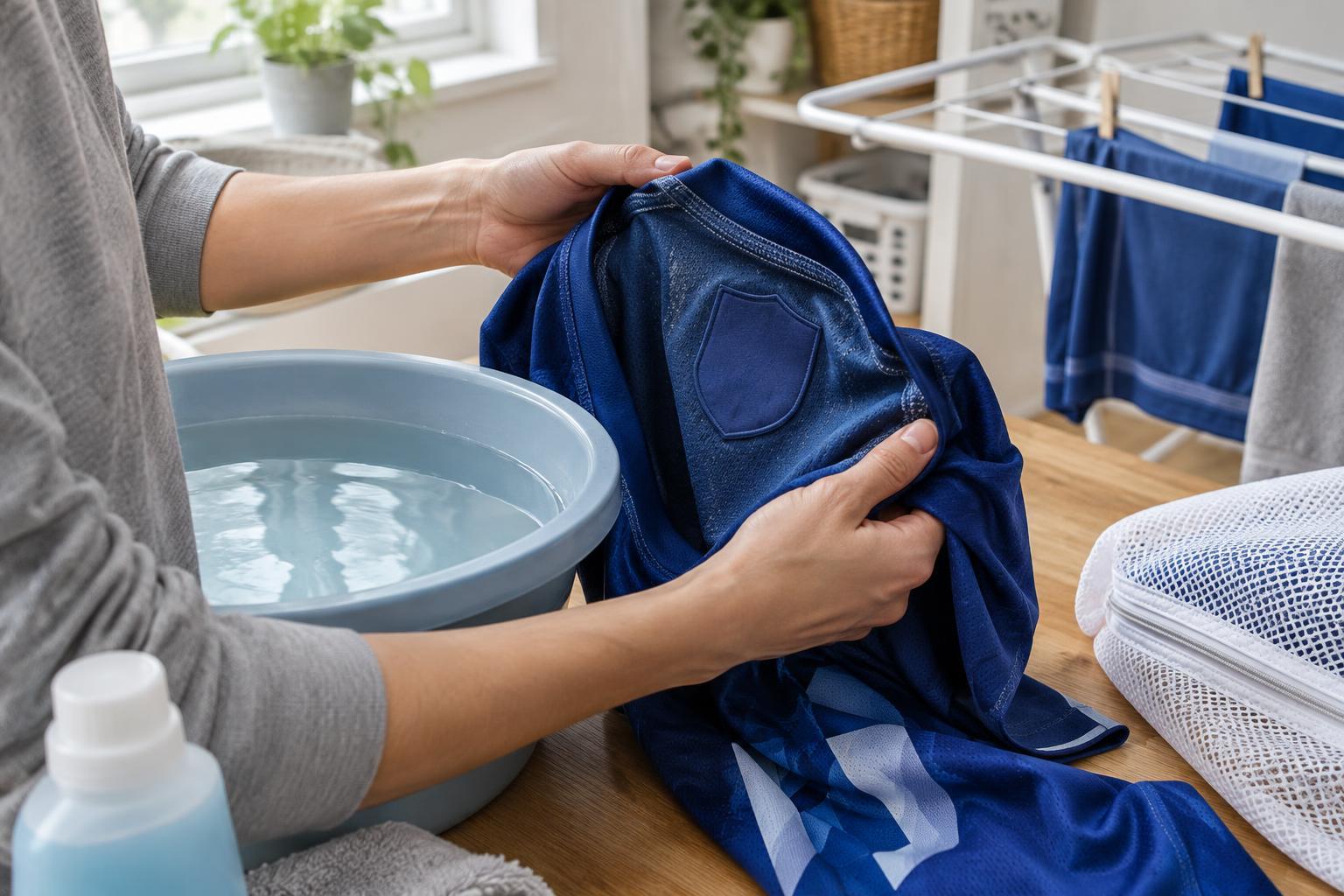
Care is part of the design’s working life. Follow each garment’s label, particularly for printed numbers, crests and decorative finishes. Letting kit dry as directed and dealing with mud promptly can help it remain wearable and presentable. A successful kit does not require elaborate details: it lets each piece do its job while making the team look and feel like a team.