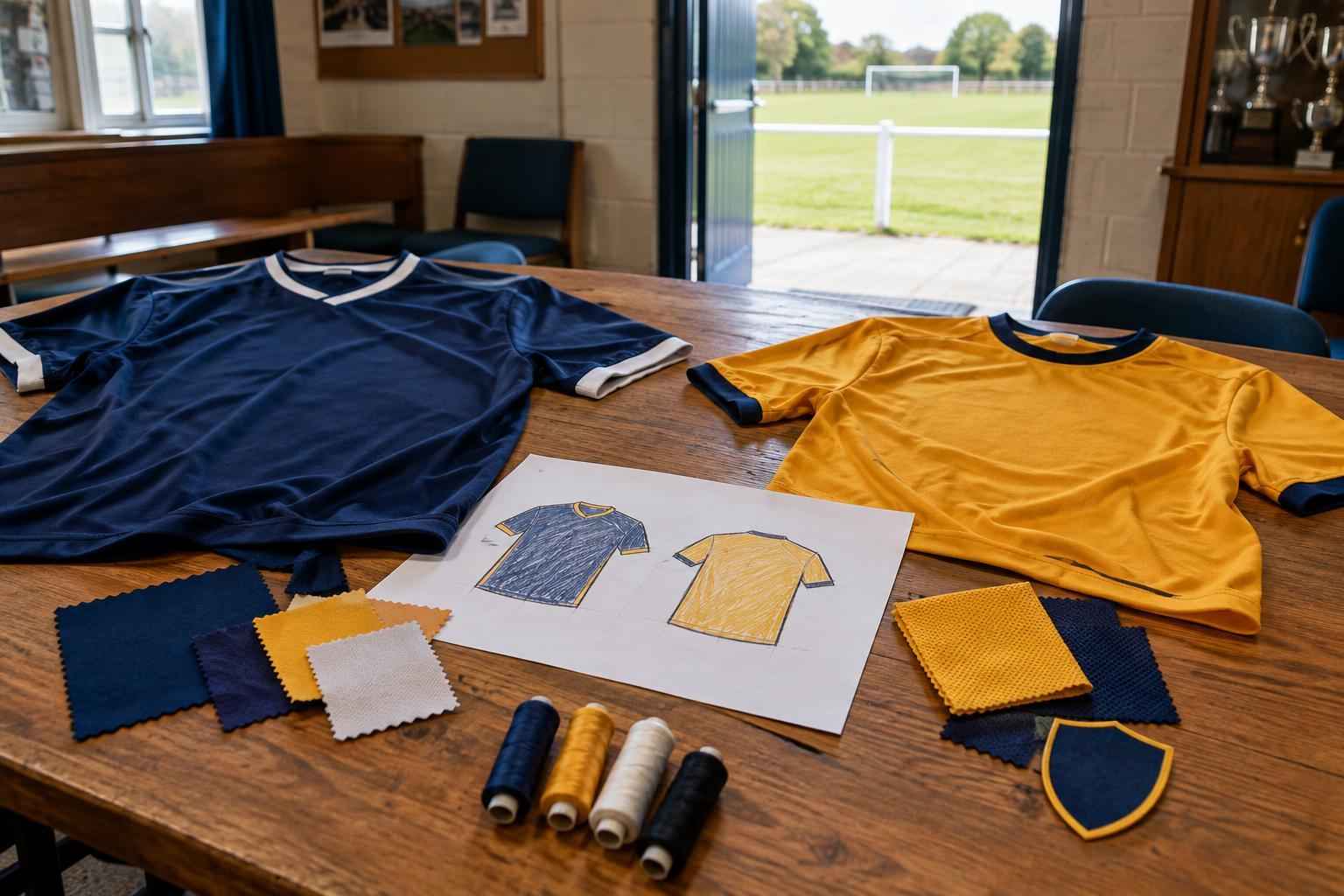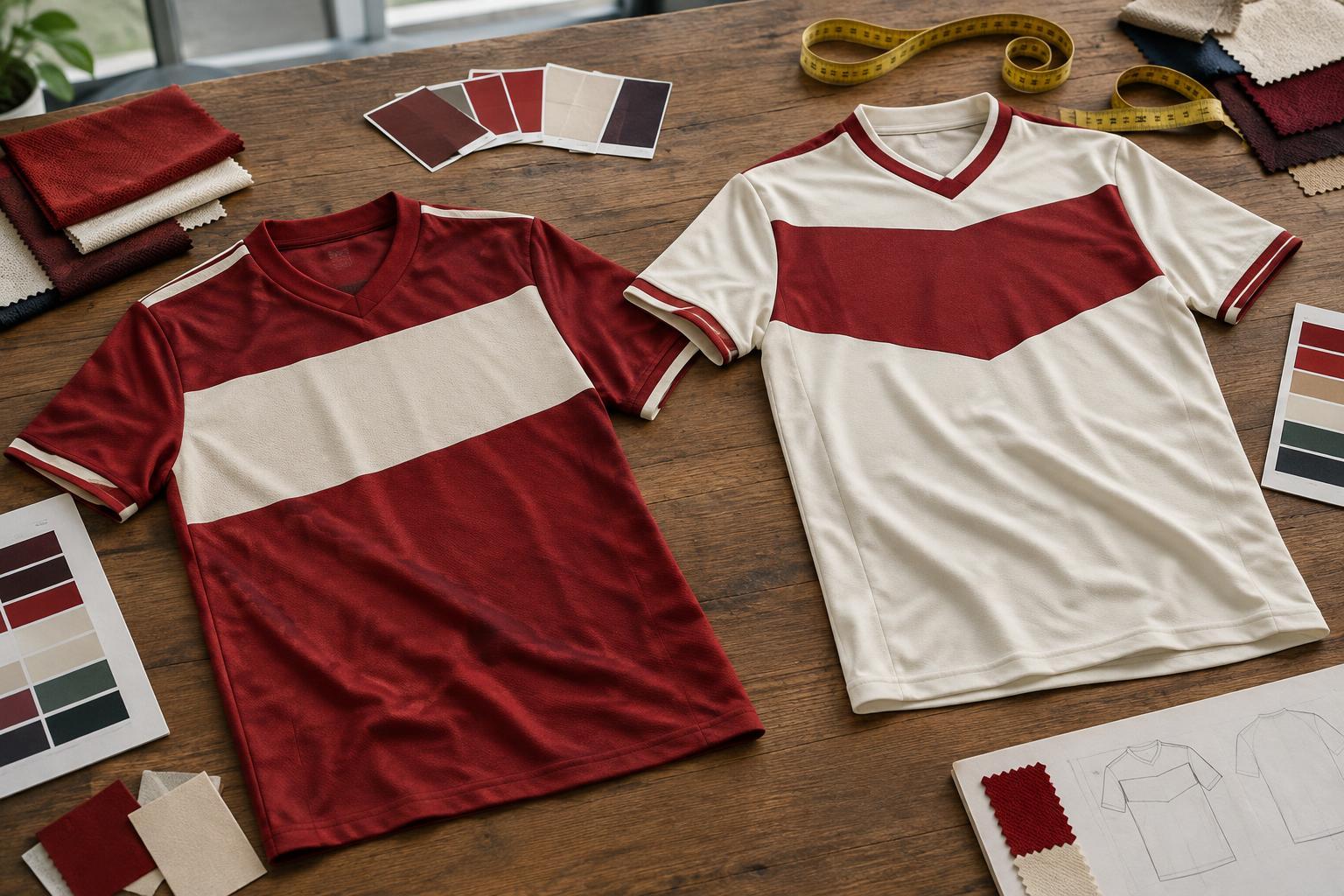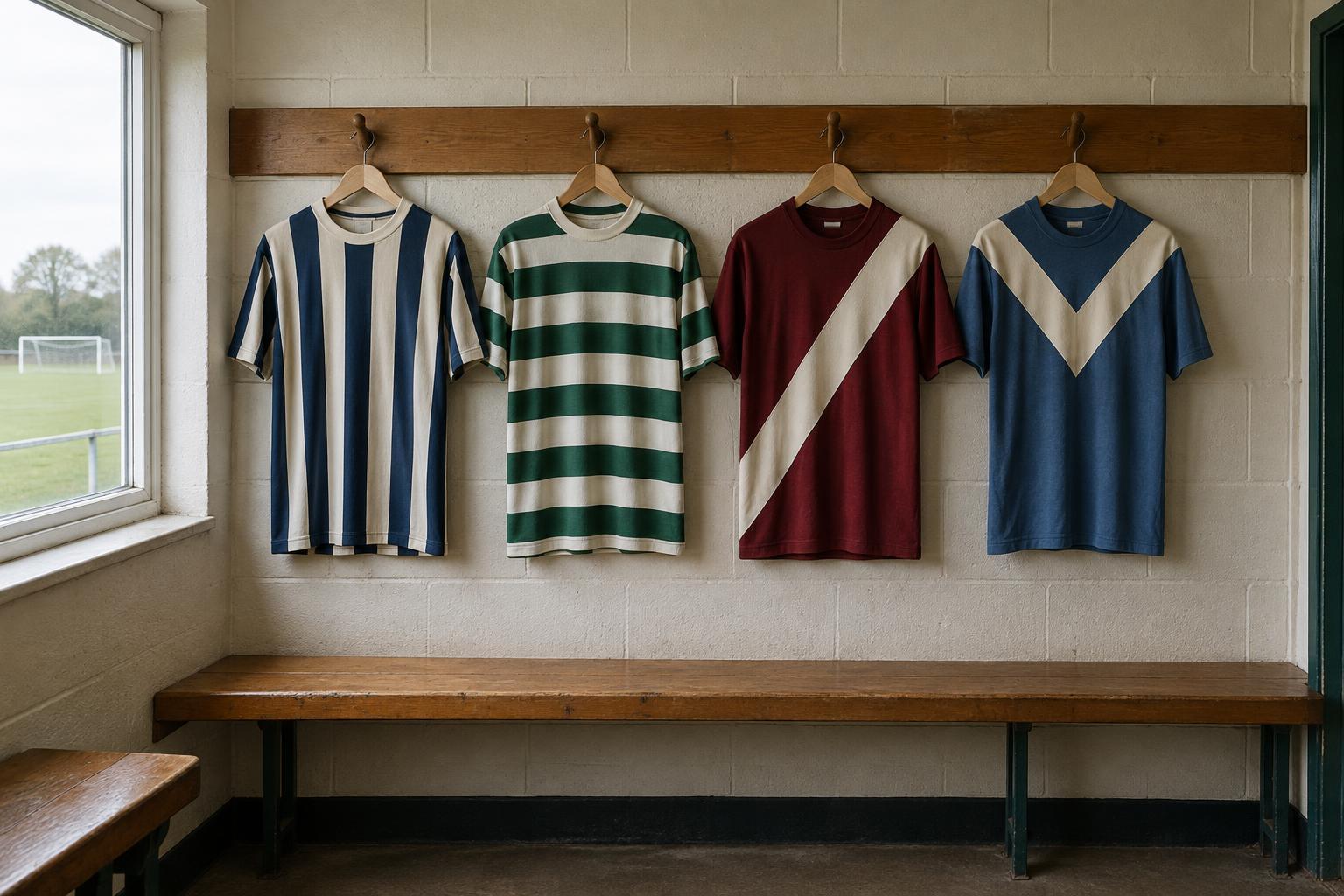
Decide what kind of shirt you want
A vintage football shirt can be a piece of supporter history, something to wear regularly, or both. Your purpose changes which flaws matter. A small pull might be easy to accept in a shirt you plan to frame, but distracting on one you want to wear. Likewise, a neatly replaced name set may suit a wearable shirt while disappointing someone seeking a shirt with all its original details.
Before looking closely at a listing, set your own priorities: the era and design, the size you need, and how much wear you are comfortable with. “Vintage” does not guarantee an untouched garment. Shirts can spend years being worn, stored, washed, repaired or customised. The useful question is not simply whether a shirt looks old, but which parts are original, which have changed, and whether the seller’s description makes that clear.
Read the fabric, not just the front photo
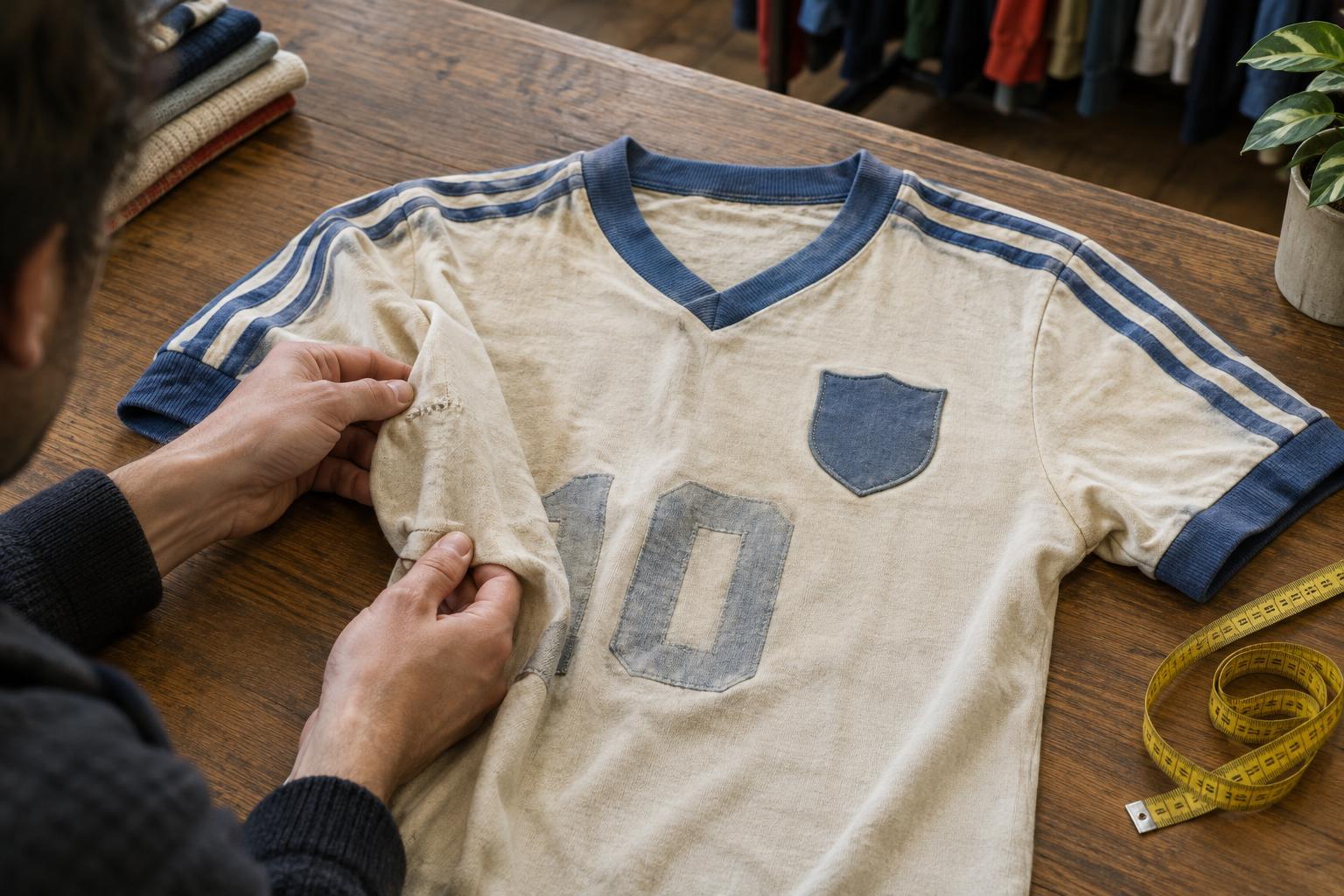
Ask to see the shirt in even light, laid flat, from the front and back. Close-ups of the collar, cuffs, underarms and hem can reveal issues that a full-length photo misses. Look for pulls, snags, bobbling, small holes, thinning fabric, stains and uneven fading. Patterns woven into the fabric may make damage harder to spot, so inspect both plain and patterned areas. Check whether the shirt sits evenly: a twisted side seam or distorted collar may suggest wear, stretching or an earlier repair.
Condition is more than a count of marks. Consider where each flaw sits and whether it could worsen with use. A loose thread may need only careful handling; a tear beside a seam or a cracked print can be more noticeable and harder to preserve. Photos can hide texture, odour and subtle discolouration, so ask direct questions if those factors matter to you. A description such as “good for its age” is less helpful than clear images and a list of specific faults.
Check badges, sponsors and name sets separately
Football shirts combine elements that can age differently. A badge may be embroidered or applied, while a sponsor or name set may be printed or heat-applied. Inspect each for lifting edges, cracks, peeling, missing sections and colour differences. A shirt may have sound fabric but fragile lettering, or a worn body with a fresh-looking replacement print. Neither combination automatically makes it a bad purchase, but it should be understood before you decide.
Alterations are not always obvious. Names, numbers, patches and even sponsor marks can be added or replaced later; a shirt may also have been personalised when first sold. Compare the placement, scale and finish of details with other examples of the same design if you can, while allowing for possible variations between versions. Ask the seller what they know rather than treating an unfamiliar detail as proof of anything. If its history cannot be established, regard the alteration as uncertain.
Inspect repairs and measure for fit
Turn the shirt inside out in photos where possible. Stitching around seams, hems, cuffs and badges may reveal a repair or alteration to the shape. A shortened body, narrowed sides or changed sleeves can affect the look and feel even when the work is tidy. Visible mending is not necessarily a problem; for some buyers it is part of the garment’s history. What matters is knowing where it is and whether the surrounding fabric is secure.
Do not rely on the size printed on the label. Cuts vary, and washing or alterations may have changed the fit. Ask for flat measurements, including chest width, length from shoulder to hem, and sleeve length where relevant. Compare them with a shirt you already own that fits as you want. If you intend to wear the vintage shirt, leave room for the fabric and any older printing to move without being stretched.
Make the final decision with clear information
Before buying, bring your questions together: Are there stains, holes or repairs not visible in the main photos? Have any badges, prints, patches or labels been replaced? Has the shirt been resized? Can the seller provide close-ups of the areas you are unsure about? Clear answers make it easier to judge whether the shirt matches your expectations; vague answers leave you to accept more uncertainty.
Once it arrives, inspect it before wearing or washing it, particularly if the printing looks delicate. Follow any care label that remains, and handle older applied details gently. The most satisfying vintage shirt is not necessarily the one with the fewest signs of age. It is the one whose condition, changes and fit you understand well enough to enjoy.