More than a guide to the game
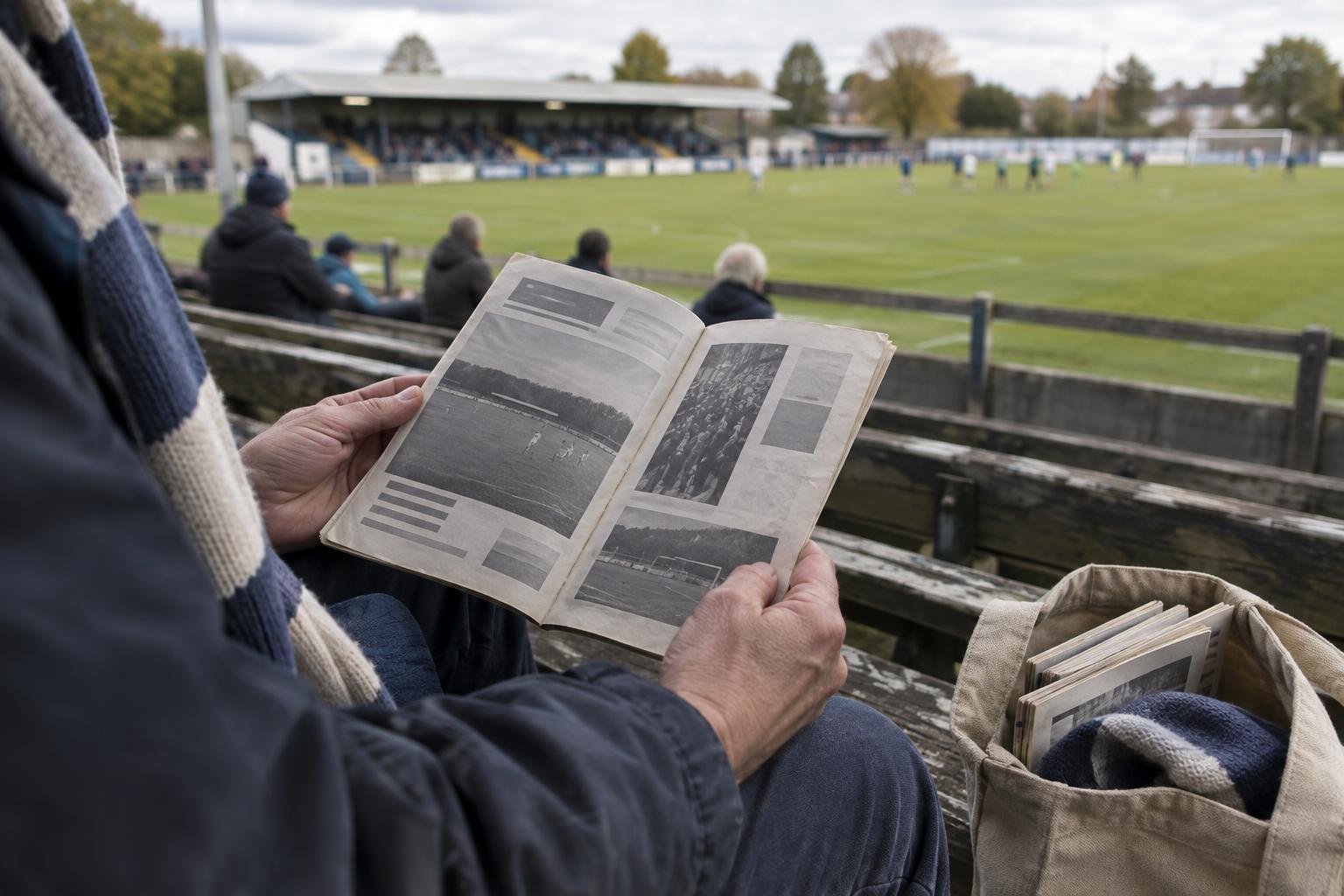
A matchday programme is usually made for a particular fixture. Depending on the club and competition, it might contain team information, interviews, photographs, historical features, community news or notes from people involved with the club. It gives a supporter something to read before kick-off, but its usefulness does not end when the match does.
A programme fixes a little of the day on paper. Its cover, advertisements and choice of stories show how a club presented that occasion to its audience. Years later, even an ordinary fixture can be interesting to revisit: a player may have been making an early appearance, a ground may have changed, or a familiar local business may no longer advertise there. The programme cannot tell the whole story of a match, but it preserves details that a scoreline leaves out.
A personal record of being there
For many supporters, the value of a programme lies in the memory attached to their copy. A folded corner might recall a rainy walk to the ground; a note on the line-up might bring back a conversation in the stand. Two people can own the same edition yet remember entirely different afternoons. That is part of what makes a modest, widely sold object feel personal.
Some fans mark the final score, scorers or the people they attended with inside the cover. Others prefer to leave it untouched. Neither approach is more authentic. If you want to keep a matchday record, a few words written soon after the game may be more useful to your future self than a detailed account composed much later. Include what you noticed beyond the pitch: the journey, the weather, a meeting with friends or a sound from the crowd.
Reading a programme with a curious eye
A programme is also a piece of club communication. Its editorial choices can reveal what the club wanted to celebrate or explain on that day. Look at who appears in the photographs, which parts of the club receive attention and how visiting supporters or teams are introduced. Community notices and youth-team pages can be just as revealing as the main interview.
It helps to read with an awareness of what is missing. Programmes are produced for a purpose, often under time pressure, and they may not reflect every supporter’s experience or every side of a club’s history. An official programme and an independent fanzine can offer different perspectives on the same football community. Neither needs to stand alone as a complete account.
Collecting without turning it into a chore
You do not need a complete run of editions to enjoy collecting. A small selection tied to meaningful matches can be easier to store and more rewarding to revisit than a stack you never open. You might keep programmes from first visits to grounds, matches attended with family, or fixtures involving a local grassroots team. Decide what matters to you rather than following someone else’s idea of a valuable collection.
If you want copies to last, keep them somewhere dry and out of prolonged direct sunlight. Avoid forcing oversized editions into tight sleeves or piling heavy objects on top of them. A simple note identifying the fixture can help when the cover does not make it obvious. Sharing duplicates or lending an edition to a friend can be another way to enjoy a collection, provided everyone is comfortable with how the copies are handled.
When the programme is not on paper
Not every club produces a printed programme for every fixture. Some use digital editions, shorter handouts or other ways of sharing match information. These can be convenient, though they invite different habits: a file can be easy to save but just as easy to forget. If a digital edition matters to you, give it a clear file name and keep it with your other match memories rather than leaving it buried among downloads.
Whether it is printed or digital, the programme offers a reason to pause and notice the setting around a game. Read it on the journey home, compare it with what you saw, or show it to someone who could not attend. The best reason to keep one is not that it might become rare. It is that an ordinary football afternoon can become easier to remember when you have held on to one small part of it.