What is a cover shadow?
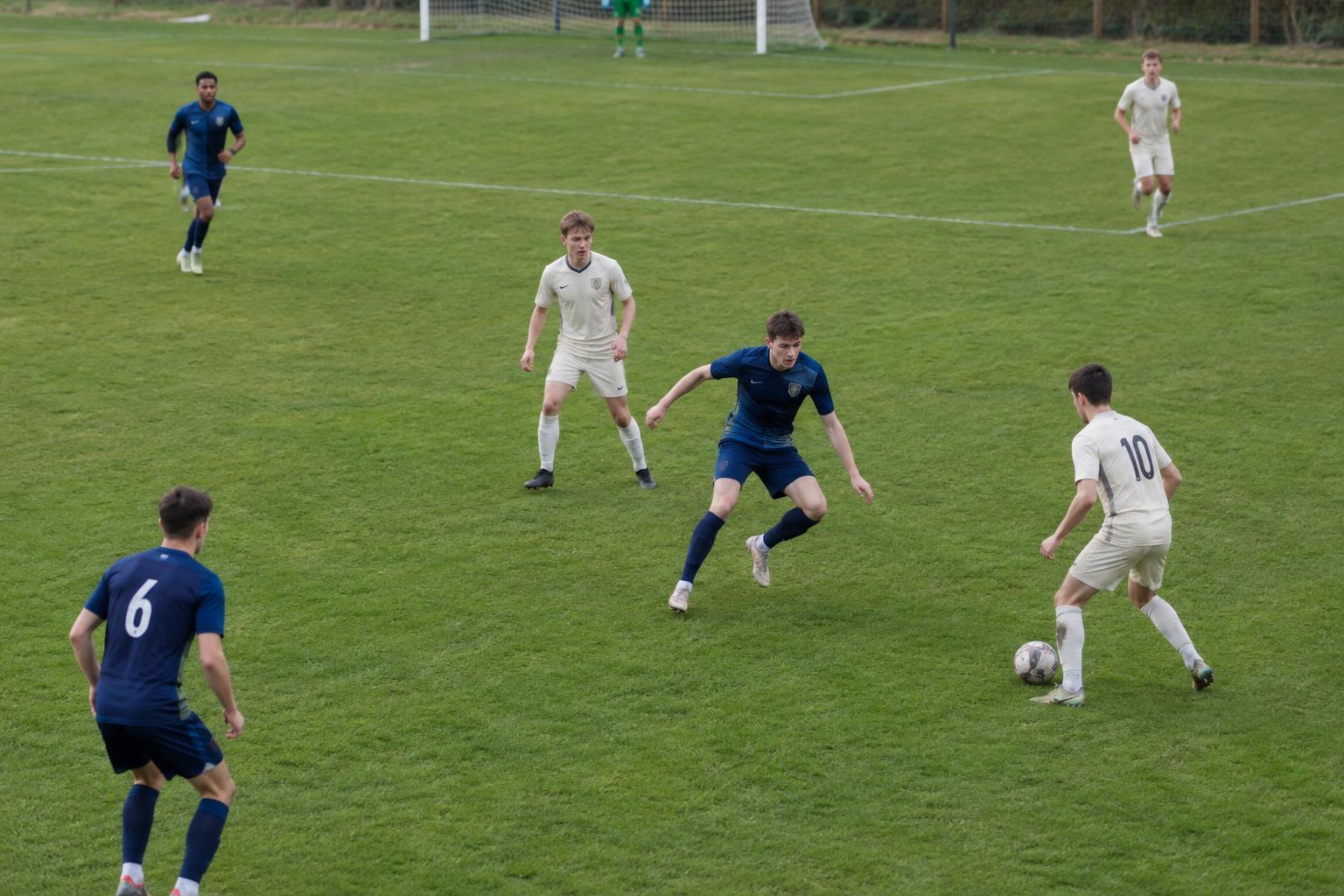
A cover shadow is the area behind a pressing player that is difficult for the ball carrier to pass into. Imagine a defender closing down a centre-back while keeping a nearby midfielder in line with their body. The defender threatens the player on the ball, but their position also makes a direct pass into midfield harder to complete. They are doing two jobs without standing next to two opponents.
The word “shadow” is a useful picture, not a fixed shape on the pitch. The blocked area changes as the ball carrier, defender and potential receiver move. A small adjustment by any one of them can open or close the passing lane. This is why a press can look orderly one moment and suddenly offer an easy pass the next.
How the angle of the press does the work
A defender who runs straight at the ball may arrive quickly but leave passes open on either side. To use a cover shadow, they often approach on a curve. That route lets them move toward the ball while staying between it and a particular receiver. As they get closer, they may slow down and adjust their body position so the ball carrier cannot easily pass through the gap.
The objective is not always to win the ball immediately. If a forward discourages a pass into a central midfielder, the ball carrier may play wide or back toward the goalkeeper. Teammates can then shift toward the likely destination. The forward’s run has helped guide the attack, even if they never touch the ball.
This only works when the rest of the team responds. If the pressing defender blocks a central option but nobody moves toward the wide player, the ball carrier may still have a comfortable way out. A cover shadow is one part of a coordinated choice about which passes to discourage and which spaces to defend next.
Why the blocked pass can become available again
A cover shadow does not erase a teammate from the game. The potential receiver can step sideways, move closer to the ball or drift behind a different defender to find a new angle. The ball carrier can also move with the ball, changing the line of the pass. The presser has to keep adjusting; simply arriving in the right place once is not enough.
There are other ways around the obstacle. A pass can go to a different player first, allowing the ball to reach the intended receiver from a new angle. A ball carrier may play over the pressing player when there is room and the pass is manageable. Those options carry their own risks, but they show why a cover shadow is better understood as a constraint than a guaranteed interception.
The defender has limits, too. If they focus entirely on screening one pass, the ball carrier might have time to dribble past them or choose another route. If they charge forward to tackle, they may lose the position that blocked the lane. Good pressing often depends on balancing those two threats rather than committing completely to either one.
How to spot a cover shadow while watching
Start with the first defender approaching a player on the ball. Instead of watching only whether they make a tackle, look behind them. Is there a midfielder or defender who appears available but cannot be reached with a simple pass? Then watch the presser’s route: a curved run or a small sideways step may be keeping that passing lane closed.
Next, follow what the ball carrier does in response. A sideways pass does not automatically mean the press has succeeded, but it may show that a central option was discouraged. If the receiver moves a few steps and the ball suddenly reaches them, notice how little it took to change the angle. Watching that sequence makes the press easier to understand than judging a single player’s sprint in isolation.
The cover shadow is a reminder that defending is partly about the passes a player prevents, not just the tackles they make. For a change of subject after examining football’s fine technical details, browse Armour and Craftsmanship · Arms and Armour Journal and explore another kind of craftsmanship.