Start with what the club actually uses
An equipment store does not need to be elaborate. It needs to make the next training session or match easier to run. Begin by listing the items the club owns: balls, bibs, cones, pumps, first-aid supplies and any other shared kit. Note which items travel to every session, which are used occasionally and which need to remain at the venue.
Walk through a typical session from arrival to departure. Who collects the equipment, and how do they carry it? Where does it go when players are packing up? These questions reveal whether the space needs a grab-and-go bag near the door, a shelf for less-used items or a clear area for returning muddy kit. For broader ideas on arranging a compact shared room, browse Room Planning · Space and Surface, then adapt what is useful to the club’s space.
Give everything a place people can recognize
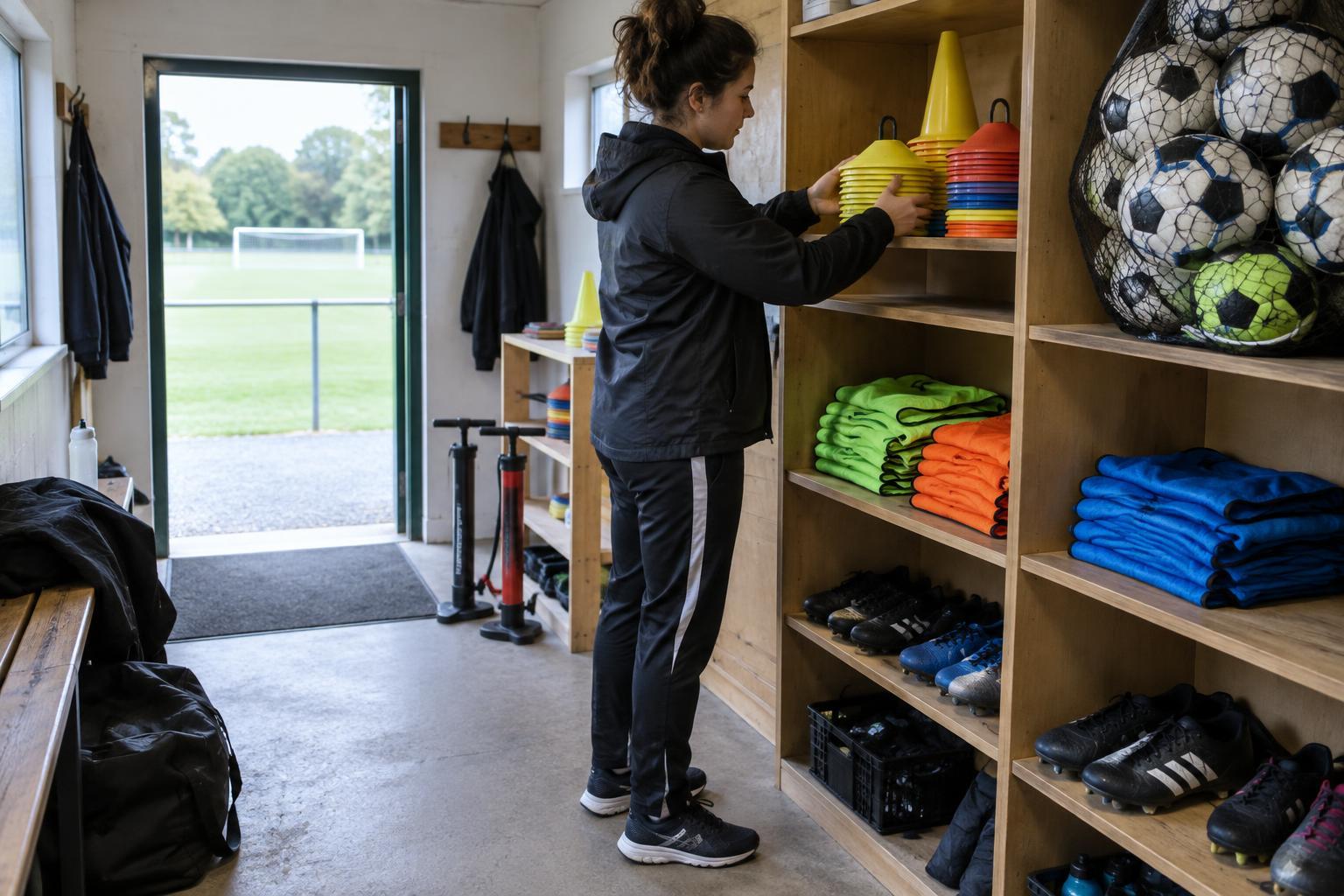
Group equipment by purpose rather than fitting it wherever there is a gap. Put training markers together, keep pumps and spare needles in one small container, and give clean bibs a separate place from used ones. Simple labels help occasional volunteers return things correctly without having to ask the person who usually runs the session.
Avoid stacking heavy items where someone must reach over other kit to retrieve them. Keep walkways and doors clear, and check that shelves and hooks are appropriate for the loads placed on them. Portable goals and other large equipment need storage and handling that follow their manufacturer’s instructions and the venue’s rules. A tidy-looking corner is not a substitute for secure storage.
If several teams share the store, assign each a clearly marked area for team-specific items while keeping communal equipment in an agreed location. This reduces time spent searching and makes it easier to notice when something has not been returned.
Make access simple without losing accountability
Decide who needs access before distributing keys or codes. Coaches and designated volunteers may need to open the store, but a growing, informal list of keyholders can make it difficult to know who last used the space. Keep an up-to-date access list with a named person responsible for changes, and follow any requirements set by the venue.
A short check-out routine can be enough for shared equipment. Record items taken away from the site, the person taking them and when they are expected back. Items used at the usual pitch may only need a quick count when they are returned. Choose a method people will actually use, whether that is a sheet in the store or a shared club record.
Make the return routine part of finishing a session, not a separate job left for the next volunteer. One person can count balls while another gathers cones and bibs. Before locking up, check that borrowed items are accounted for and that anything damaged has been noted.
Plan for wet, worn and missing kit
Football equipment will not always come back clean or dry. Give wet bibs and other washable items a route to cleaning and drying rather than leaving them in a closed bag. Keep muddy items away from clean supplies, and follow the venue’s rules for cleaning floors and storage areas. For general ideas about caring for a shared room, browse Home Maintenance · Space and Surface, while keeping the club’s own cleaning routine specific to its equipment and venue.
Set aside a clearly marked place for damaged items so they are not unknowingly taken to the next session. A flat ball may need attention; a damaged item that could be unsafe should stay out of use until an appropriate person has checked it. Record missing kit promptly, but avoid turning every small loss into a search for someone to blame. A useful record helps the club decide what to repair or replace.
If the club is choosing shelves, containers or floor coverings for a permanent store, browse Materials and Finishes · Space and Surface for broader materials-and-finishes ideas. Check any proposed changes with the venue before buying or installing them.
Keep the system easy to hand over
The best storage plan should still work when the usual organizer is away. Put a brief inventory and closing checklist somewhere keyholders can find them. Include where communal items belong, how to report damage and whom to contact about access problems. Keep instructions short enough to read while packing up after a session.
Revisit the layout when the club’s equipment or use of the space changes. A shelf arrangement suited to one team may become awkward when more sessions share the room. Ask the people who collect and return kit what slows them down, then make small changes and explain them to everyone with access. The aim is not a perfect storeroom; it is a dependable routine that leaves the next group ready to play.