What is a third-man run?
A third-man run is an attacking movement in which a player receives the ball after two teammates have connected first. Imagine a midfielder, A, passing to a forward, B. While that pass travels, another midfielder, C, runs into space beyond B. The forward then plays the ball to C. The runner is the “third man”: not the original passer or the first receiver, but the player the exchange was designed to reach.
The important feature is not the number of passes. It is that a direct pass from A to C may have been blocked, risky or poorly timed. Passing through B changes the angle of the attack and gives C a moment to move away from a marker. The same principle can appear near the touchline, through the centre or around the edge of the penalty area.
Why the middle player matters
The player who receives the first pass acts as a link. A defender may step toward that player, creating space behind them, while another defender turns to face the ball. If the link player can return or redirect the pass promptly, the runner may arrive in a position that was unavailable a moment earlier. The link does not always need a spectacular touch; a simple layoff can be enough.
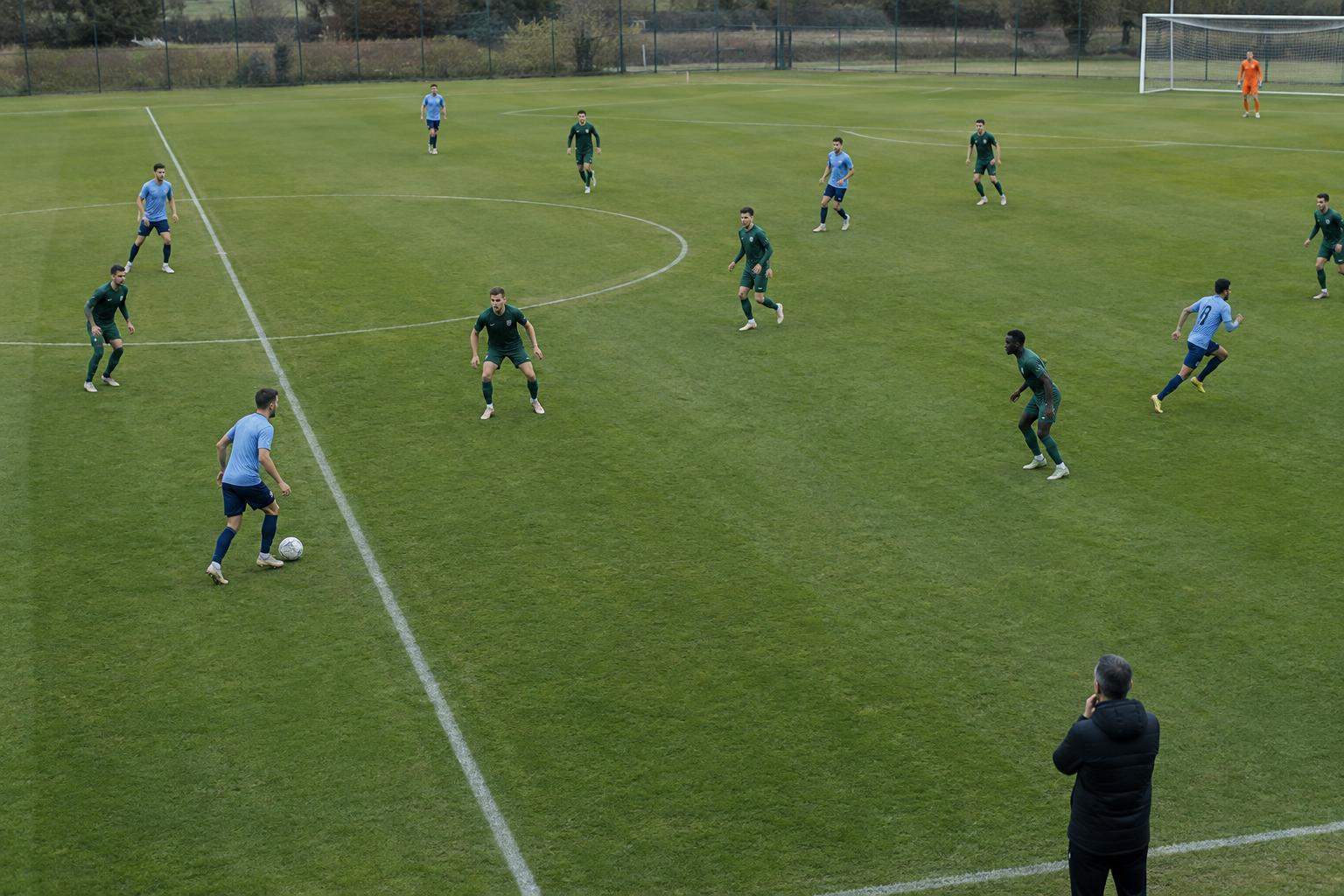
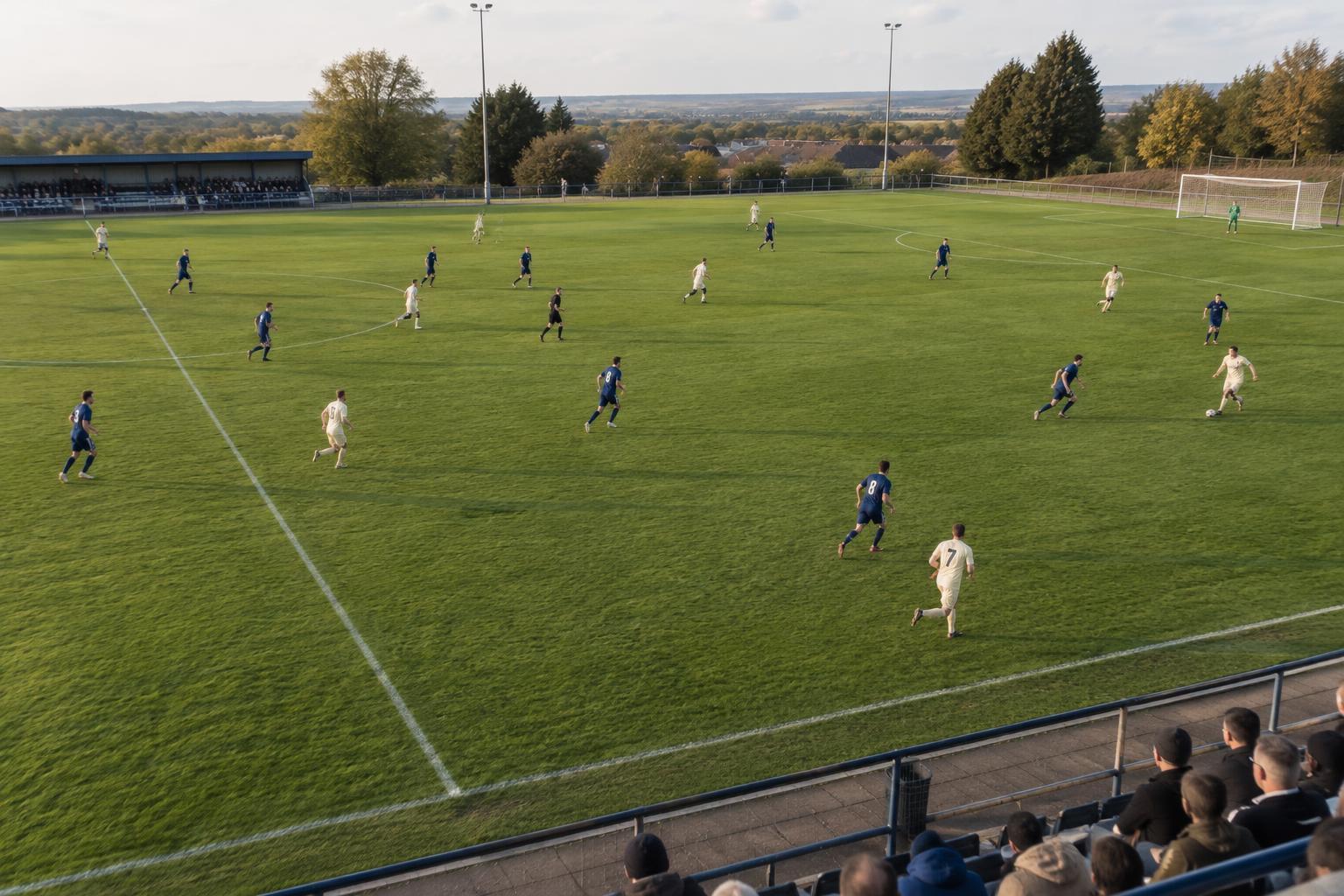
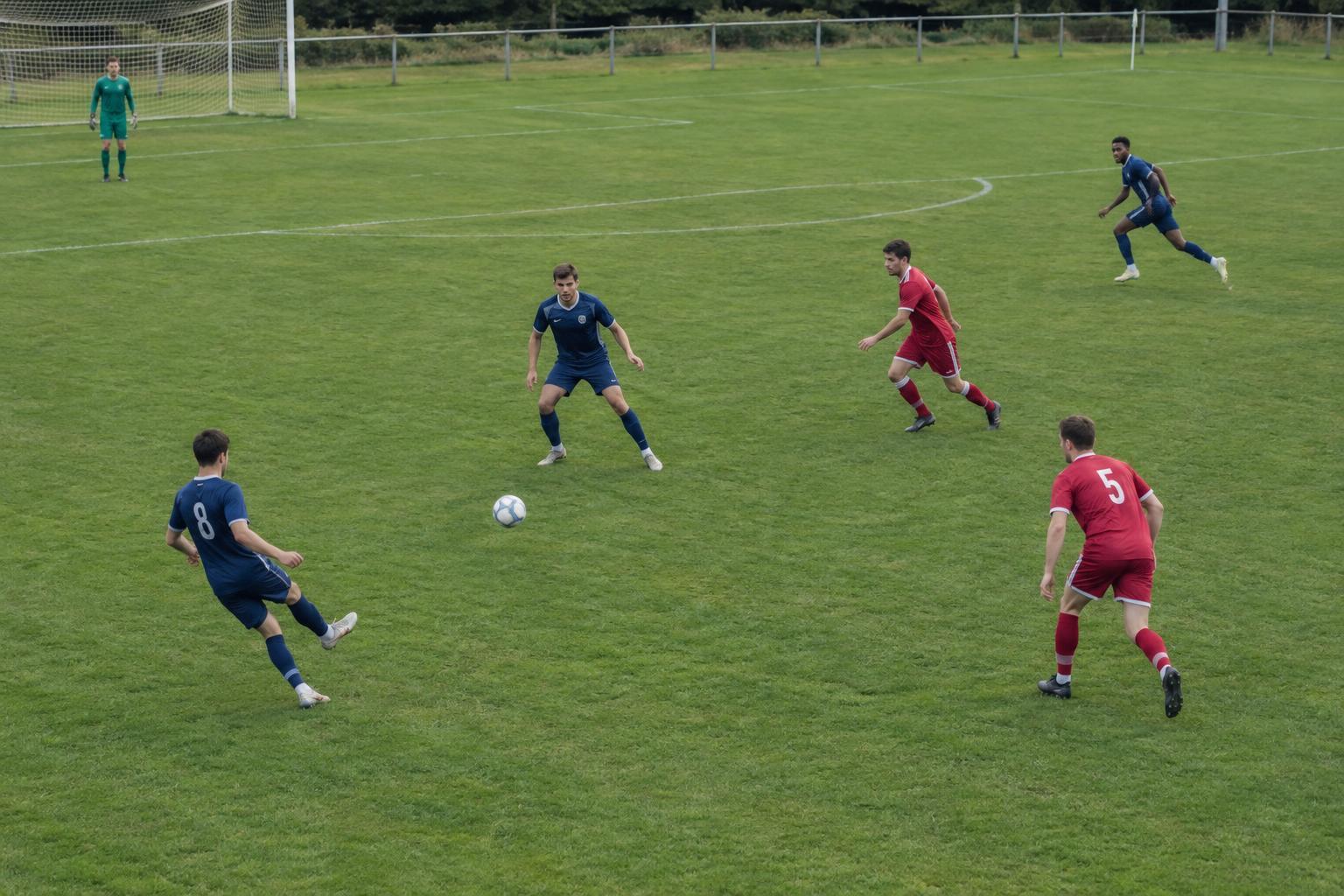
A typical example starts with a central midfielder facing a compact defensive line. A forward drops toward the ball and receives a pass to feet. As a defender follows the forward, a second midfielder runs into the space that defender has left. The forward lays the ball into the runner’s path. If the defender stays put instead, the forward may have room to turn. The attack poses a choice rather than relying on one predetermined outcome.
Third-man combinations are not limited to players in central positions. A winger can pass inside to a midfielder while a full-back runs beyond on the outside. Equally, a forward can lay the ball back to a teammate who then finds a runner from deeper. In each case, the intermediate receiver helps connect the passer with a moving target.
Timing and angles make the run useful
A third-man run works best when the runner moves as the first pass is made, rather than waiting for the link player to control it. Move too early and a defender can track the run or the player may reach the space before the ball can arrive. Move too late and the link player has to hold possession under pressure. The useful window depends on the distance of the passes and the speed of the defenders.
The runner also needs a route that gives the link player a workable passing angle. Sprinting straight ahead is not always helpful if an opponent still blocks the lane. A curved run can create separation or help the runner meet a pass while facing forward. The first passer contributes too: a firm, accurate ball to the link player makes it easier to play the next pass quickly.
Not every move of this kind is a rehearsed pattern. Players may recognize the opportunity during play, particularly when an opponent follows a teammate out of position. Nor does every third-man run produce a chance. The defence may intercept the layoff, cover the vacated space or force the runner away from goal. The tactic offers a way to progress, not a guarantee of doing so.
How to spot one while watching a match
Start by watching the area around a player who is about to receive with their back to goal. Look for a teammate beginning a run before the first pass reaches that player. Then watch the nearest defenders: does one step toward the receiver, and does another notice the runner? This often explains why a short, apparently backward-facing pass can lead to an attack moving forward.
It also helps to look at the runner’s starting position. A player arriving from deeper may be harder for a defender to monitor than someone already standing on the defensive line. If the move succeeds, follow the entire sequence back to the first pass. The decisive action may have been the movement that began before the final ball was played.
When the move fails, ask which connection broke down. Was the first pass difficult to control? Did the runner set off too soon? Was the layoff blocked, or had a defender already covered the space? Those questions make third-man runs easier to recognize as coordinated choices rather than isolated flashes of skill.