A simple way to show belonging
A football scarf is easy to recognize and easy to carry. Its colours, badge or lettering can identify a club without the wearer saying a word. Unlike a shirt, it can go over almost any outfit; unlike a flag, it can be folded into a pocket or bag. That practicality helps explain why scarves are common at grounds, on journeys to matches and in the everyday lives of supporters.
The scarf does not have a single fixed meaning. For one person, it may be a straightforward display of loyalty. For another, it may recall the relative who first took them to a match. Someone else may wear one only when the weather calls for it. Its value comes partly from this flexibility: a shared symbol can still hold a private story.
Part of the matchday ritual
Matchdays are built from repeated actions: choosing a route, meeting familiar faces, finding a place to stand or sit. Putting on a scarf can become one more step in that routine. It marks the shift from an ordinary day to a day organized around the game. Seeing the same colours on the way to the ground can also make a supporter feel part of a larger crowd before a ball has been kicked.
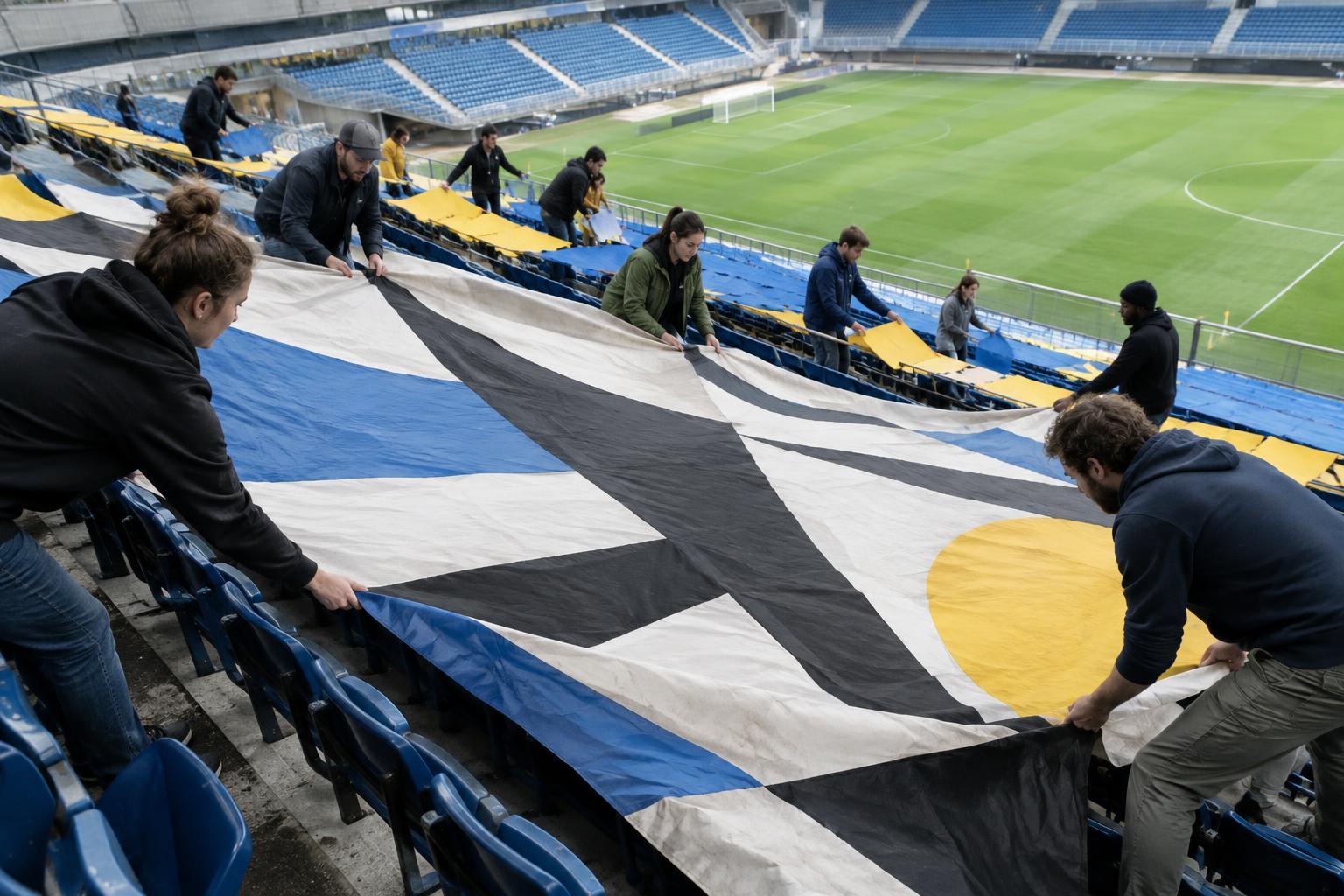
Inside a stadium, scarves can turn individual gestures into a collective display. Supporters may raise them during a song or hold them up as the teams enter. From a distance, that creates a visible pattern of club colours; close up, it is made by people each holding something of their own. Participation is not compulsory, though. Some fans sing without raising a scarf, and others prefer to watch quietly. The object offers a way to join in, not a test of whether someone belongs.
A record of people, places and occasions
Scarves often outlast the match for which they were bought. A worn edge or faded colour may remind its owner of years of travel, seasons spent with friends or an early visit to a ground. A scarf passed from one supporter to another can carry a connection between generations. These meanings are personal rather than visible on the label, which is why an old scarf may matter more to its owner than a new one.
Some scarves name a particular match or pair of clubs. They can serve as keepsakes, although not every supporter likes their design or wants a souvenir for every occasion. Others choose a plain scarf in club colours and wear it for years. Both approaches show how football objects gather meaning through use. The important thing is often less where a scarf came from than what happened while someone had it.
Identity beyond the stadium
A scarf can make support visible far from a home ground. On a train, in a new city or at a local pitch, it may start a conversation with a fellow fan or prompt friendly recognition from someone following another club. For supporters who cannot attend regularly, wearing club colours can offer a small connection to a place and community they care about.
That visibility also has limits. Club colours can be meaningful in places where rivalries run deep, and supporters may decide when they feel comfortable wearing them. Nor does owning official merchandise measure commitment. Scarves may be homemade, inherited, bought second-hand or received as gifts. These different paths into wearing club colours are worth remembering: football culture is shaped by people and their relationships, not only by what they purchase.
Why the scarf endures
Football clothing changes with fashion, but the scarf remains useful because it does several jobs at once. It offers warmth, shows allegiance and gives the wearer something to hold during a tense or joyful moment. It can be raised with thousands of others, then taken home as an intensely personal reminder.
That combination helps explain its place in supporter culture. A scarf cannot stand for every fan’s experience, and no one needs one to prove they care. For those who do wear one, however, it can connect the ordinary act of getting dressed to the larger habits, memories and communities that make following football matter.