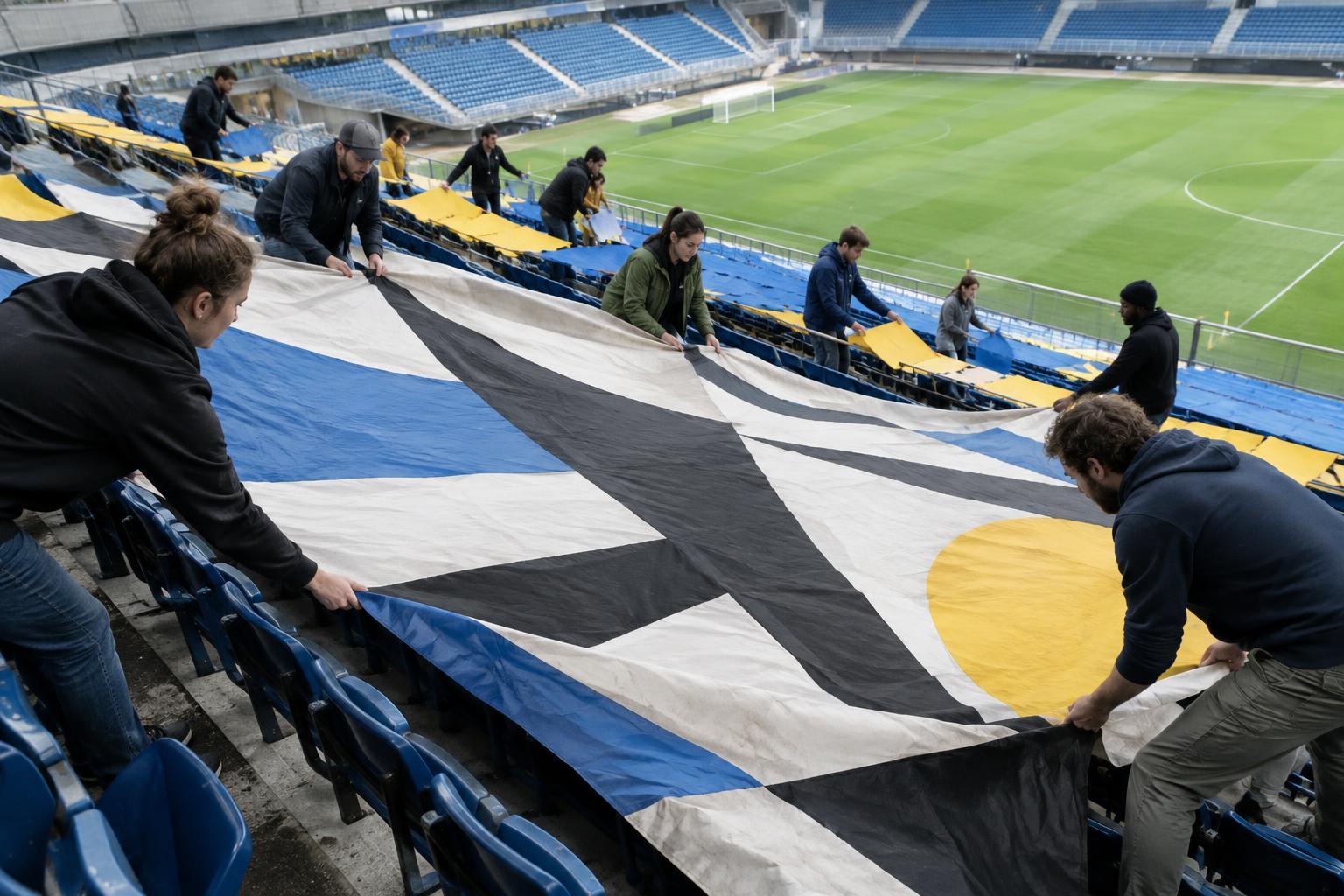
Start with a message the stand can share
A tifo is a coordinated visual display made by supporters, often revealed as teams enter the pitch or at another agreed moment. It might be a painted banner, a pattern formed by cards held above heads, or several elements working together. The most memorable displays tend to communicate one idea clearly: a tribute, a reference to local identity, or a message of encouragement. A design that looks striking on a screen is not necessarily easy to read from the opposite end of a stadium.
Planning often begins with a small group settling the message, colours and rough layout. They need to consider the shape of the stand, sightlines and how long the image will be visible. A short phrase or bold symbol may work better than fine detail. Supporter groups can also ask whether the idea will feel welcoming to the people expected to take part. Although a few organisers may lead the design, the finished display depends on many others giving it space and attention.
Design for the stand, not just the page
The available space shapes the method. A banner needs room to open without blocking aisles or becoming tangled; a card display needs a simple plan showing which seats receive which colours. Some stands have gaps, entrances or restricted areas that interrupt an image. Organisers may sketch the display against a seating plan and check that its essential features remain legible even where the layout is imperfect.
Materials are another practical choice. Paper or card can create a strong block of colour but may crease or shift. Painted fabric can be reused if it is stored and cared for, though a large piece may be difficult to handle. Whatever the format, the group needs to think about weight, visibility, weather exposure where relevant and the time available for preparation. It is usually easier to simplify a design early than to fix an overly intricate one while volunteers are assembling it.
Make the work collective
Behind a brief unveiling are hours of ordinary tasks: measuring, cutting, painting, folding, labelling and packing. A useful plan breaks the display into pieces that volunteers can finish and check. Clear labels matter particularly when sections must be placed in a specific order. Keeping a sample of the intended colours and a diagram of the whole image can help different work sessions produce a consistent result.
Volunteer time and money are finite, so organisers often have to choose where effort will make the greatest difference. A bold outline and reliable distribution may matter more than elaborate shading. Sharing tasks can make participation possible for people who do not paint or draw; they might help sort cards, record what is complete or explain the reveal to fellow supporters. The process can become part of the culture around the display, rather than merely a way to produce it.
Coordinate with the venue and plan the reveal
A tifo is prepared for a shared space, not a blank canvas. Stadium policies, competition rules and stewarding arrangements can affect what materials are allowed, when volunteers can enter and where items may be placed. Organisers should check the applicable requirements with the club or venue well ahead of matchday and adapt the plan if needed. A display should not obstruct exits, aisles, signs or anyone who needs assistance moving through the stand. Smoke effects and pyrotechnics are not necessary for a tifo and can present serious risks.
The reveal needs instructions simple enough to work in a noisy crowd. For a card display, that might mean a note at each seat stating when to lift the card and when to lower it. For a banner, designated helpers may need to know their positions and the agreed cue. A rehearsal with a small team can reveal confusing labels or awkward folds. Organisers also need a way to collect materials afterward so the stand is left usable and tidy.
Value the moment beyond the photograph
Photographs often show a tifo at its most complete, but the experience inside the stand is different. Participants may see only the card in their hands or the fabric passing above them. Their contribution is an act of trust: each person follows a simple instruction so that a larger image can appear. Not every reveal will be perfectly even, and a breeze, a late arrival or an unclear cue can change the result.
That does not make the work meaningless. A tifo gives supporters a way to tell a story in their own visual language, using the stand itself as the medium. The strongest plans balance ambition with clarity, respect for the venue and consideration for other spectators. When those pieces fit together, the display is more than a backdrop for a match. It is a brief, shared expression of belonging made visible by the people who built it.