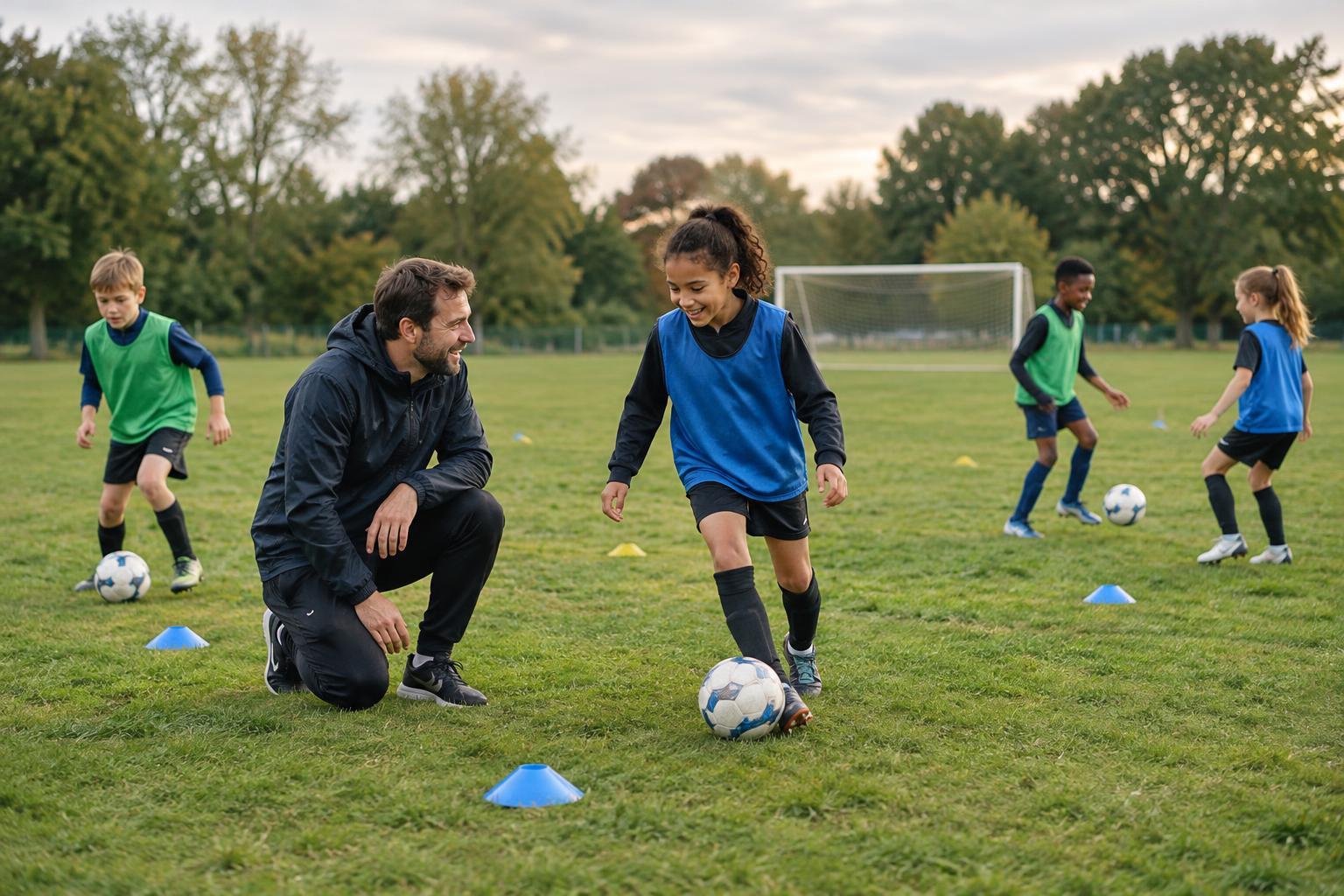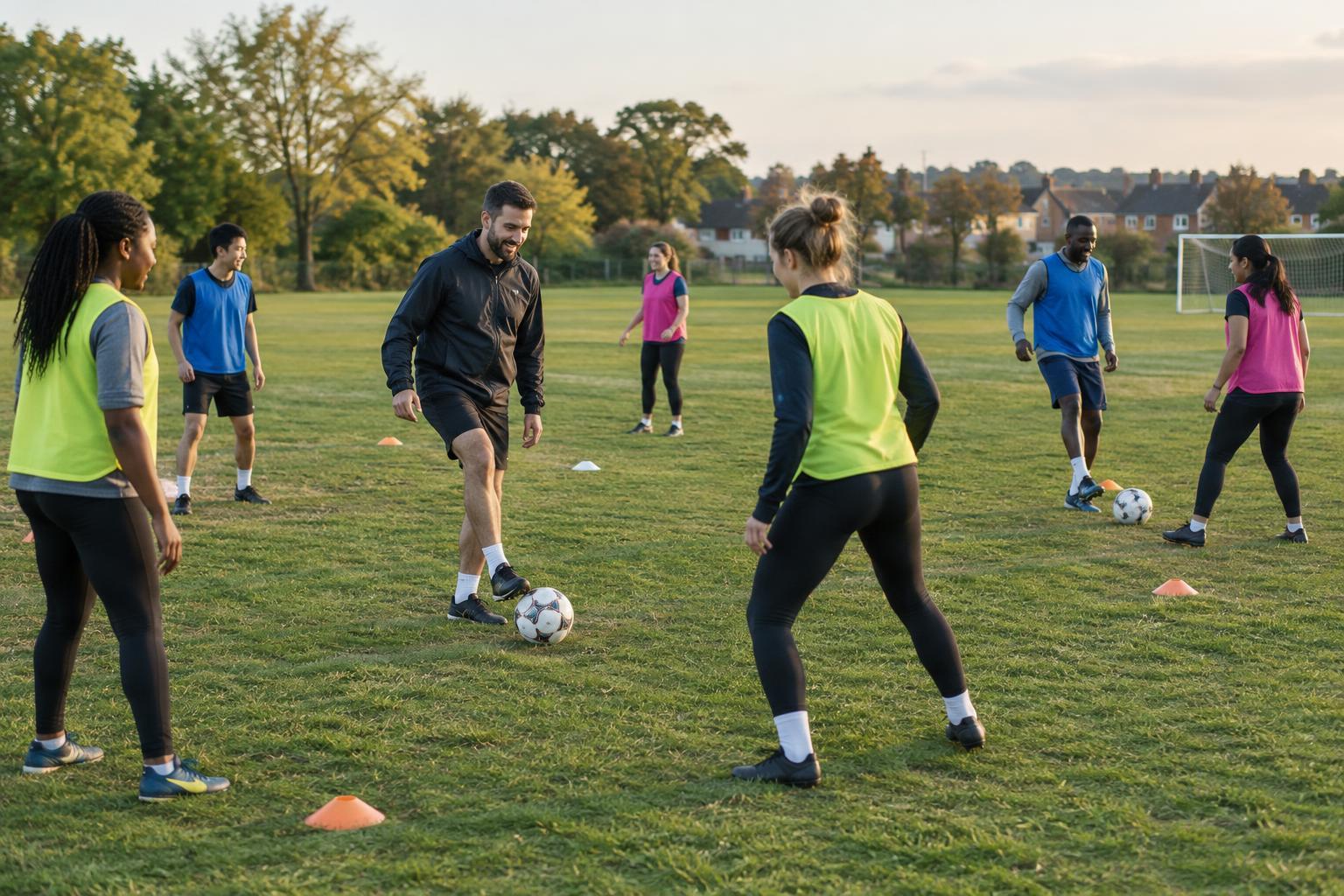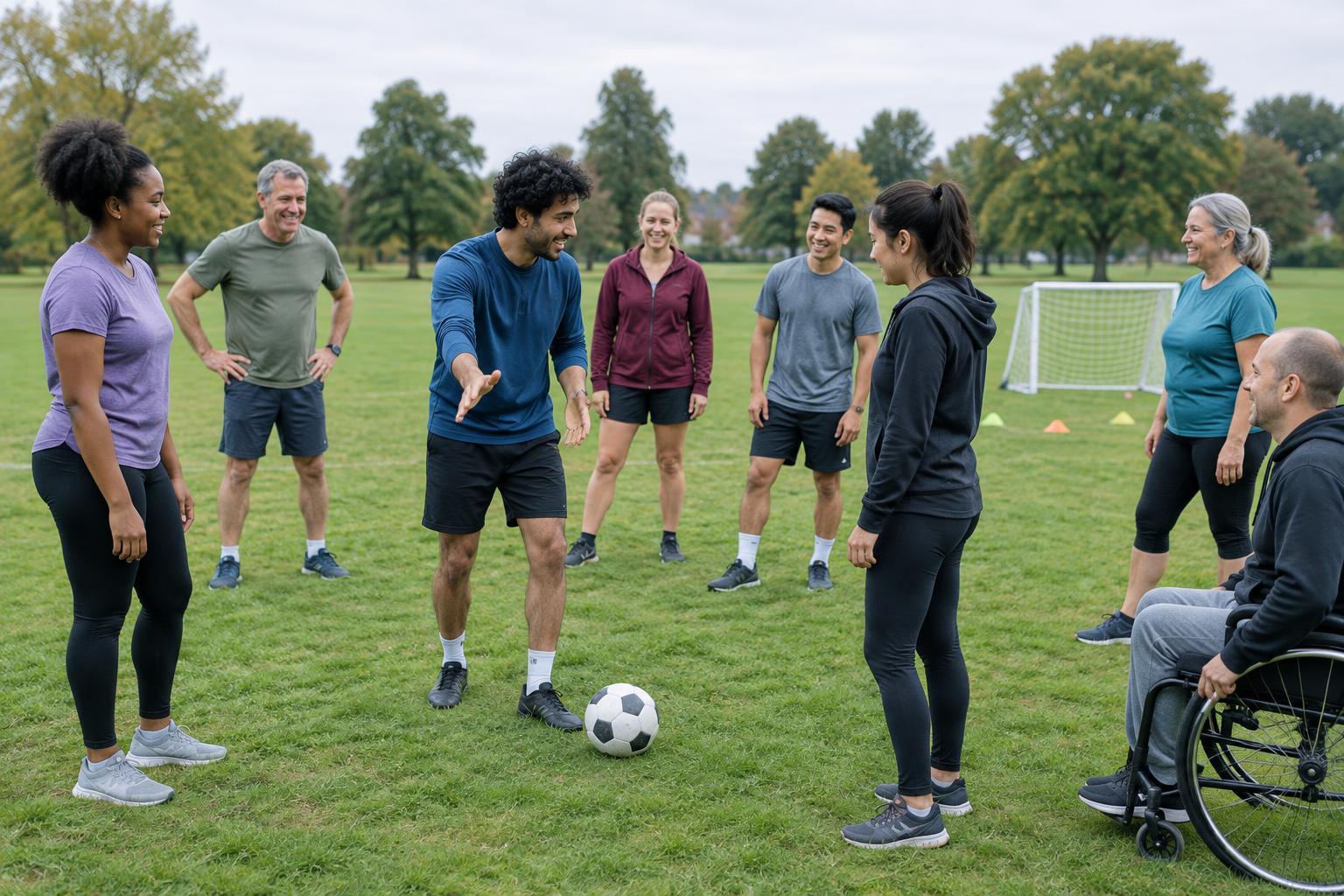
Before you arrive
A first training session can feel like a test, but most grassroots teams expect newcomers to be learning. Sessions vary by age, ability, club and available space. Some groups are preparing for a weekend match; others focus on participation and enjoyment. If you can, ask the organiser where to meet, when to arrive and whether the session is a trial or an open training night. That small bit of information makes the first few minutes easier.
Wear clothes you can move in and bring water. Ask about the playing surface before choosing footwear: boots suited to grass may not be appropriate for an indoor hall or artificial pitch. Shin pads are commonly expected for football activities, so check the group’s requirements. You do not need a complete matching kit unless the organiser says otherwise. If you are arranging a session for a child, confirm who will be responsible for them at drop-off and collection.
The first few minutes
When you arrive, find the coach, organiser or person setting out equipment and introduce yourself. They may ask your name, playing experience and preferred position. It is fine to say you have never played in an organised team, or that you are returning after time away. That helps them place you in a suitable activity; it does not commit you to one position for the whole session.
Training often starts with a warm-up. This might be light movement with a ball, a passing exercise or a simple game in a small area. Listen for the boundaries of the pitch, the aim of the exercise and when to rotate. If the instructions are unclear, ask. Everyone has had to learn a new drill at some point, and a quick question is usually more useful than guessing in silence.
How the football usually works
Many sessions move from a warm-up into short activities that practise a particular part of the game. You might pass in pairs, try to keep possession in a small group, practise defending one-on-one or play a small-sided match. The activities may change quickly so that everyone gets time on the ball. A coach might pause play to explain an idea, then let the group try it again.
You are not expected to master every exercise immediately. Start with simple choices: look up before receiving the ball, offer a teammate a passing option and keep playing after a mistake. In a game, positioning and communication matter as much as a clever touch. If you do not know where to stand, ask a teammate or coach what your role is. A clear answer can make the next few minutes much more comfortable.
Joining the group
The social side of grassroots football can be as unfamiliar as the drills. Groups develop their own routines for sharing equipment, choosing teams and encouraging one another. Watch how people communicate, use teammates’ names when you learn them and offer a simple word of encouragement. You do not have to be the loudest person on the pitch to contribute. Turning up ready to participate and treating others respectfully goes a long way.
Football is a contact sport, but the purpose of training is to help everyone take part. Play within the rules explained by the organiser and give others room to learn. If the pace, physical contact or an activity feels unsuitable for you, speak to the coach. They may be able to adjust your role or suggest a more appropriate group. Being honest about your comfort level is better than trying to prove you belong by taking unnecessary risks.
After the final whistle
Training may finish with a game, a brief team talk or help packing away cones and balls. Before leaving, check whether there is anything you need to know about future sessions, such as location, timing, equipment or how attendance is confirmed. If you enjoyed yourself, say so. If you are unsure whether the group fits, it is reasonable to ask about its usual pace and expectations.
Try not to judge the whole experience by one missed pass or an awkward introduction. A first session involves learning names, routines and the way a group plays, all while playing football yourself. Consider whether you felt welcome, understood the activities well enough to join in and would like to return. Grassroots football offers many kinds of teams and sessions; finding one where you can participate regularly matters more than getting everything right on day one.