Start with the players, not just their age
Age groups are a useful planning guide, but they do not tell a coach everything about a team. Players of the same age can differ in confidence, coordination, experience and physical development. A beginner may need time to get comfortable with the ball, while a more experienced teammate may be ready for a new challenge. Good coaching leaves room for both.
Whatever the group, sessions work best when players spend plenty of time moving, touching the ball and making choices. Long lines and lengthy explanations limit those opportunities. A coach can plan one clear theme, such as finding space, then explore it through activities that suit the group. The ages below are broad guides rather than fixed rules; local competition formats and the players in front of you should shape the details.
Young beginners: make the ball part of the game
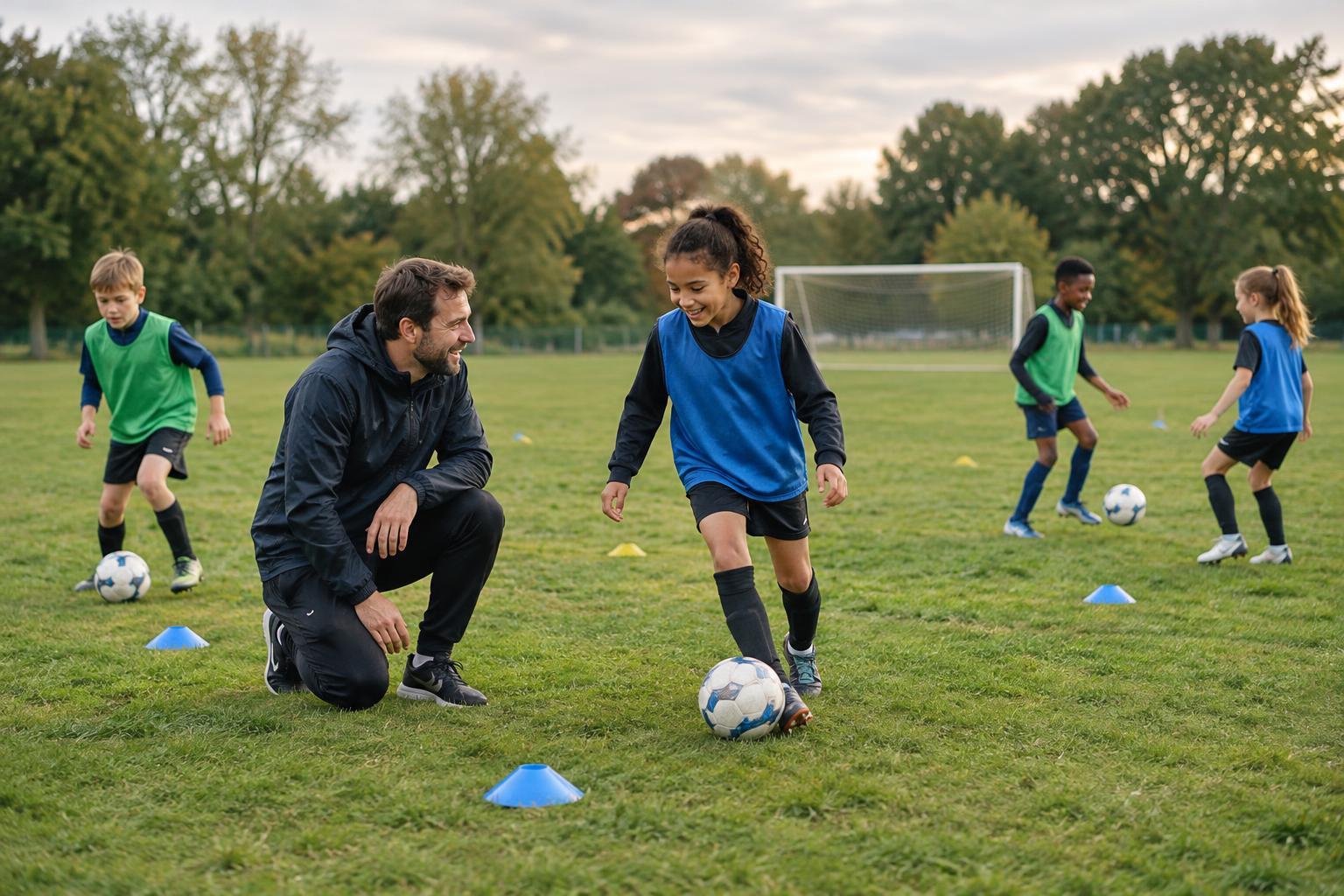
For the youngest players, roughly early primary-school age, a session can feel more like guided play than a formal lesson. Simple games involving running, turning, stopping and changing direction help children explore movement. Giving each player a ball for parts of the session means nobody has to wait for a turn to practise a first touch.
Instructions are most useful when they are short and visible. Instead of explaining several passing principles, a coach might show how to move into an open space, let the children try it, then restart the game. Small pitches, small teams and frequent changes of activity can help keep everyone involved. At this stage, trying a move and recovering from a mistake matter more than performing it perfectly. Praise can focus on effort, curiosity and attempts to include others.
Developing players: introduce choices and cooperation
As children gain experience, often during the later primary-school years, sessions can add more cooperation. Passing, receiving and defending make more sense when they solve a problem in a game: how to keep the ball, how to help a teammate, or how to regain possession. A small-sided game with a clear aim gives players a reason to use a skill rather than repeat it without context.
Coaches can begin asking brief questions between rounds: “Where could you stand to help the player on the ball?” or “What changed when the defender came closer?” The answers need not be identical. Players learn by noticing options and testing them. Rotating positions also helps them experience different parts of the game before anyone is treated as permanently suited to one role.
Challenge can vary within the same activity. A confident group might have less space or an extra defender; a group finding the task difficult might have a larger area or an additional teammate. These adjustments change the problem without singling out a player in front of everyone.
Teenagers: deepen the game without narrowing it
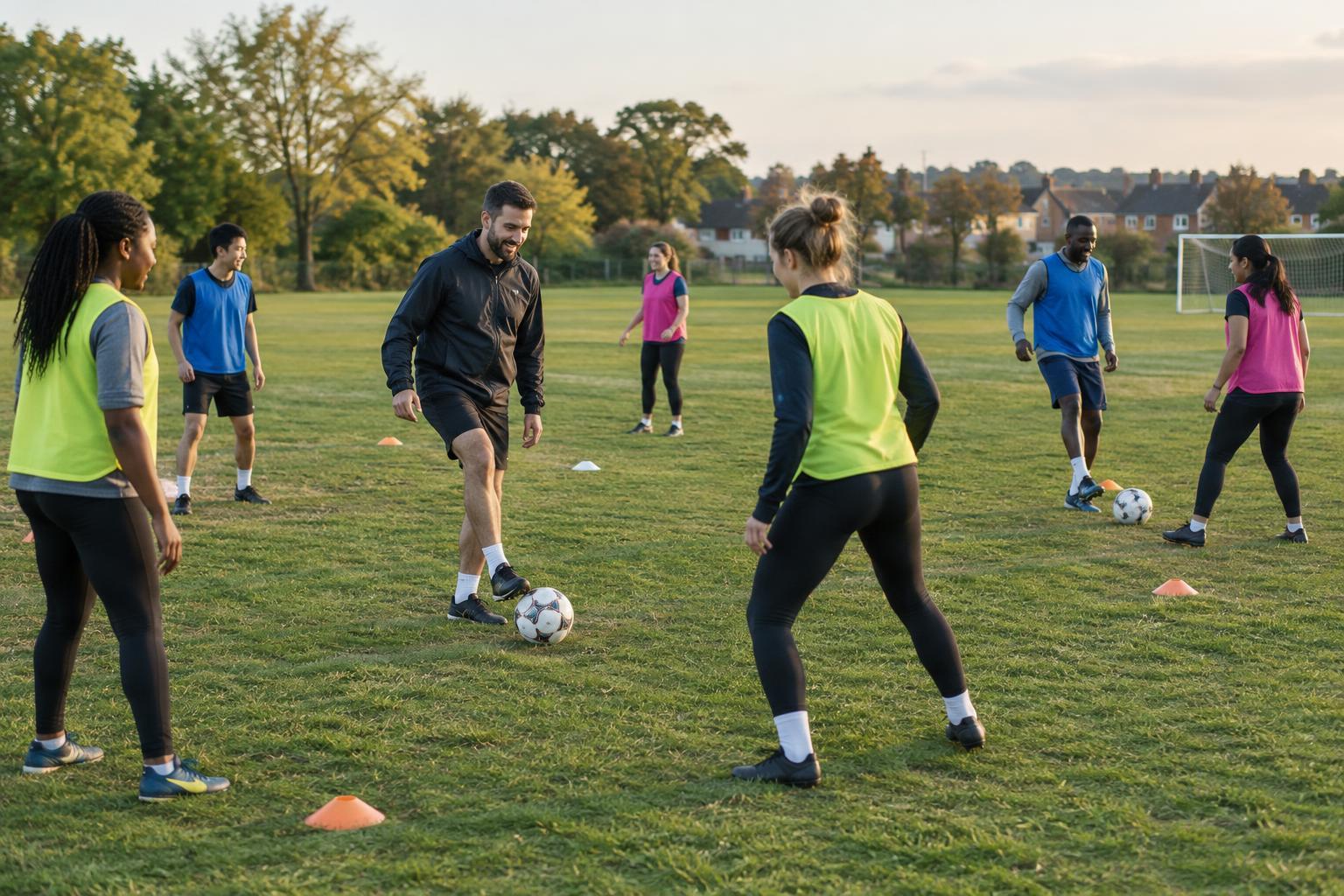
Teenage players can usually work with more detailed tactical ideas, but a session still needs to connect those ideas to playing. A coach might introduce pressing through a small game in which one team tries to win the ball in a particular area. After a short round, players can discuss when pressing helped and when holding position would have been wiser. Demonstrations and feedback are more useful when they lead quickly back to another attempt.
Physical development can vary widely among teenagers. A player who is faster or stronger at one point may not always have that advantage, so sessions should offer ways to succeed through timing, awareness and technique as well as speed. Workload, contact and intensity should suit the group and the setting. Coaches can also give players some ownership: invite them to suggest a solution, help set a team goal or reflect on what they learned from a game.
Keep the principles consistent while the activities change
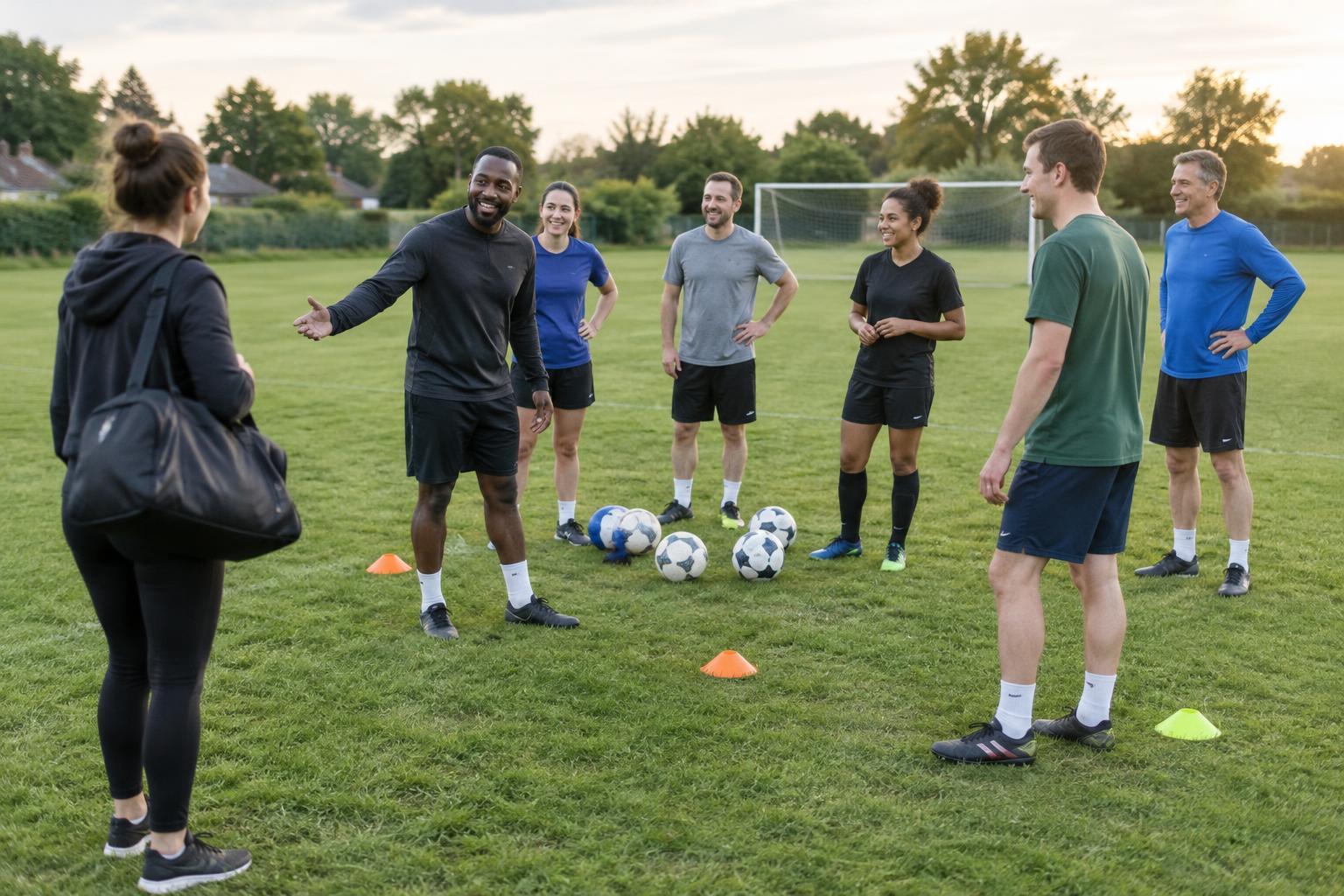
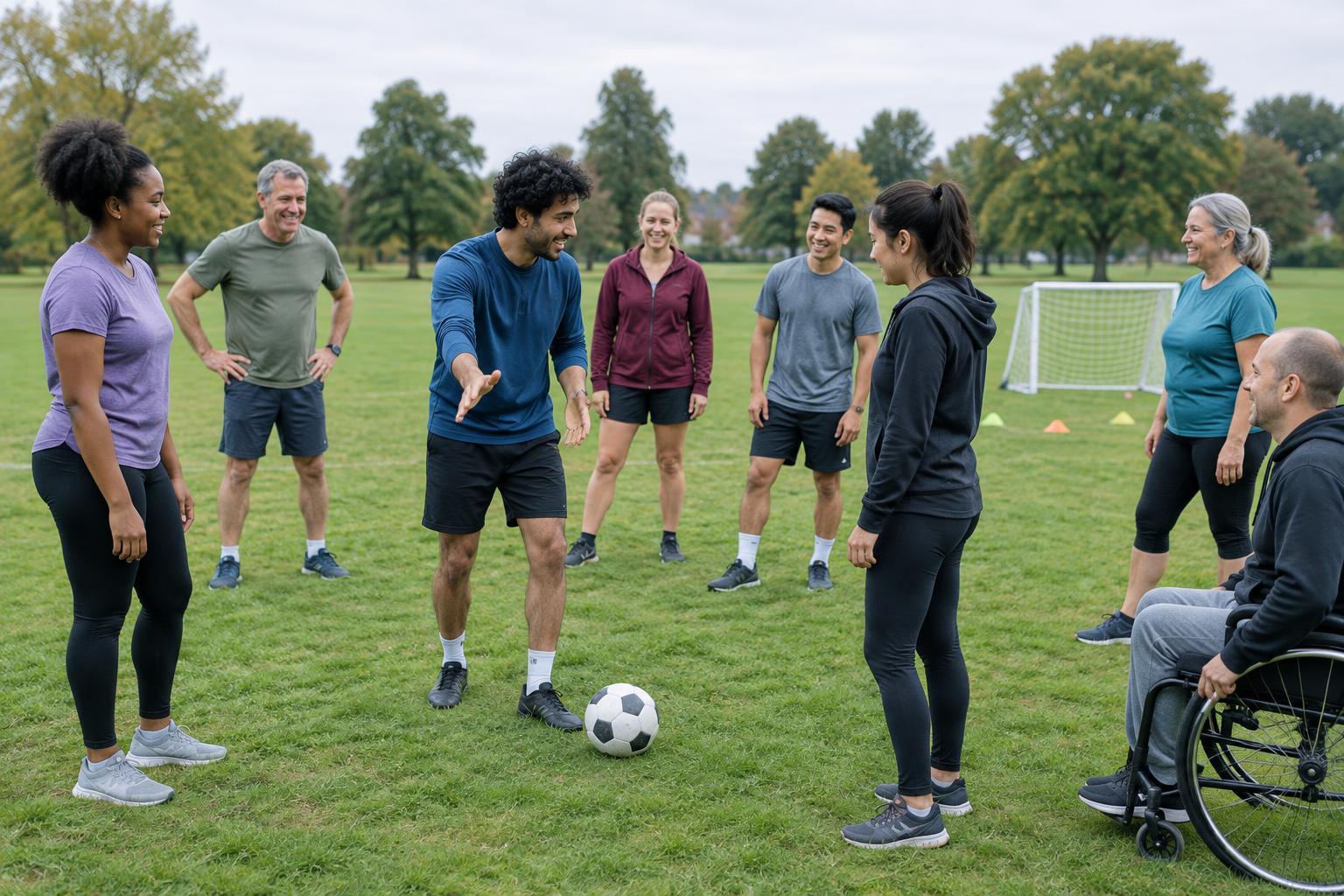
An age-appropriate session does not require a new philosophy every year. Across all groups, players benefit from feeling welcome, getting meaningful playing time and understanding the purpose of an activity. The difference lies in how the coach presents the challenge: playful exploration for beginners, clearer shared decisions for developing players, and more detailed tactical problems for teenagers.
A simple check after practice is useful: who spent time playing, who waited, who spoke, and who left wanting to return? Those questions can reveal whether the session matched the players better than the complexity of a drill can. When coaches adjust to what they see, young footballers have space to improve at their own pace while continuing to enjoy the game.