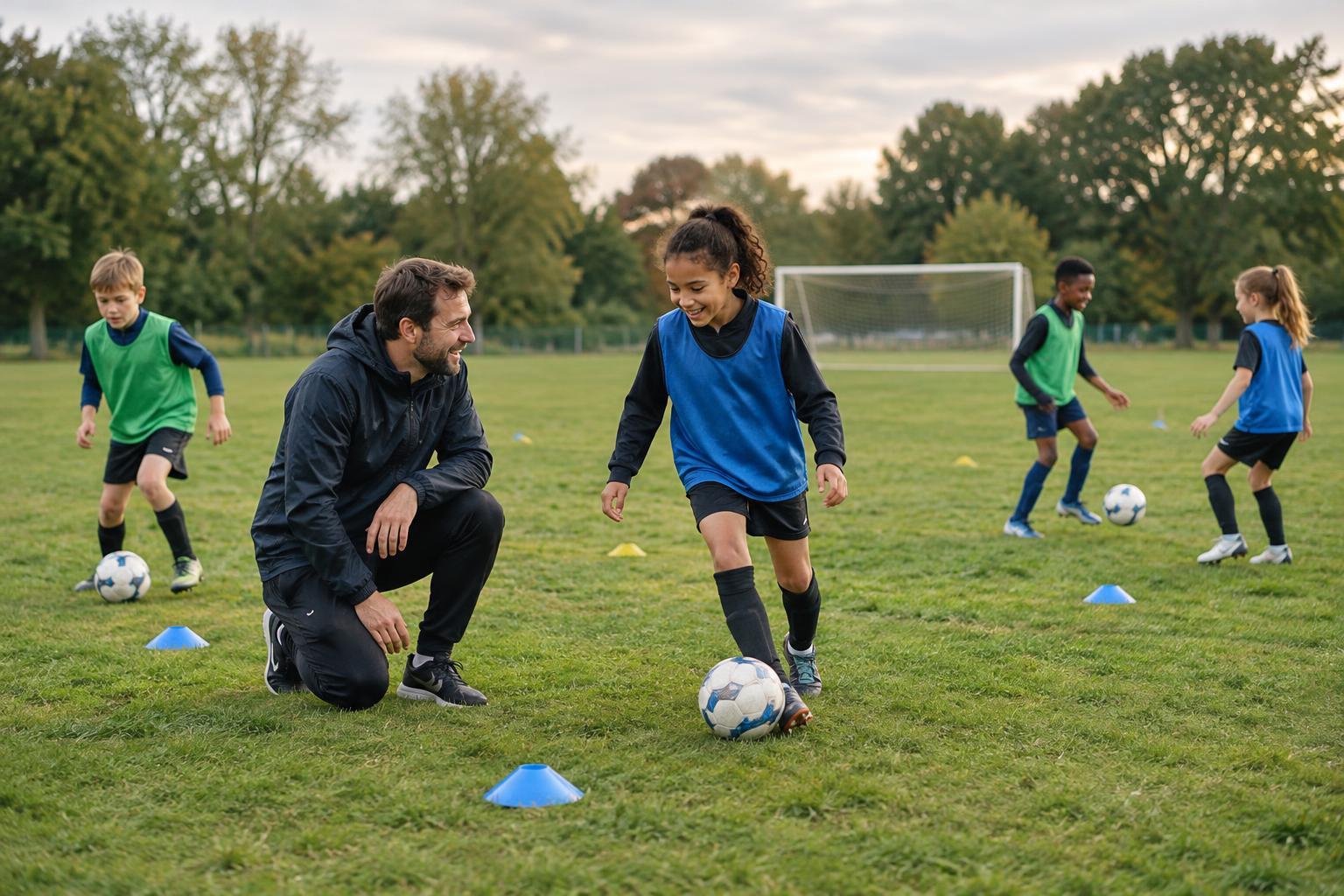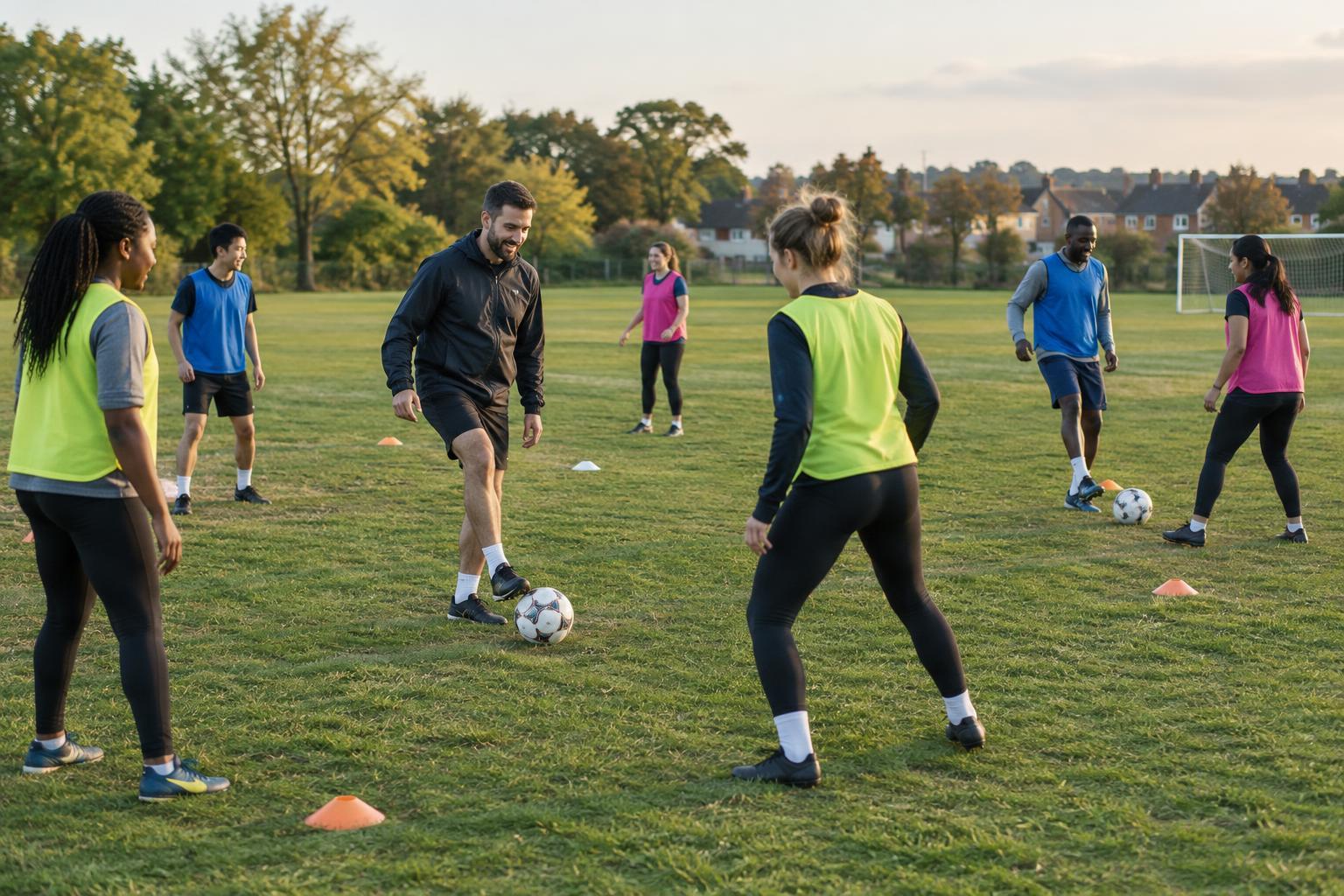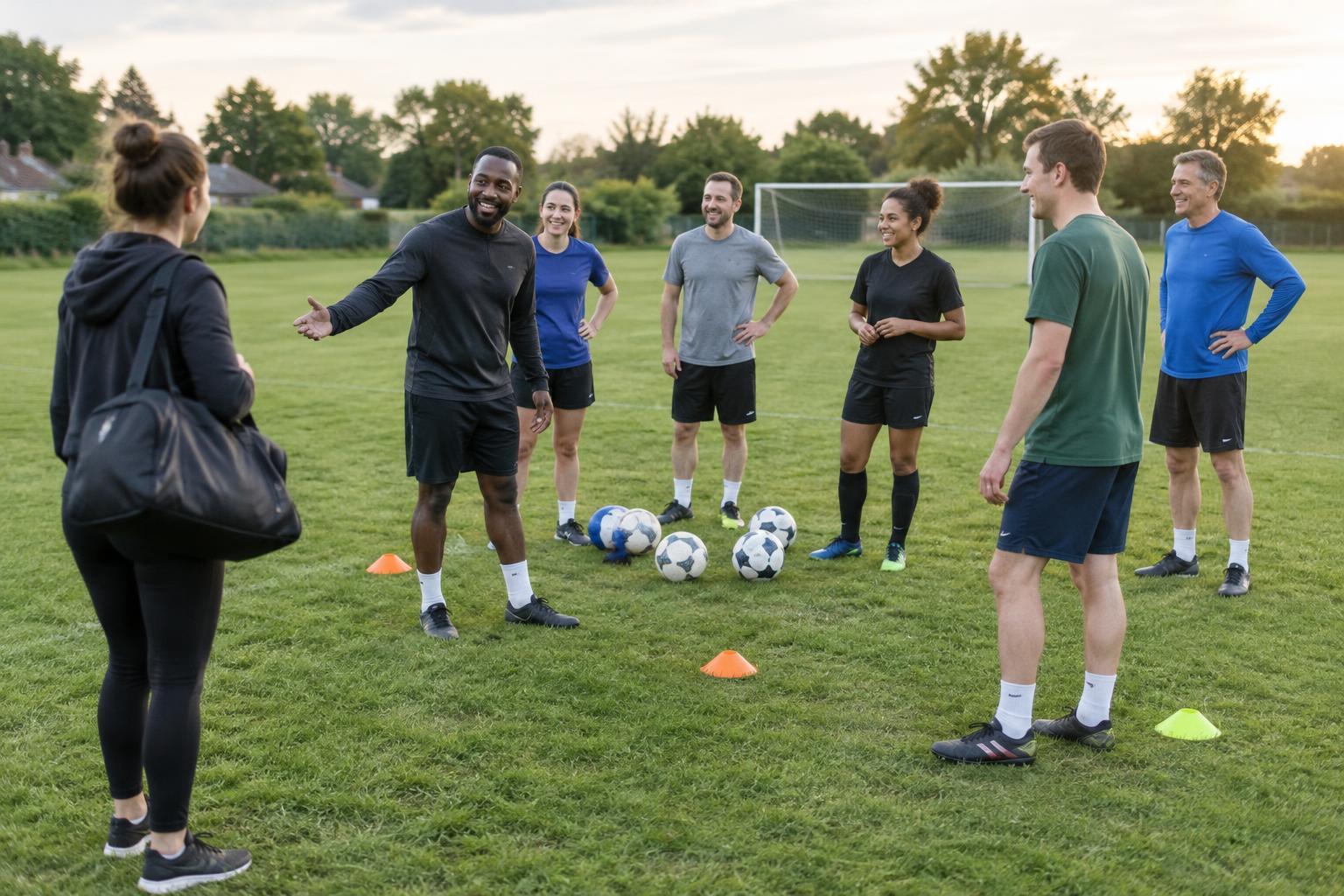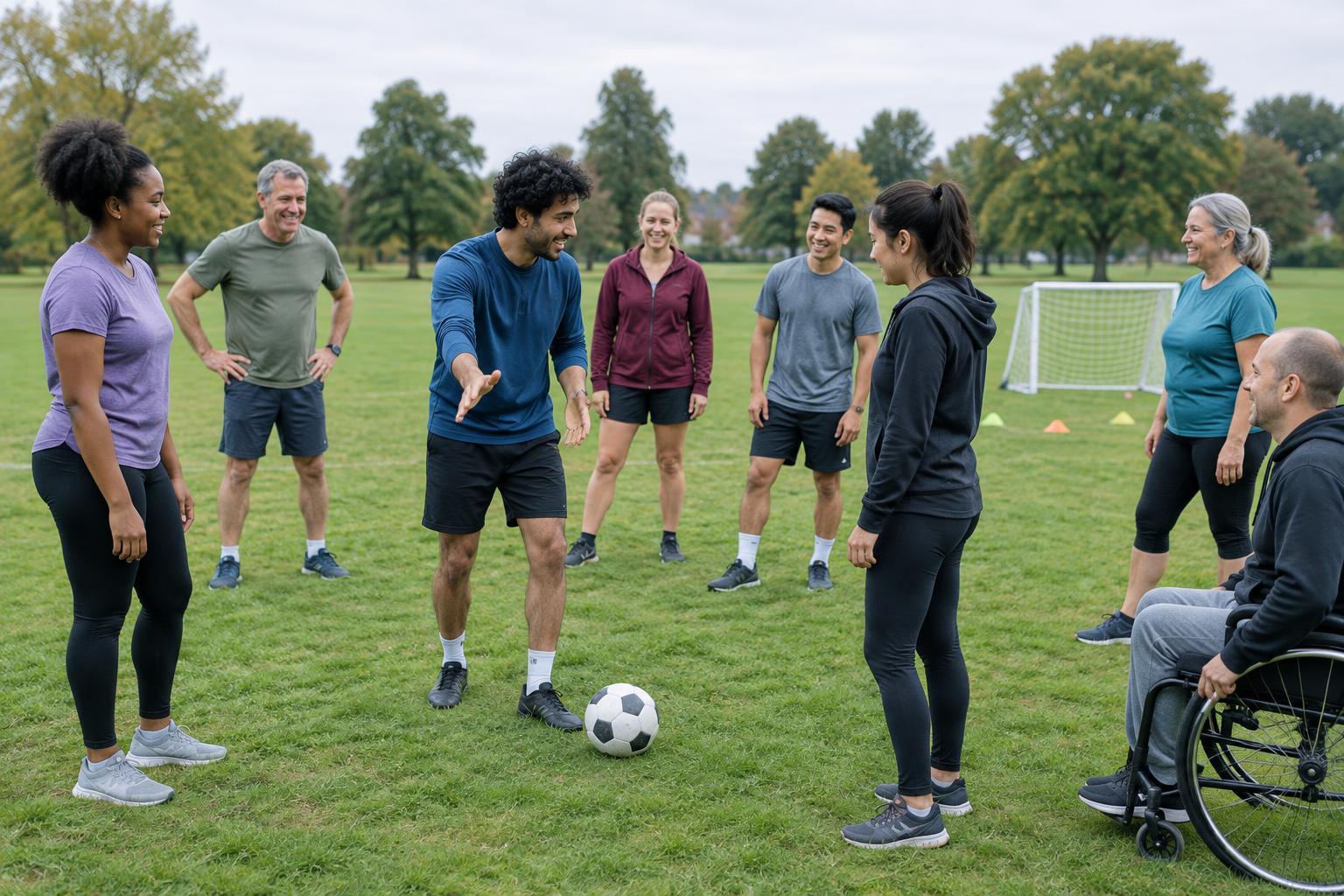
Decide what kind of game you are inviting people to
A kickabout can mean anything from a gentle passing session to a fiercely contested match. If you want beginners to join, say what you mean when you invite them. Describe it as a casual game where people can learn, take breaks and make mistakes. That gives experienced players a chance to decide whether they are happy to play in that spirit, too.
Ask for a rough headcount, but do not make a full team a condition of playing. A small group can practise passing or play a game with compact goals; a larger group can rotate players. Share the meeting point, start time, expected length and any cost in advance. Let people know what to bring, while making clear that specialist boots or a club shirt are not required.
Choose a space that makes joining easy
Look for a place the group can use, reach and understand. Check whether the pitch or open space needs booking, whether football is permitted and whether there is enough room to play without troubling other users. A reasonably even surface and clear boundaries matter more than a perfect pitch. If the area is shared, agree to adjust the game or move when needed.
Think beyond the playing surface. Nearby public transport, somewhere to leave bags and access to drinking water can make attendance easier. Tell newcomers which surface they will play on so they can choose suitable footwear. For a first session, a familiar, easy-to-find location is often more inviting than a better pitch that is difficult to reach.
Bring simple equipment and explain the basics
You need a ball, a way to mark the goals and a way to distinguish teams. Cones are useful, but bags or spare layers can mark a boundary if they are placed where nobody is likely to trip. Bibs help when available; otherwise, ask one team to wear light tops and the other dark tops. If someone does not have the right colour, sort it out without making them feel conspicuous.
Before play, explain the boundaries and the handful of rules you will use. You might allow kick-ins instead of throw-ins, play without offside, and restart quickly after the ball goes out. Agree on what counts as a goal and how to handle close calls. Keep the explanation short, then answer questions as they arise. Someone who is new to football should not have to pretend they understand a rule to be included.
Set teams and rules for participation
Try to spread confident players across the teams rather than letting friends pick sides. Avoid a public selection process that leaves newcomers waiting until last. If one team becomes much stronger, move a player or change the teams at the next break. The aim is a game in which everyone gets chances to pass, defend and shoot, not a perfectly balanced contest on paper.
A few agreed habits can change the feel of the session. Ask players to avoid heavy challenges, give others space to restart and keep criticism out of the game. Experienced players can help by offering a passing option instead of calling instructions at every touch. Rotate positions if people want to try them, but do not force someone into goal for the whole session. Short games or scheduled pauses make it easier for anyone to rest or ask a question.
Make the welcome visible during and after play
Greet arrivals, introduce people by name and explain how they can join the next game. A newcomer arriving late may be more comfortable watching a few minutes before stepping in. During play, notice who rarely receives the ball. You do not need to engineer every pass, but you can model a game in which players look for all their teammates. Praise useful decisions and effort, not only goals or tricks.
At the end, thank people for coming and ask what would make the next session easier to join. Some may want a slower start, clearer directions or a little more time to practise before playing. Treat that feedback as help with organizing, not as a verdict on anyone’s ability. A good beginner-friendly kickabout leaves people feeling they can come back, whether they scored three goals or spent most of the game learning where to stand.