Accessibility starts before the turnstile
For many supporters, the matchday begins well before kick-off. Finding out whether a visit is workable may involve checking transport, entrances, seating, toilets and the route back home. An accessible stadium makes that planning easier by providing clear, specific information before tickets go on sale and keeping it easy to find afterward. A statement that a ground is “accessible” is less useful than details about routes, distances, lifts, seating positions and who to contact with questions.
Ticketing matters too. Disabled supporters should be able to understand which spaces meet their needs, how to request a companion ticket where available and what happens if an arrangement changes. Online booking can be convenient, but a usable phone or email route remains important when a standard seating chart cannot answer a particular question. The aim is not to make every supporter explain their circumstances repeatedly; it is to give people enough information and choice to plan with confidence.
The journey must work from arrival to departure
A step-free seat has limited value if the route to it includes an unexpected staircase or an inaccessible gate. The whole journey needs attention: nearby transport stops, drop-off points, parking arrangements, security checks, concourses and exits. Directions should identify the accessible route rather than assuming the shortest route is suitable for everyone. When lifts or entrances are unavailable, staff need a clear alternative that can be communicated promptly.
Matchdays also bring queues, crowds and noise. Some supporters may need room to move at their own pace, a less crowded entry point or clear signs that reduce the need to ask for help at every stage. Departure deserves the same thought as arrival: a workable route to a seat is not enough if leaving after the final whistle becomes confusing or difficult. Accessibility is more reliable when it is tested as a continuous trip, not as a list of separate features.
A good seat is one that lets someone follow the match
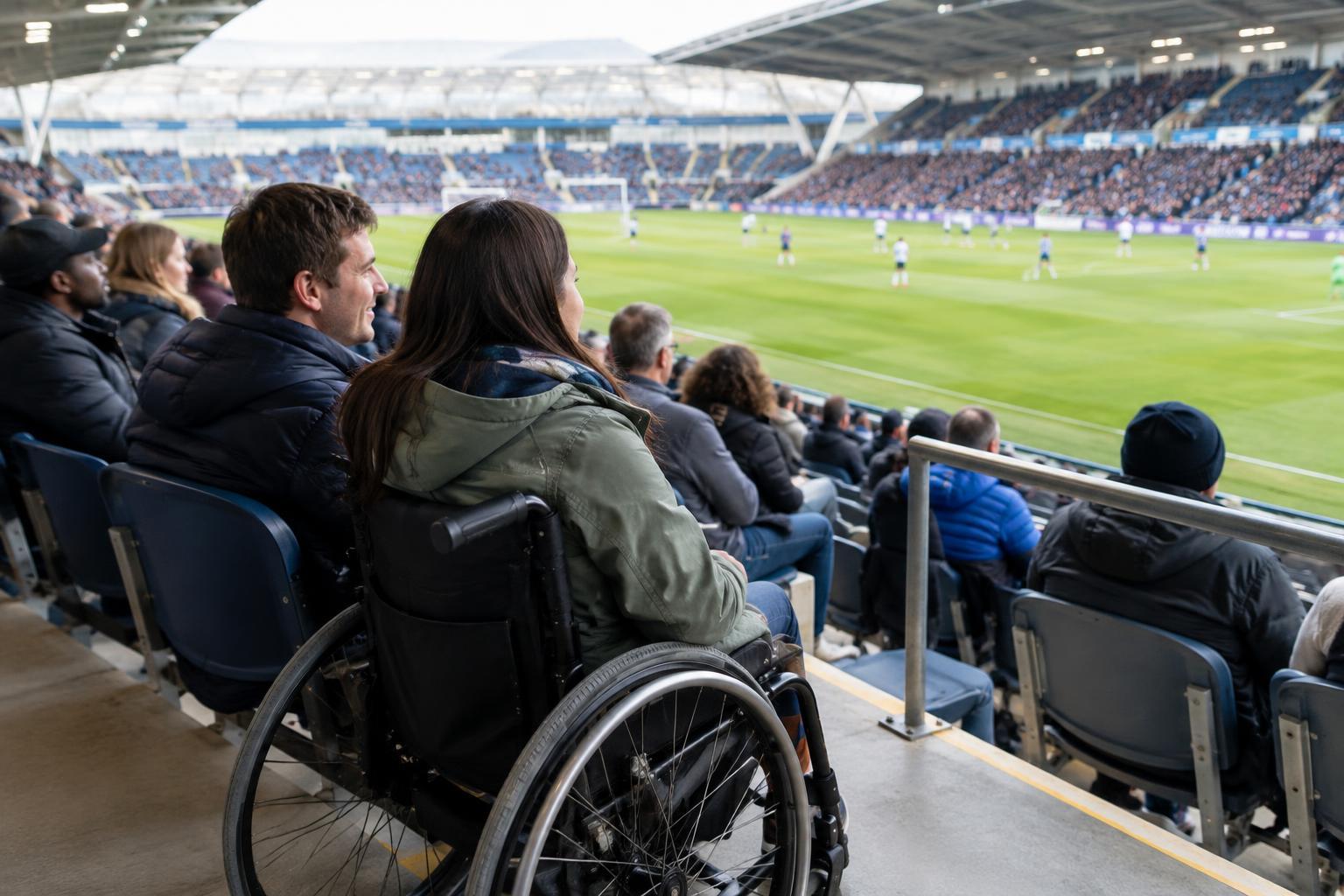
Accessible seating is not simply about fitting a wheelchair into a designated area. Supporters may need a clear view when the crowd stands, space for a companion, a location near facilities or a choice between different parts of the ground. People with limited mobility who do not use wheelchairs may also find steep steps or long walks difficult. Offering choices, where the building permits, helps avoid treating disabled fans as though they all want the same matchday experience.
Following the action can depend on more than sightlines. Supporters with visual impairments may value clear wayfinding and an available audio description service; those with hearing impairments may rely on readable announcements, visible information and effective communication with staff. Such options work best when supporters can find out in advance what is offered and how to use it. They should support a fan’s enjoyment of the game, not separate them from the atmosphere they came to share.
Facilities and staff shape the experience
Toilets, food counters and places to pause are part of a stadium visit, not extras. Accessible toilets need to be reachable from seating areas and usable throughout the event. Concessions should not assume that every customer can stand in a long queue, reach a high counter or hear a shouted order. For some supporters, a quieter place to take a break can make a busy matchday more manageable. Clear information about these facilities helps people decide whether the visit will work for them.
Staff can make a well-designed ground easier to use—or make a difficult situation harder. Training should help stewards give accurate directions, understand available adjustments and respond respectfully when someone asks for assistance. It should also leave room for a supporter to say what they need rather than having a need guessed from appearance. Not all disabilities are visible, and a calm, practical response is often more useful than assumptions or unnecessary questions.
Accessibility belongs to stadium culture
Football culture is built through shared routines: meeting friends, wearing colours, singing, reacting to a chance and returning to a familiar seat. Disabled supporters should be able to take part in those routines with as much independence and choice as possible. Access is therefore about more than meeting a minimum requirement. It affects whether someone can attend regularly, sit with people they know and feel welcome as a supporter rather than treated as a special case.
No single checklist will capture every supporter’s needs, and older grounds may present difficult physical constraints. Clubs and venue operators can still improve the experience by publishing honest information, maintaining the facilities they provide and listening when supporters describe what does not work. The most useful question is not merely whether an accessible feature exists. It is whether a person can plan the day, enter the ground, enjoy the match and get home without avoidable barriers.