The history that a scoreline cannot hold
A match record can tell you who played and what the score was. It rarely tells you which bus a family caught, how the walk to the ground felt, or why a particular song mattered to the people singing it. Those details are part of a club’s history too. They show how football fits into ordinary lives, neighbourhoods and friendships.
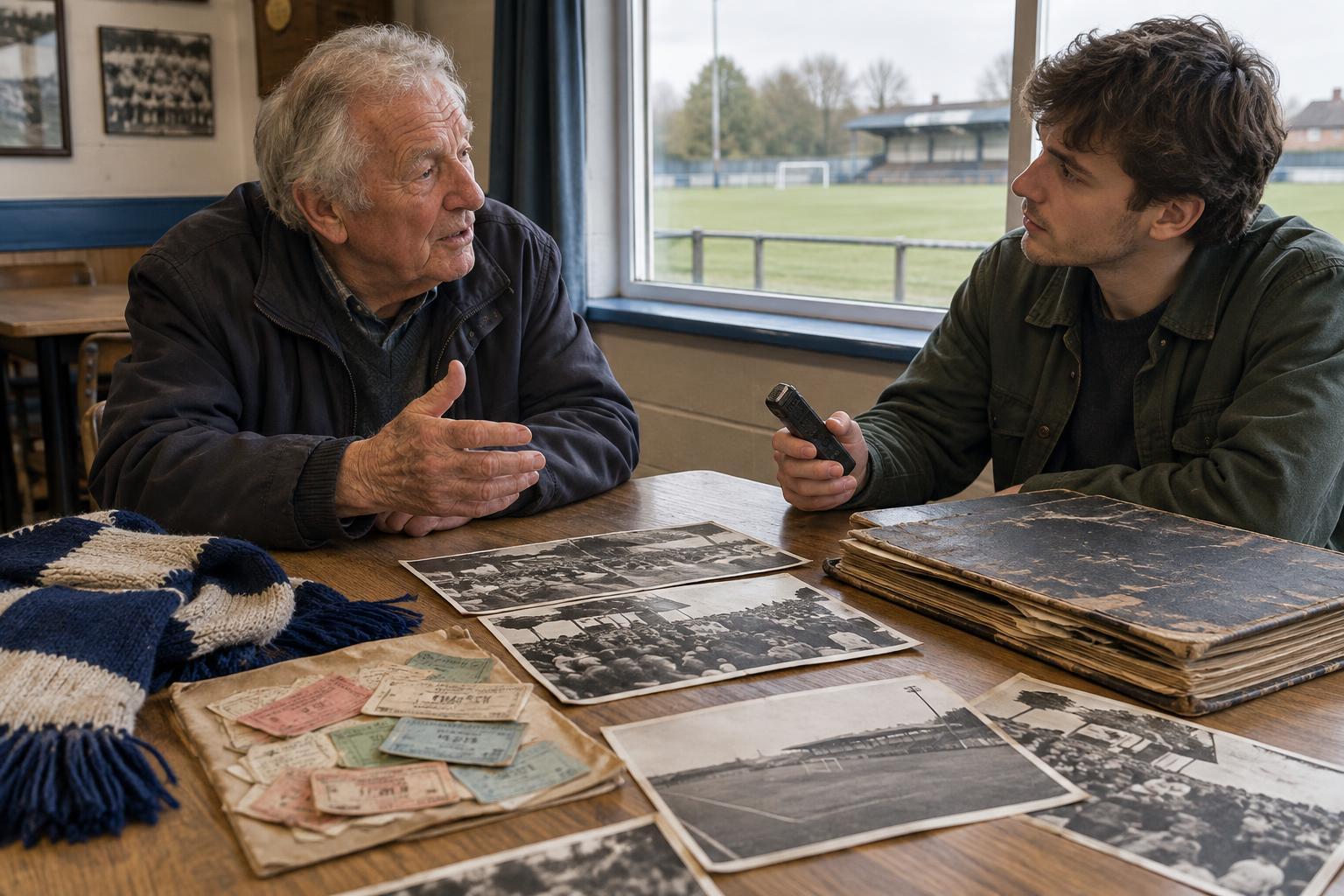
Supporters preserve that history in two complementary ways. Oral histories capture people describing what they remember in their own words. Archives keep the objects and records that help give those accounts context: tickets, programmes, photographs, fanzines, scarves, letters or notes from a supporters’ group. Neither offers a complete account on its own. Together, they can reveal how experiences differed across generations and across the various groups who followed the same club.
Start with a conversation, not a checklist
An oral history can begin with a quiet conversation. Ask an open question such as “What was your first journey to a match like?” and leave room for the person to follow what matters to them. Questions about routines, companions, food, clothing and meeting places may bring out details that a request for a favourite match would miss. It is worth speaking with people whose roles are sometimes overlooked, including volunteers, relatives who travelled with supporters, and fans who watched or listened from afar.
Before recording, explain what you hope to do with the interview. Ask permission to record it and agree how the recording may be stored, quoted or shared. Someone might be happy for family members to hear their story but not want it posted publicly. Give them a way to correct a name or ask for a sensitive passage to be withheld. Consent is especially important when memories involve other people who did not take part in the conversation.
Memory is valuable without being infallible. A supporter may recall the atmosphere of a day vividly while mixing up its sequence of events. Rather than treating a discrepancy as a failure, note it and, where possible, check names or details against a programme or another account. Keep the original interview alongside any transcript or edited extract so future listeners can hear what was said and understand how it was presented.
Give everyday objects enough context to speak
An archive does not need rare memorabilia to be useful. A ticket kept in a drawer can say something about where a person sat, whom they went with and why they saved it. A homemade banner, a coach-trip notice or a page from a local fanzine may help explain how supporters organised themselves. When accepting an item, ask its owner what they know about it. Record who made or kept it, roughly when it was used, and what its connection to the club was. Mark uncertain details as uncertain rather than filling gaps with guesses.
Organisation matters more than an elaborate system. Give each item a simple identifier and keep a list that describes what it is, who provided it and any restrictions on sharing it. Store physical material somewhere clean and dry, away from avoidable damage. For digital files, use clear names, keep the original versions where possible and maintain a separate backup. A folder full of unexplained scans can be hard to use later, even if every image is sharp.
Ownership and access also deserve care. Lending a photograph for scanning does not necessarily mean its owner wants the image published. Ask what uses they permit, and keep that information with the file. If an item includes private addresses, personal correspondence or identifiable children, consider whether a description or a cropped image would serve the archive better than unrestricted access.
Build a collection people can return to
A fan archive becomes richer when people can contribute and recognise their own experiences in it. A small listening session, a display at a community venue or a call for memories around a familiar gathering place can invite stories beyond the best-known moments. Make it clear that a contribution need not celebrate the club. Accounts of difficult journeys, changing ticket habits or places supporters no longer meet are part of the record as well.
The aim is not to create one definitive version of club culture. Supporters remember the same era differently, and some may have felt excluded from traditions others recall fondly. Preserve those differences with care rather than smoothing them into a single story. A useful archive lets future fans ask new questions of the material. By recording how each account or object came to be there—and respecting the wishes of the people behind it—supporters give those fans a stronger place to start.