From individual matches to a shared season
A cup competition has a clear question: who survives each round? A league asks something different. Which club performs best across a sustained series of matches? Answering that question requires more than a collection of results. Clubs need a common schedule and an agreed way to compare what they have achieved.
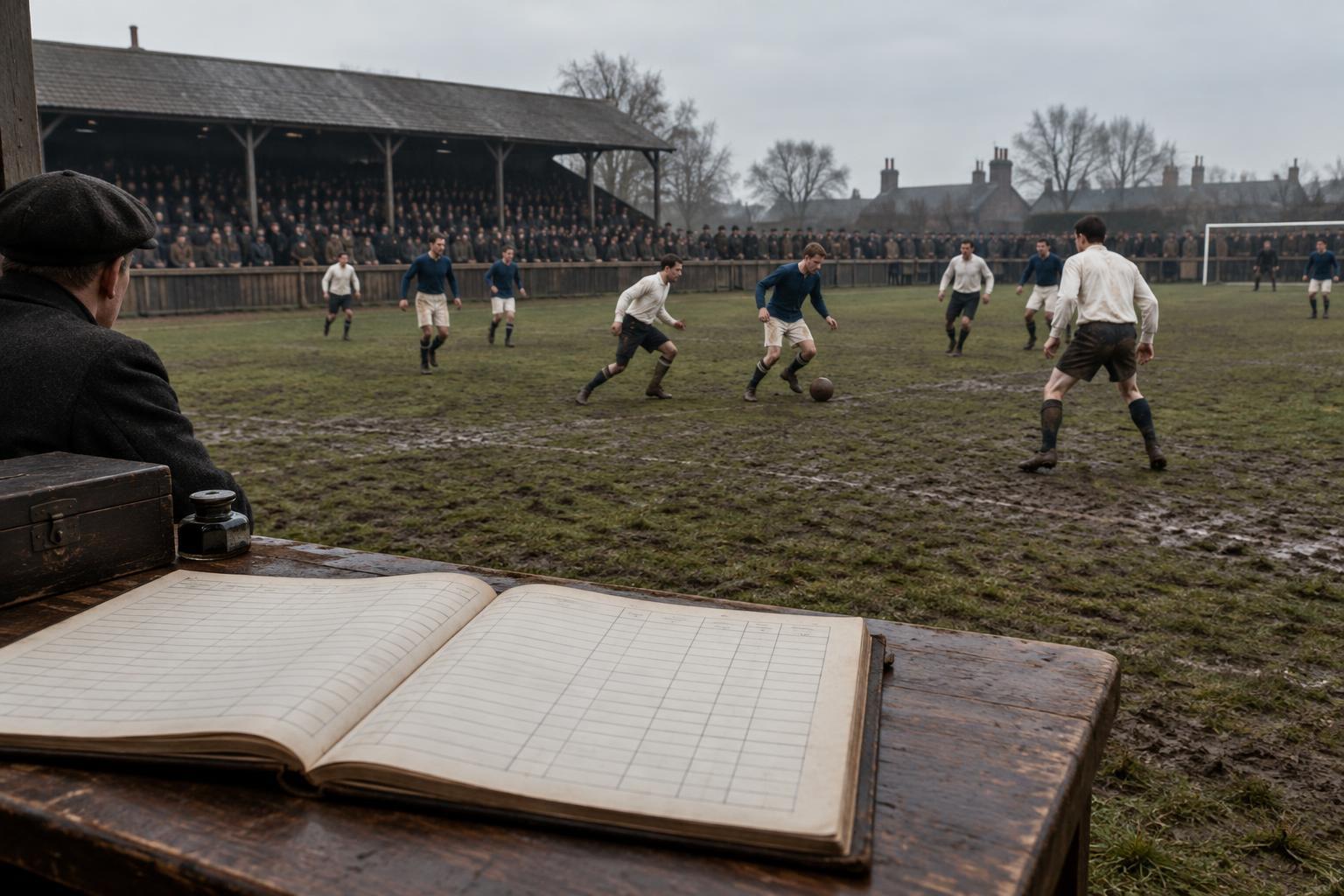
The Football League began in 1888 with twelve clubs, mainly from England’s Midlands and North West. Each club played the others home and away. That arrangement gave every team the same number of league opponents and created a season in which results could be considered together. A win in one town and a draw in another were no longer isolated events; both contributed to a club’s position among its rivals.
Why points became the table’s foundation
The first Football League season used a system familiar in outline to modern supporters: two points for a win, one for a draw and none for a defeat. As results accumulated, clubs could be ranked by their points totals. This made the table a compact record of the season so far, rather than simply a list of scores.
Points also changed how an ordinary fixture could be understood. A drawn match did not end without consequence: each side gained something, but neither gained as much as it would have from a win. A defeat meant missing a chance to add to the total. The table connected those outcomes, allowing supporters to follow not only their own club’s results but also the effect of other matches. It offered a running answer to the question of who was setting the pace, while leaving room for that answer to change.
How goal average separated teams
Points alone could not settle every position. When clubs finished level, the early Football League used goal average as a way to separate them. Goal average compared goals scored with goals conceded as a ratio. It is different from goal difference, the later and more familiar measure that subtracts goals conceded from goals scored.
The distinction matters when reading an old table. A team with a larger surplus of goals did not necessarily have the better goal average: the ratio depended on how many it had conceded as well as how many it had scored. That rule encouraged a different reading of attacking and defensive records from the one many supporters use today. To understand a historical finishing position, it helps to know which tie-breaker was in force rather than applying modern assumptions.
A lasting framework, not a finished model
The first table did not arrive with every feature of the modern league system. There was no automatic promotion and relegation between Football League divisions in its inaugural season, because the competition had only one division. Clubs near the bottom faced a re-election process rather than the straightforward drop to a lower division that later became familiar in many competitions. The league’s structure would change, but the basic practice of arranging clubs by their season-long records endured.
Preston North End finished the inaugural league season unbeaten and became its first champion. That achievement is easy to grasp partly because the table provides its setting: a full programme against the same group of opponents, measured through shared rules. The Football League did not need to invent the idea of ranking teams to make the table influential. By bringing a regular schedule, points and tie-breaking rules into one competition, it helped make league position one of football’s defining ways to tell the story of a season.