Why football needed a common set of laws
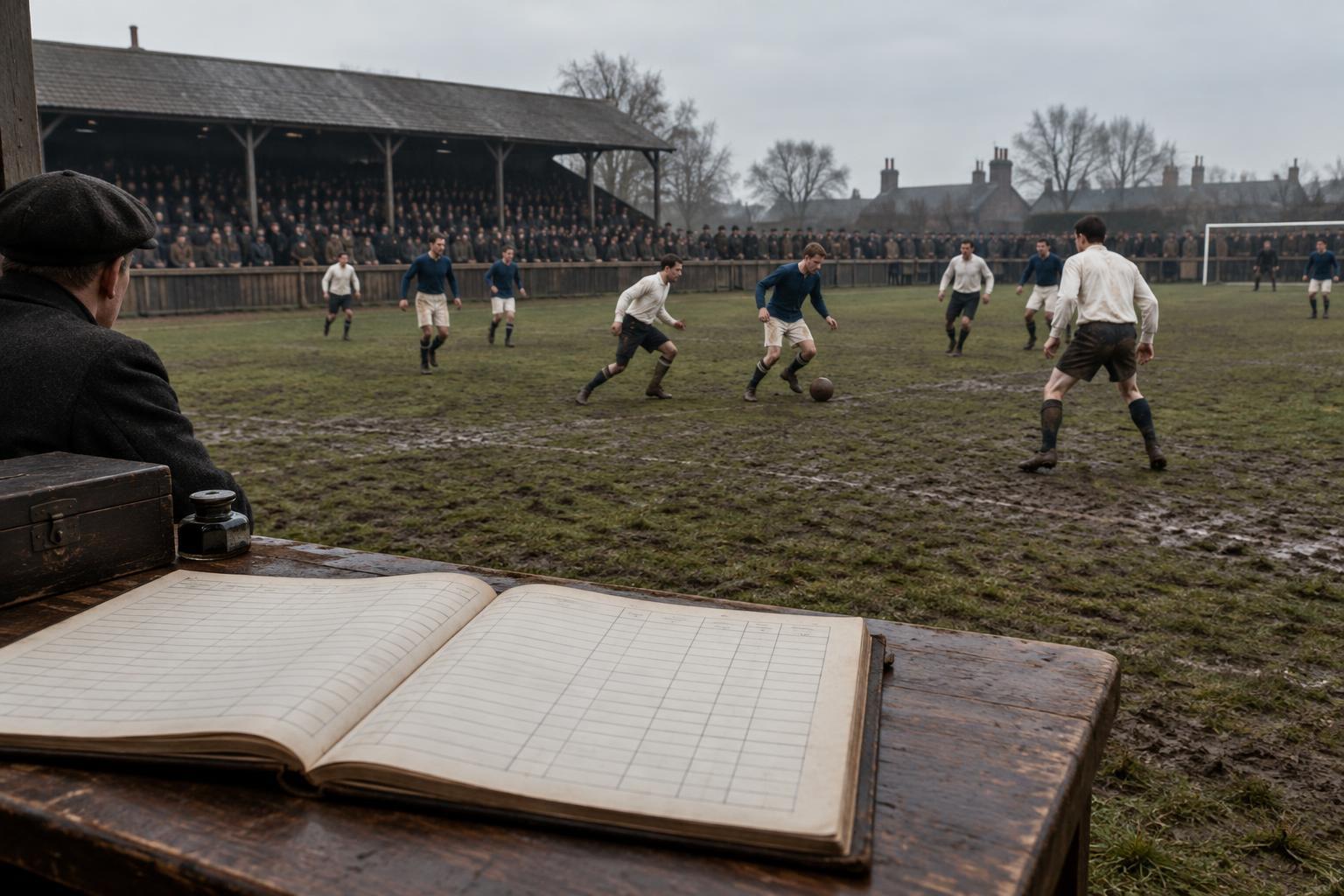
Before association football had a widely adopted rulebook, clubs and schools played several forms of football. Written codes already existed, but they did not all answer basic questions in the same way. Could a player carry the ball? Was a forceful challenge permitted? What happened when the ball left the playing area? A match between teams accustomed to different answers required negotiation before it could begin.
The Football Association, formed in England in 1863, drew up laws intended to let its member clubs play one another under shared conditions. These were not the first written rules for any kind of football, nor were they identical to the laws used today. Their importance lies in establishing a recognizable starting point for association football: a code that clubs could adopt, discuss and revise.
A game built around kicking, not carrying
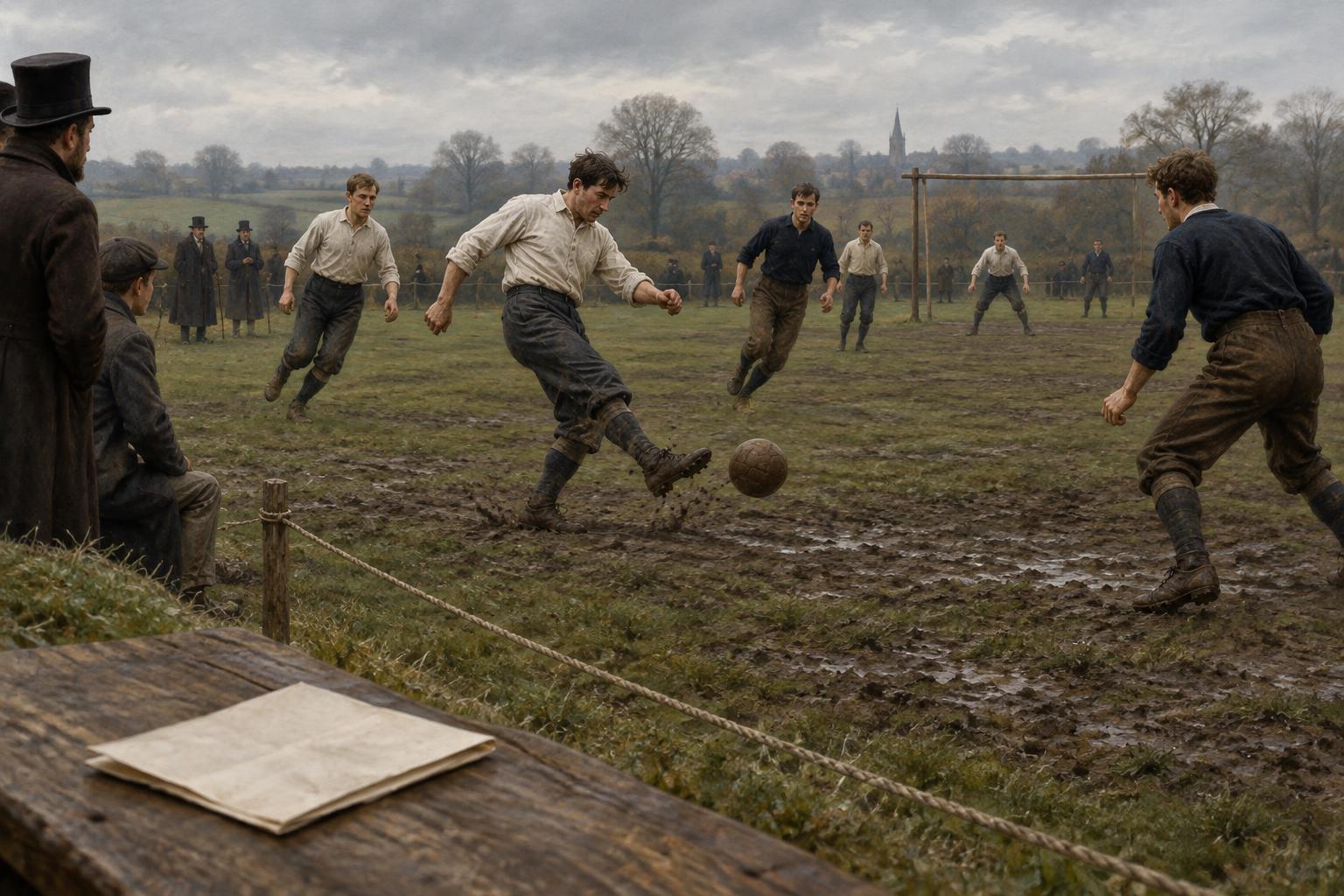
One of the early code’s most consequential choices was to rule out running with the ball in hand and practices such as hacking, or kicking an opponent’s shins. Different versions of football had made different allowances for handling and physical contact. Setting those limits helped distinguish the association game from forms that developed along other paths, including rugby football.
That distinction affected more than technique. If players could not advance by carrying the ball, they had to move it primarily with their feet. Passing, dribbling and finding space became central problems for a team to solve. The first laws did not prescribe a modern formation or tactical philosophy, but they created conditions in which those ideas could develop.
Boundaries made play easier to share
A common game also needs a common understanding of the pitch. The early laws described a field of play, goals and ways to restart after the ball crossed a boundary. These provisions gave players a clearer way to decide whether play should continue and which team would put the ball back into play.
The details were not fixed forever. The throw-in, the goal’s construction and other familiar features changed as the laws evolved. What endured was the value of defining them in advance. Boundaries turn a disputed moment into a question the rules can answer, making matches between unfamiliar teams more practical.
Offside shows how a law can shape tactics
The 1863 offside law was much stricter than the one modern supporters know. In broad terms, an attacking player ahead of the ball could not simply wait near the opponents’ goal for a pass. The restriction encouraged players to think about their position relative to the ball and to teammates, even though early patterns of play looked very different from today’s.
Offside was later relaxed and repeatedly refined. Those changes gave teams more ways to pass forward and organize attacks, while defenders found new ways to hold a line. Its history is a reminder that laws do not merely settle arguments after they happen. They influence where players stand, when they run and which choices seem worth attempting.
A foundation that was meant to change
It is tempting to picture the 1863 laws as a complete blueprint for the modern match. They were closer to an opening agreement. Familiar parts of the game, including goalkeeping provisions and methods of officiating, developed further over time. Clubs also continued to use other codes, so the association laws gained influence through adoption rather than instantly replacing every local practice.
That capacity for revision may be the early laws’ most lasting contribution. They made football a game whose terms could be written down, shared and amended. The modern match is not a replica of an 1863 match, but it still depends on the same basic idea: opponents agree on the laws before they compete, then use those laws to make sense of what happens on the pitch.