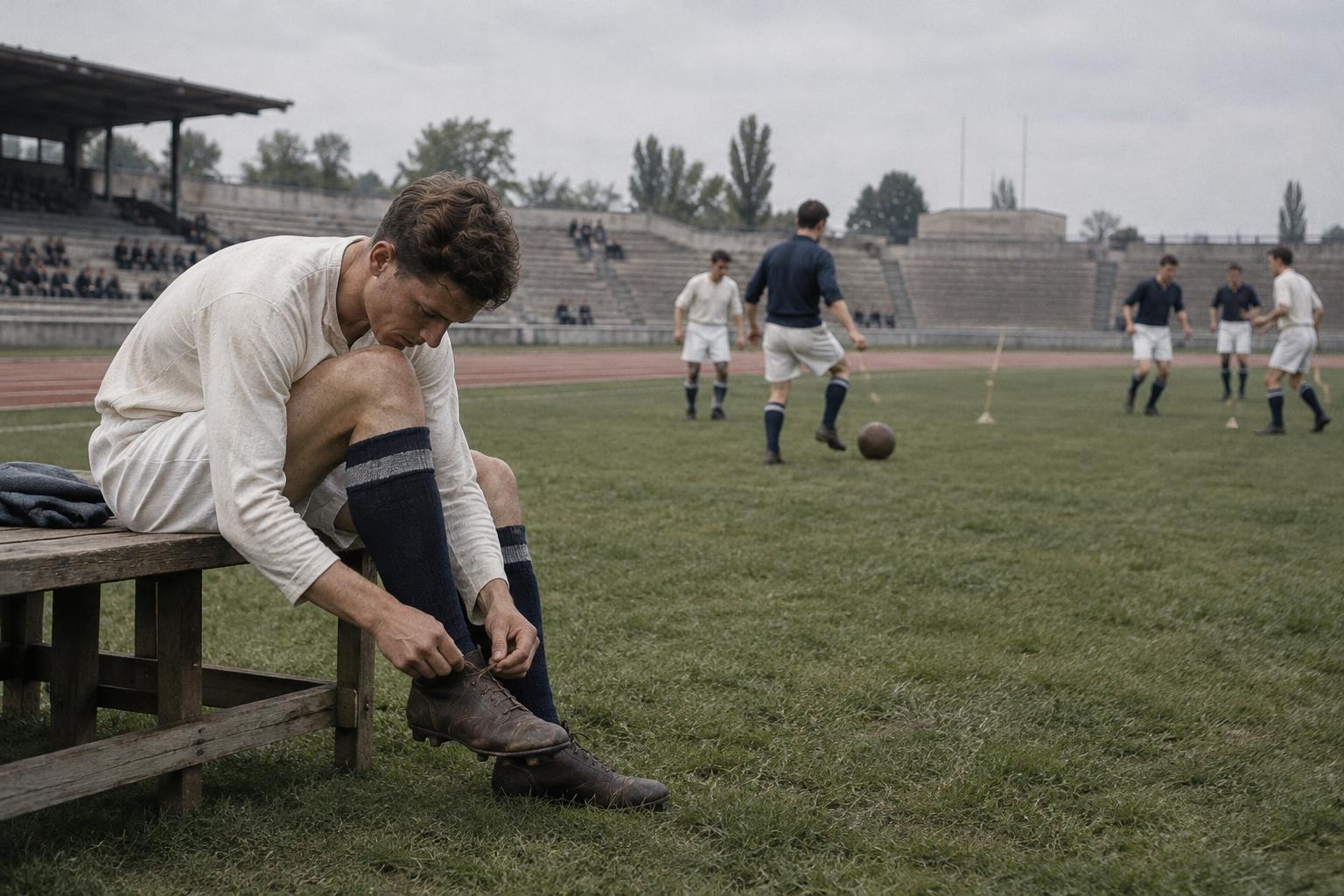
An Olympic ideal meets a changing sport
For much of its history, the Olympic movement treated amateur participation as an ideal. An amateur was generally understood to play sport without earning a living from it. Football made that distinction difficult to maintain. As professional clubs grew, some players were paid openly, while others received expenses, time away from work or other forms of support. A rule that seemed clear in principle could be hard to apply to individual players.
Olympic football therefore developed under a different set of pressures from ordinary club football. Organisers had to decide who was eligible before they could decide who was best. Those decisions shaped national squads and influenced what supporters saw on the pitch. To understand the tournament’s history, it helps to see amateurism not as a minor entry requirement, but as one of the forces that defined the competition.
Eligibility changed who could represent a country
In countries with established professional leagues, many leading players could not meet Olympic amateur requirements. National teams had to draw instead from eligible clubs, students or players outside the professional game. That did not make every Olympic side weak: talented footballers could still be amateurs. It did mean, however, that an Olympic squad was not necessarily a country’s strongest possible selection.
The effect varied between footballing cultures. Professionalism took hold at different speeds and under different arrangements, so the same eligibility principle did not limit every country in the same way. A player’s status could depend partly on how their football system classified and supported them. Olympic results consequently reflected more than tactics and talent; they also reflected the rules governing who was allowed to play.
Why the amateur boundary caused arguments
The central problem was that payment was not always straightforward. A player might have a regular job while receiving help that made training and travel possible. Another might be formally employed outside football but able to devote far more time to the sport than a conventional amateur. Whether such arrangements met the spirit of the rule was open to dispute, even when an athlete was accepted under the rules in force.
These differences became especially visible when countries used distinct approaches to sport. State-supported players, for example, could have training opportunities that looked professional in practice without fitting the model of a salaried club player. Critics argued that this created an uneven contest. The debate was not simply about whether someone had been paid: it was about whether a shared definition of amateurism could work across different societies.
A separate path from the World Cup
Olympic football was an important international stage before the men’s World Cup began. As the World Cup established itself as a competition open to leading professional players, the two tournaments developed different roles. The World Cup offered a clearer route to testing national teams at full strength. Olympic football remained shaped by eligibility restrictions and the disagreements surrounding them.
That distinction helps explain why the competitions cannot be treated as interchangeable when looking back at a country’s record. An Olympic medal could represent a major football achievement, but the pool of available players and the conditions of entry might differ substantially from those of a World Cup. Reading the history of either tournament means paying attention to its rules at the time, rather than assuming that every international title was contested on the same terms.
From amateurism to age limits
Over time, strict amateur eligibility became harder to reconcile with the realities of international football. The men’s Olympic tournament moved through rule changes that allowed wider professional participation before adopting an under-23 format for the 1992 Games. A limited number of older players were subsequently permitted. Age, rather than a broad amateur test, became the main feature distinguishing the men’s event from an unrestricted senior competition.
Women’s Olympic football, introduced in 1996, followed a different path: it has not been defined by the men’s under-23 limit. That difference is a reminder that “Olympic football” does not describe one unchanging set of selection rules. The older amateur era still matters because it explains why Olympic teams were assembled differently, why fairness was often debated, and why the tournament acquired an identity of its own.