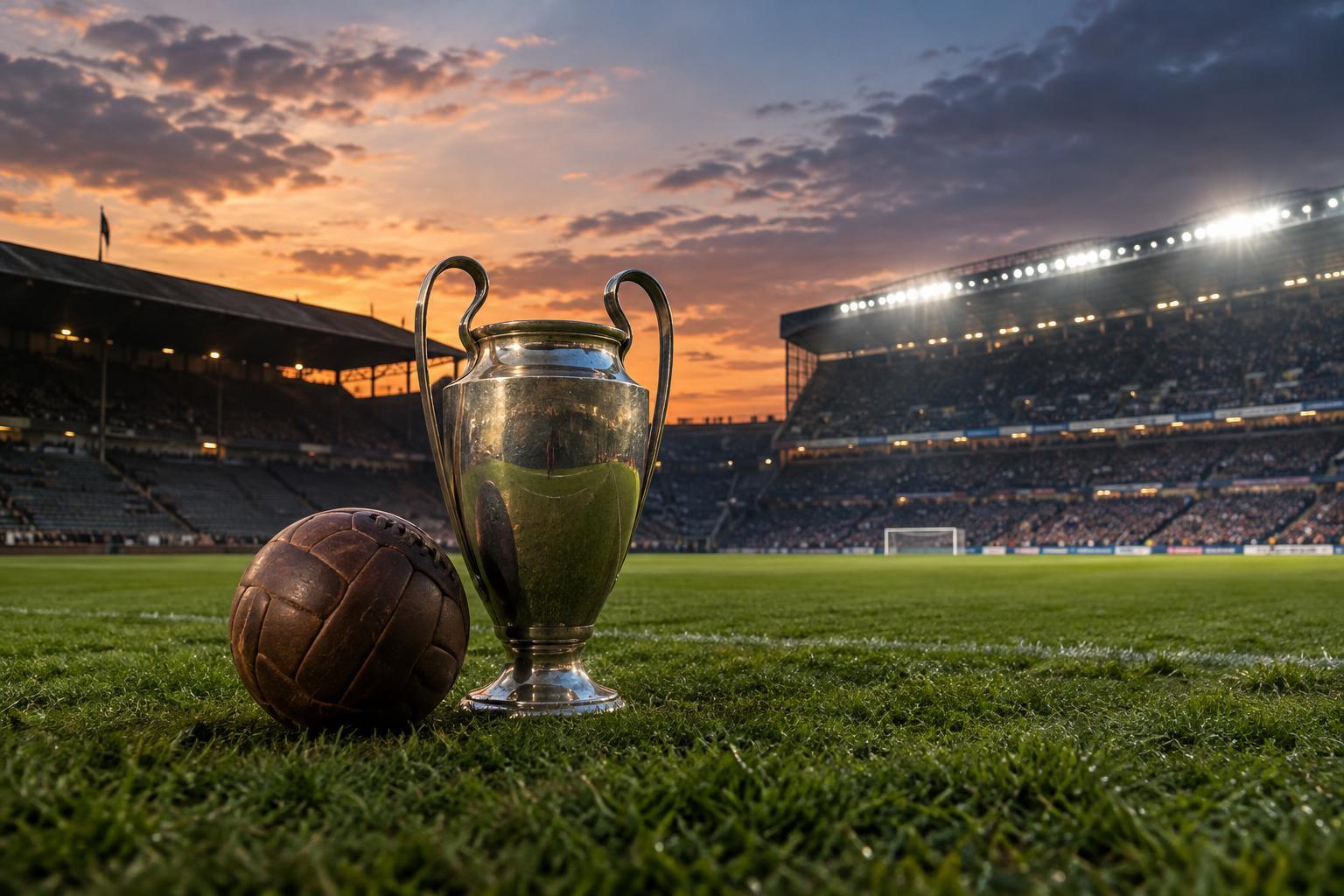
A European stage for domestic cup winners
The European Cup Winners’ Cup was a club competition for winners of national knockout cups. It began in the 1960–61 season and ran until 1998–99, giving clubs a route into Europe that did not depend on finishing near the top of their domestic league. Alongside the European Cup, which was built around league champions, it gave a different kind of achievement its own stage.
A place in the competition was normally earned by winning a country’s principal domestic cup. Qualification could become more complicated when a cup winner also secured a place in another European tournament; depending on the rules in force, the beaten cup finalist might take the berth instead. But the central idea remained clear: a club could carry a domestic cup victory into a continental campaign.
How the competition worked
The Cup Winners’ Cup was primarily a knockout tournament. Clubs met over two legs in successive rounds, with a final deciding the trophy. There was little room to recover from a poor tie, and each new opponent could bring an unfamiliar style, ground and set of travelling supporters. For fans, those matchups were a large part of its appeal.
Its entry route also made the field less predictable than a competition reserved for league champions. A team might have won its cup while enduring an uneven league season. Another might have been an established power chasing a different European honour. That mixture did not guarantee close contests, but it gave the tournament an identity of its own: domestic knockout success was the shared starting point, not league position.
Why supporters still remember it
The competition connected two familiar football experiences. A domestic cup run could bring together clubs from different divisions and give supporters a final to remember. Winning it then opened the door to European nights the following season. For clubs that were not regular league champions, the Cup Winners’ Cup offered a chance to test themselves abroad on the strength of a trophy they had already earned.
Several well-known clubs won the tournament, including Barcelona, Chelsea and Manchester United, while its list of finalists reached beyond the usual league-title contenders. The final edition ended with Lazio beating Mallorca in 1999. Those names help tell its story, but its importance was not confined to the winners: qualifying for the tournament could itself be a notable chapter in a club’s history.
Why it ended in 1999
The Cup Winners’ Cup ended as European club football was reorganised. The Champions League expanded to include more clubs that had not won their national leagues, increasing its reach and prominence. Maintaining a separate tournament for domestic cup winners became a less attractive fit within that changing structure. After the 1998–99 season, UEFA discontinued the Cup Winners’ Cup, and domestic cup winners were directed toward the UEFA Cup, later renamed the Europa League.
This did not end the European reward for winning a domestic cup. It changed the form of that reward. Cup winners would now enter a broader competition rather than meet in a tournament defined by their common route to qualification. In that sense, the Cup Winners’ Cup was not simply an old trophy replaced by a new name: a distinct category of European contest disappeared.
Its place in football history
The Cup Winners’ Cup is a reminder that European competitions have not always been organised around the same priorities. For much of its existence, league champions and domestic cup winners had separate routes, and each route said something different about how a club had earned its place. A cup victory could lead to another knockout journey across borders.
Understanding that structure helps put older club achievements in context. When a supporter recalls a Cup Winners’ Cup run, they are talking about more than an obsolete competition title. They are recalling a time when winning a national cup came with the prospect of entering a European tournament created specifically for teams that had done the same.