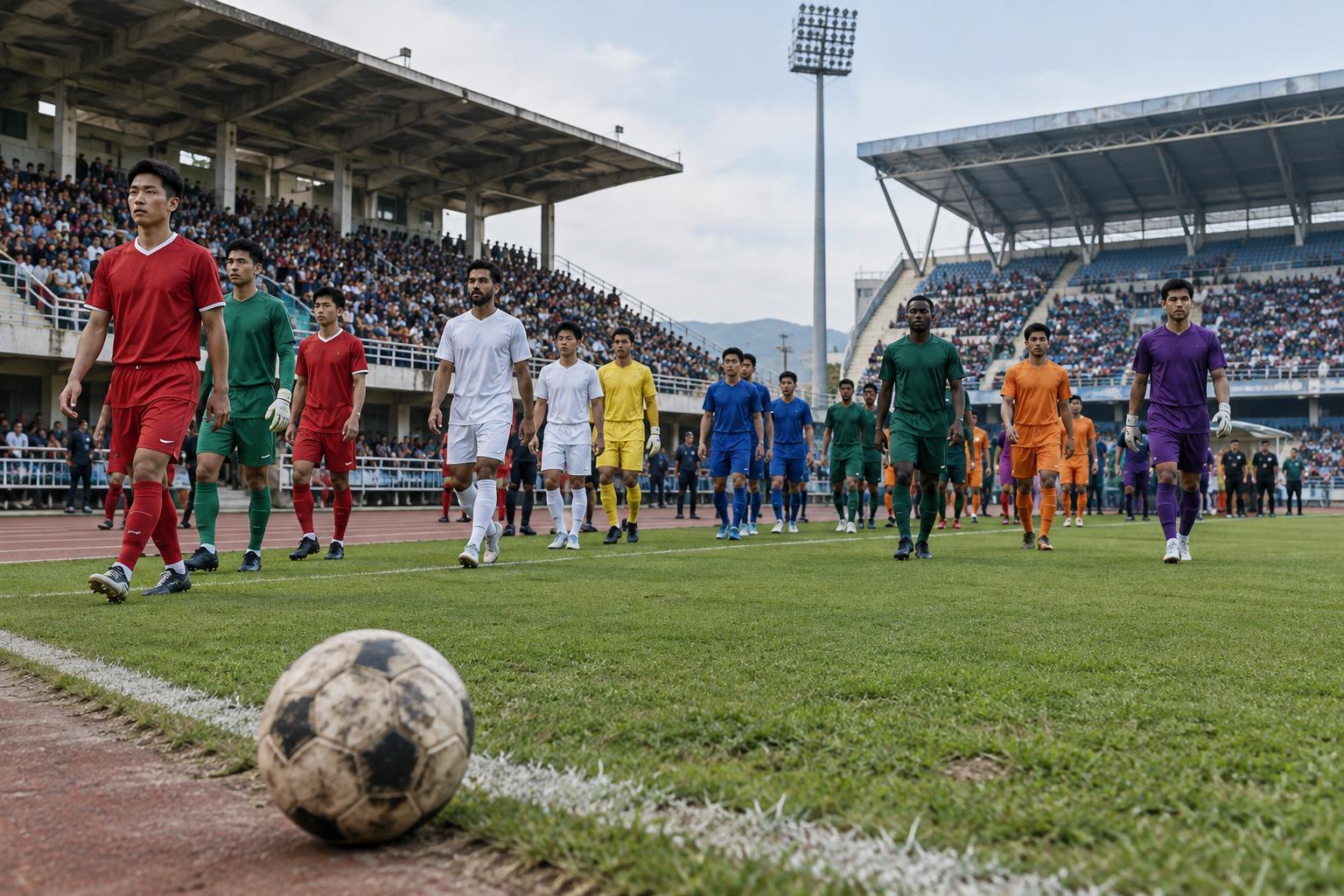
A continental competition takes shape
The AFC Asian Cup began as a way to identify a champion among Asia’s national teams. The Asian Football Confederation was founded in 1954, and the first Asian Cup final tournament took place in Hong Kong in 1956. Only four teams contested that final stage, with South Korea emerging as champion. It was a modest event compared with the tournament familiar to later generations, but it established a recurring stage on which national sides could meet beyond friendlies and regional competitions.
The early finals used a round-robin format: teams played one another, and the standings decided the winner. That suited a small field, where every side could face every other side without an unwieldy schedule. It also meant there was no final in the modern sense. Understanding that distinction matters when comparing editions: a title won by topping a league table came through a different route from one won after a knockout run.
From a small field to a multi-stage tournament
As participation broadened, the Asian Cup needed ways to separate the path into the finals from the finals themselves. Qualification gave national teams across the confederation a route to compete while keeping the host tournament manageable. Later editions combined group play with knockout matches, changing the questions teams had to answer. A side might need consistency across several games to advance, then cope with a single match in which a draw could lead to extra time or penalties.
Expansion was gradual rather than a single reinvention. The final tournament featured 12 teams in 1996, grew to 16 in 2004 and reached 24 in 2019. A larger field can give more countries a chance to participate and bring more football traditions into view. It also changes the shape of the competition: group standings, routes into the knockout rounds and recovery time between matches become part of how supporters understand a campaign. Comparing champions across eras therefore calls for attention to the format they faced.
Hosts, travel and the calendar
Hosting the Asian Cup means more than supplying stadiums. Asia’s distances, climates and varied football infrastructure make travel and scheduling practical parts of the tournament’s history. A host can give visiting supporters a shared destination and local fans a rare chance to watch numerous national sides in person. Home crowds can also lend the competition a distinctive atmosphere, although hosting alone offers no guarantee of success on the pitch.
The 2007 edition marked two notable changes. It was jointly hosted by Indonesia, Malaysia, Thailand and Vietnam, showing one way to stage a continental event across several countries. It also followed the 2004 edition after three years rather than the usual four, as the competition shifted its place in the international calendar. Calendar changes can look like administrative details, but they affect preparation, travel plans and the rhythm by which supporters remember tournaments.
More than a list of winners
A continental title is one measure of success, but the Asian Cup’s development is also a story about access. Qualification allows teams that may not reach the finals to measure themselves against regional opponents. Reaching the final tournament can become a landmark for a national side, even without a title. For supporters, it can create memories tied to a first appearance, a long-awaited return or a match against a rival they seldom encounter.
The competition also offers a meeting point for different approaches to football. National teams arrive with their own coaching ideas, player pathways and supporter cultures; none fits neatly into a single description of “Asian football.” The broader field makes that variety more visible. Rather than treating expansion as proof that every edition is automatically stronger than the last, it is more useful to ask what each format allowed teams and audiences to experience.
How to read the tournament’s history
The Asian Cup has kept its central purpose—determining a continental champion—while changing the route to that prize. The four-team round robin of 1956, the later group-and-knockout formats and the expanded modern field belong to the same competition, but they are not identical tests. When revisiting an edition, start with three questions: who could qualify, how did teams advance and where were the matches played?
Those questions put famous results in context without diminishing them. They show why a strong group-stage record might once have been enough to secure the trophy, while in another era it was only the beginning. Above all, they reveal the Asian Cup as a tournament shaped by the growth of participation across a vast confederation: a continuing attempt to give national teams a workable, compelling way to compete for a continental honour.